

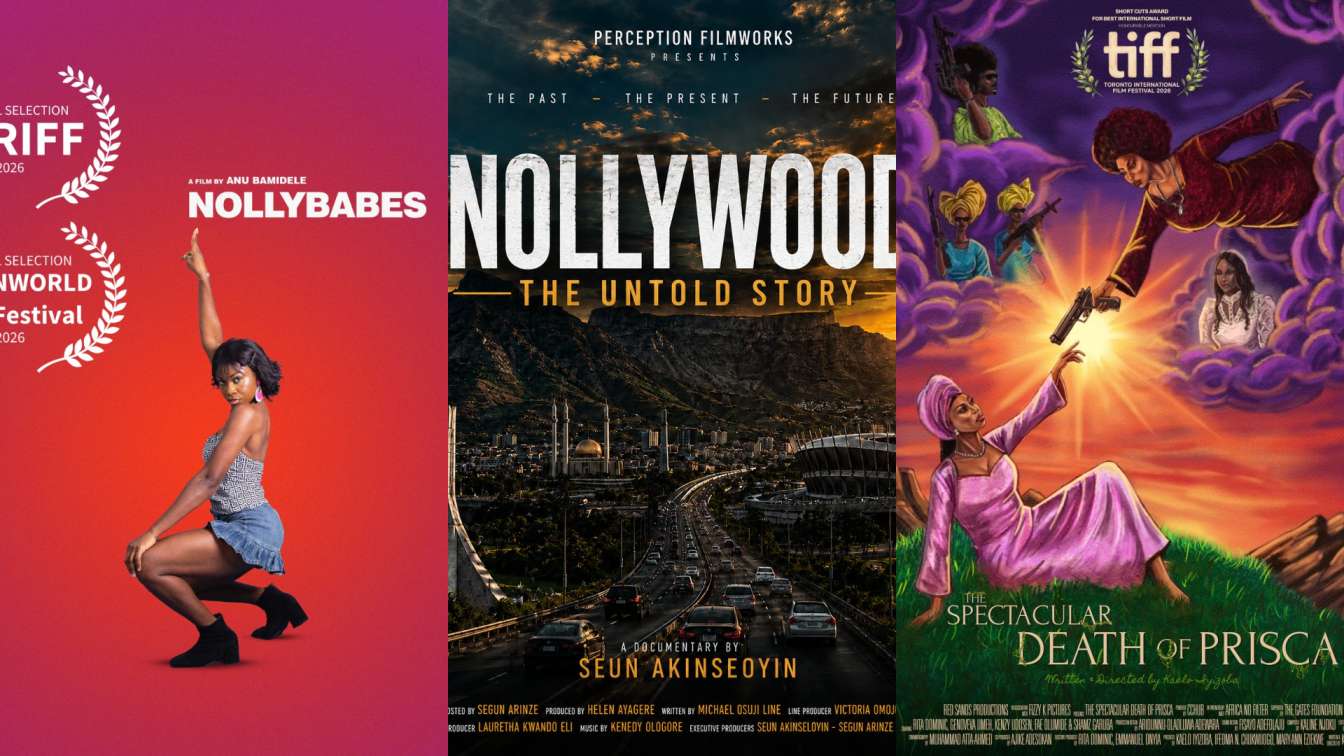

NollyBabes, The Spectacular Death of Prisca, and Nollywood: The Untold Story certainly appreciate the trends and models of the previous era of cinema. How well those trends are interpreted is essentially where the difference lies.
By Vivian Nneka Nwajiaku
That “Y2K Nollywood” has been experiencing a revival in recent years, no small thanks to social media accounts like Nolly.Babes, is no news. But just last month, that era of Nigeria’s mainstream film industry earned even more popularity with Cynthia Erivo and Ayoade Bamgboye’s SNL UK sketch, Nigerian Wicked, a parody of Hollywood’s Wicked (2024) in the style of Y2K Nollywood. It is unlikely the Africa International Film Festival had this turn of events in mind when programming this year’s edition, since Nigerian Wicked was released about a week before AFRIFF 2026 opened. Still, the timing could not be better.
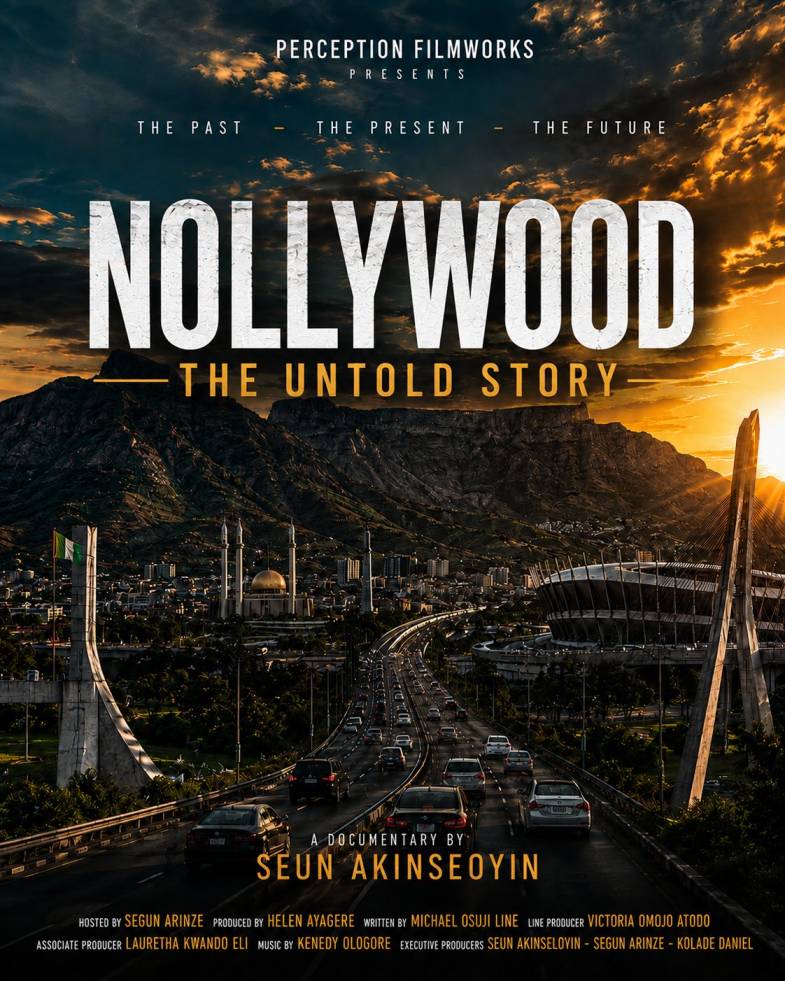
Between two short films and a documentary feature, all of which screened to full halls on different days of the festival, this year’s edition of AFRIFF sought to celebrate Nollywood. While NollyBabes (2026) and The Spectacular Death of Prisca (2026), both Nigerian-produced shorts, offer distinct tributes to Nollywood’s home video era, Nollywood: The Untold Story (2026), a Nigerian documentary, seeks to document Nollywood’s birth, evolution, and challenges.
For the landmark 15th edition of a festival dedicated to African cinema and hosted annually in Nollywood’s home country, it makes sense that AFRIFF would programme films that pay homage to the humbler and now iconic years of the continent’s most popular film industry. Besides, this year’s edition of AFRIFF is themed “Frames of the Future: Africa’s Creative Intelligence”. The idea is to look at “the new business models, formats and trends reshaping African and global film”. But none of that can be truly achieved without appreciating and understanding the previous models, formats and trends that shaped African film.
NollyBabes, The Spectacular Death of Prisca, and Nollywood: The Untold Story certainly appreciate the trends and models of the previous era of cinema. How well those trends are interpreted is essentially where the difference lies.
NollyBabes
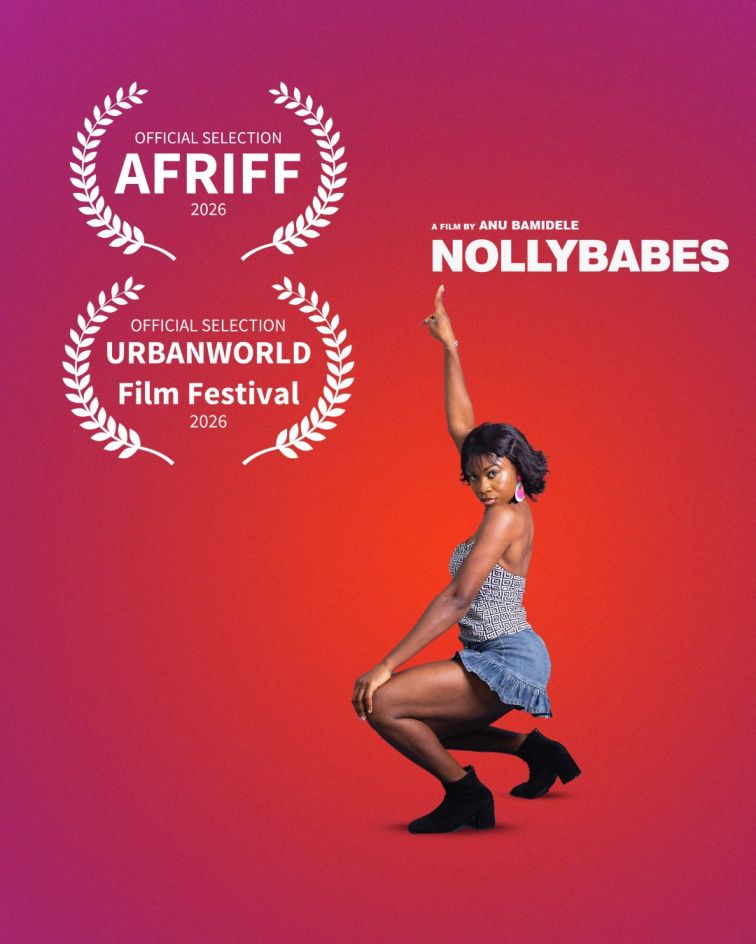
From writer-director Anu Bamidele, NollyBabes is not just inspired by Y2K Nollywood; it exists within the Y2K Nollywood era. The short film is a light crime drama set in 2004, during what the film describes as the “golden age of Nollywood”. Starring Uzoamaka Power in the lead role, the film follows Tiwa, a young actress whose dream to become the best Nollywood has ever seen starts to feel impossible when she returns from yet another audition tainted by sexual harassment. Encouraged by her friends, Esther (Tomi Ojo) and Chi-chi (Osereme Inegbenebor), they team up to rob the troublesome director (Taye Arimoro) for the funds to make their own Nollywood film.
If there is one thing that NollyBabes appreciates the most, thematically, about the era it draws from, it is the complicated line those films navigated between female agency as a source of temptation and destruction for men and female agency as a means to female fulfilment. By the 2000s, the films were leaning more towards the latter, even if their resolutions were still unlikely to favour such agentic women. As such, during that period, there were several hit films where women manufactured elaborate or chaotic schemes in pursuit of dreams or personal goals, from Games Women Play (2005) to Girls Cot (2006).
Interestingly, around the same period, Nollywood’s casting couch culture was an open secret, with actresses in general bearing the brunt of the shaming. And while Nollywood veterans like Jide Kosoko may now insist that exploited actresses could simply turn down male filmmakers who sought to exploit them in an industry that was dominated by men at the time, that combination of agency and circumstances in real life was unlikely to unfold like it would in a Nollywood film, like Starlet Seduction, where actresses who complied were met with negative consequences, and those who refused to be exploited eventually succeeded.
That NollyBabes explores the reality faced by actresses of the 2000s Nollywood—and modern-day Nollywood, by extension—through the aesthetics and plot devices of that era, with a pointed name-dropping of some of its most celebrated stars, but without actively meting out punishment to its agentic women, is definitely its most interesting achievement.
However, what NollyBabes cares the most about is the Y2K aesthetics. And the film does a solid job capturing the 2000s Nolly Babes aesthetics, from the wardrobe to the makeup and hair, at least for the most part. But the value of 2000s aesthetics goes beyond fashion, even in a film not inspired by the filmmaking traditions of that time period. From unconvincing locations and camerawork to dialogue that lacks the substance of the era and performances from actors who are stuck in the 2020s—excluding Power, who does fit into the world comfortably—NollyBabes is unable to commit to its own obsession. In the end, it all just feels like 2026 Nollywood cosplaying its more iconic ancestors.
The Spectacular Death of Prisca
The more committed and inventive of the two Y2K Nolly-inspired films, The Spectacular Death of Prisca sells its nostalgia right from its casting. Rita Dominic, an “OG Nolly Babe”, stars in the titular role as Prisca, a middle-aged divorcee who finds herself thrown into a surreal 2000s Nollywood action thriller world where she has to save her daughter, Chimdi (Genoveva Umeh), from a kingpin (Shamz Garuba) on her daughter’s wedding day.
The Spectacular Death of Prisca opens in the present-day, with a recognisable New Nollywood palette, from wardrobe, hair and makeup to the blatant corporate advertising. The focus is immediately on a worn Prisca who is struggling with the reality of letting go of her soon-to-be-wed daughter. Prisca’s identity as a mother whose life revolves around the daughter she has a complicated relationship with, and as a former wife whose marriage failed, stirs up complex feelings for both her and her daughter as the latter prepares to walk down the aisle.
Accosted by a relative (Fadekemi “Fae” Olumide) who considers her to be a bad mother, challenged by a daughter who is tired of her mother’s overprotection and projections, and unsure of who she will be when she has only herself to worry about, Prisca finds solace in the dangerous combination of a psychedelic and a Nollywood film.
It is fascinating that her escape forces her to confront her fears in a violent but dreamlike manner in an alternate world where she would ordinarily find comfort. She has to become Madam P, a powerful character who is her but also external to her. But if Prisca is nothing else, she is a Nigerian who grew up on Nollywood and who can still find pleasure in films like Abuja Connection (2003).
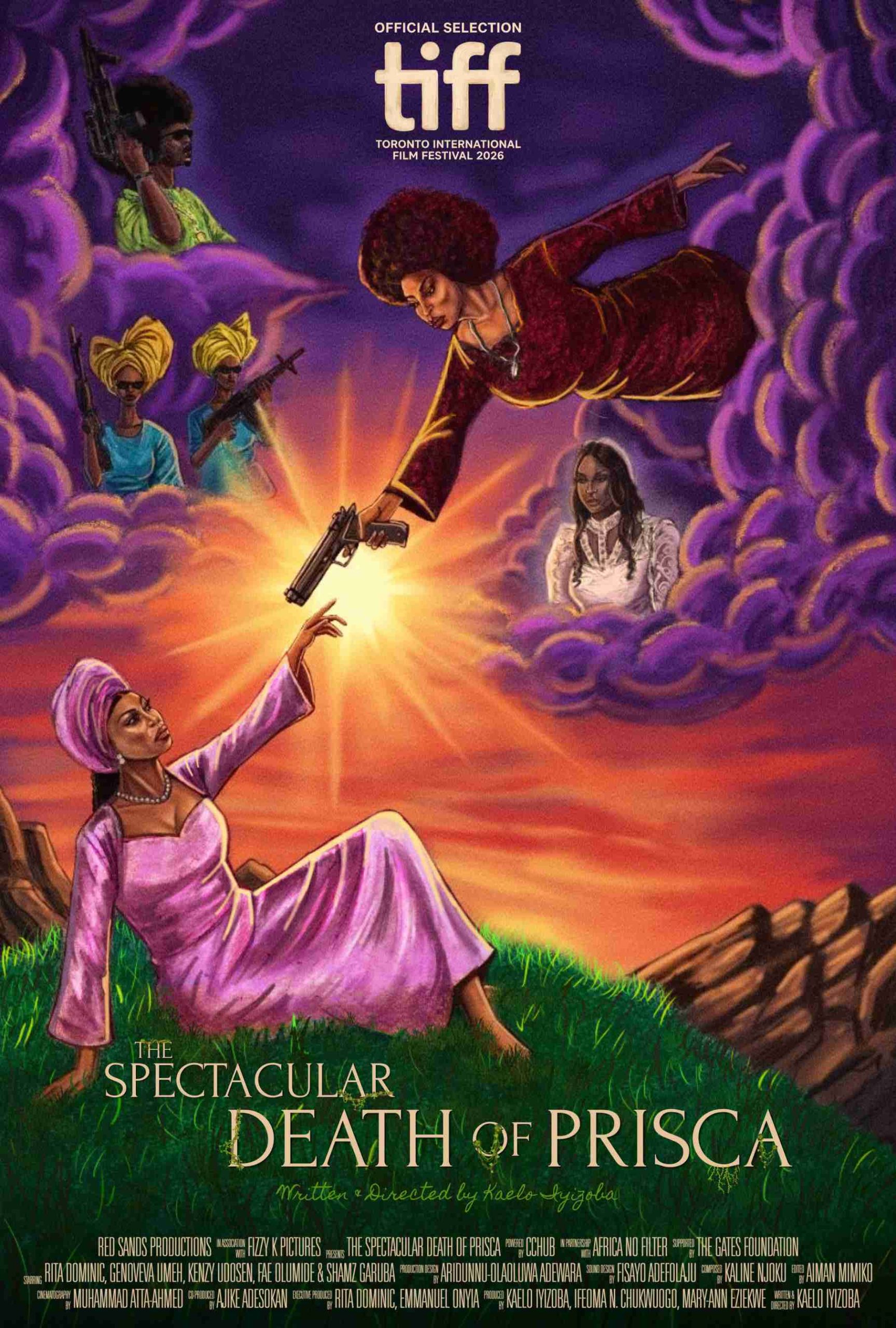
Moments into her alternate reality, Prisca asks herself, “Am I in a Nollywood film?” Before long, she leans into her new normal, reminding herself that she has watched enough films to satisfy its demands. At this point, it becomes an interesting line for her to walk, and Dominic struts across the line, delivering a grounded performance that establishes Prisca’s sanity while enjoying Madam P’s potential for melodrama.
If the leading woman is not confident in her identity, The Spectacular Death of Prisca certainly is. Writer-director Kaelo Iyizoba leans into the tendencies of Nollywood films from the era—the heavy-handed way the camera zooms in, the dramatic editing of action scenes, the cartoonish visual effects and dialled-up sound effects, and the exaggerated score and hyper soundtrack, though Iyizoba opts for even more nostalgia with the mainstream Nigerian music from the time period rather than the original soundtracks and likely uncleared foreign tracks that were more in vogue at the time.

But The Spectacular Death of Prisca also invests in the more substantive elements, unapologetically playing up the melodrama in performances and dialogue, complete with theatrical reactions, internal monologues, hilarious subtitles, and sassily-delivered figurative language. Even in its resolution, the film stays true to the style and manner of the source material, with an extended scene featuring flashbacks and a preachy confession, even if the dialogue at that point seems to suffer from diminishing returns.
Still, Iyizoba’s take on the Y2K resurgence is an entertaining ride, as hilarious as it is absurd, as it is chaotic. And for all the 2000s Nollywood influence, he manages to keep the film distinct and sophisticated, bearing in mind that The Spectacular Death of Prisca is part homage and part surreal drama. No one stumbling upon The Spectacular Death of Prisca can mistake it for the real thing, especially not with those modern cameras, but there is no reason that they should not appreciate it as a real thing of its own.
Nollywood: The Untold Story
Given the increased interest in 2000s Nollywood, if one hoped, as a curious viewer, to obtain some in-depth insight into that era of Nigerian filmmaking from a documentary literally titled “Nollywood: The Untold Story”, they would be hoping in vain. Granted, a documentary that was presumably concluded around the time of Nollywood’s first billion-grossing film at the box office would be about three years behind on the Nigerian Wicked saga. Some might ask how the filmmakers could have known. But the more important question would be why an extensive documentary on the history and the supposedly untold story of Nollywood would barely gloss over a major decade of Nollywood filmmaking.
The answer, it seems, is that Nollywood: The Untold Story is a perfunctory production, evidenced by the fact that it does not actually tell untold stories about Nollywood. New information is so lacking in this documentary that when interviewees express a gap in knowledge, the documentary does not bother to bridge that gap.
In one particularly amusing scene, an issue is raised that relates to the acclaimed Nigerian writer Wole Soyinka, whom the documentary credits with making the first indigenous Nigerian film. Soyinka, who still walks among us, never appears onscreen, nor is the issue ever clarified in any manner. In another instance, former President Goodluck Jonathan expresses his love and adoration for the industry while hinting at the support programmes his government instituted. But whether those programmes have had any real impact in moving the industry forward never truly comes into consideration.
What Nollywood: The Untold Story truly works as is a crash course for the uninitiated—an audiovisual documentation of Nigerian cinema, what it used to be, what it now is, what it hopes to become, as well as the economic and other challenges it must surmount to arrive at where it needs to be. Directed by Oluwaseun Akinseloyin, its greatest value is that it puts veterans on record while making room for the perspectives of some of the most prominent names today, with anecdotes and soundbites offering some of the documentary’s entertaining moments.
Segun Arinze shepherds the audience through the documentary, frontloading the industry’s history at its different phases. Current Nollywood heavyweights such as Niyi Akinmolayan, James Omokwe, Daniel Oriahi, and Chioma Ude, the founder of AFRIFF, share the screen with veterans like Tunde Kelani, Pete Edochie, Ngozi Nwosu, Richard Mofe Damijo (“RMD”), and Lancelot Oduwa Imasuen.
But beyond this singular virtue, there is not much else that Nollywood: The Untold Story has going for it as a documentary. It is uninventive and so chaotically edited that it cannot even be described as technically competent. It offers too little in terms of archival material. And worse still, it lazily relies on artificial intelligence as if Nollywood’s chequered film history is incapable of supplying sufficient material for use in a documentary about Nollywood’s chequered film history. Perhaps that is the untold story of Nollywood. That at this point in Nollywood’s history, a documentary that should celebrate the industry does not even seem to respect it enough.
Vivian Nneka Nwajiaku is a writer and film critic writing from Lagos. She has a master’s degree in law but spends most of her time consuming, studying and discussing film and TV. She’s particularly concerned about what art has to say about society’s relationship with women. Connect with her on X @Nneka_Viv