

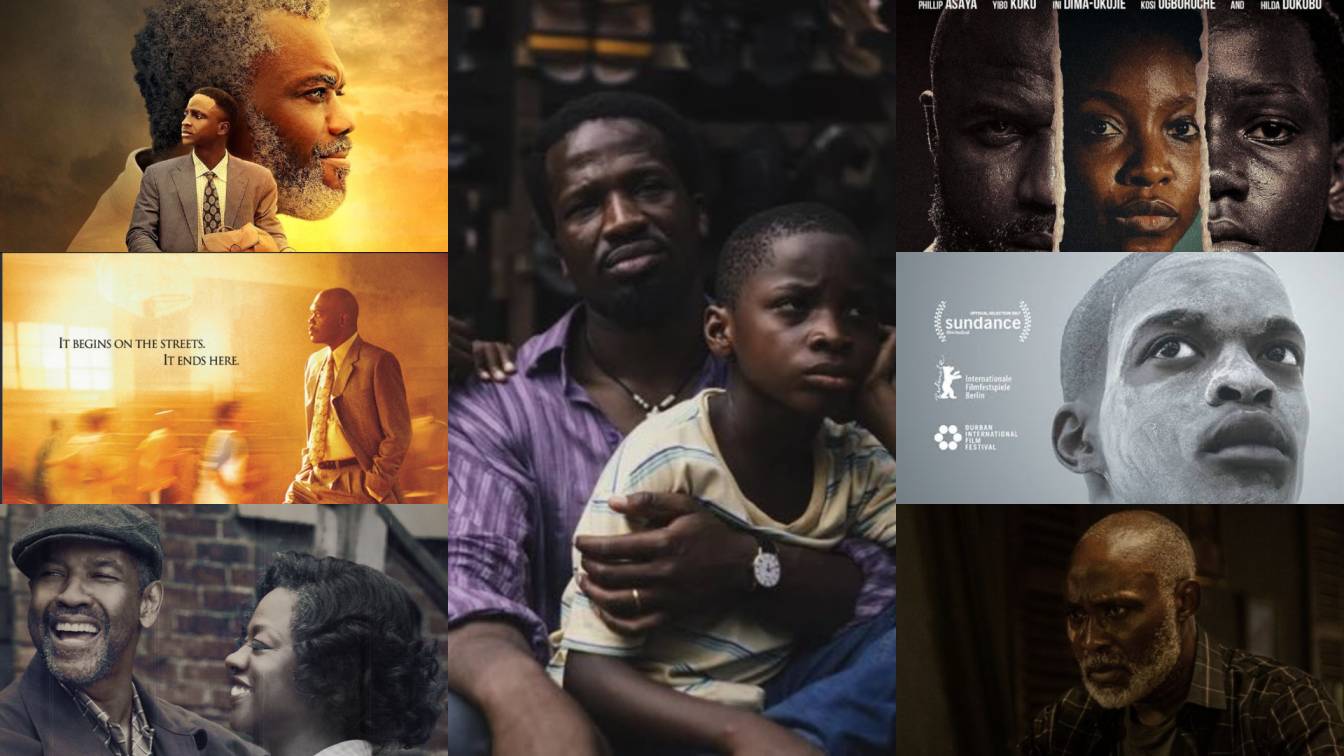

These films do not offer a single definition of what it means to be a man. Instead, they reveal the tensions, contradictions and possibilities that shape the experience of Black manhood.
By Joseph Jonathan
Masculinity is often discussed as though it were a settled idea: a set of qualities men are expected to possess, behaviours they are expected to display, and responsibilities they are expected to fulfil. Men are told to be strong, provide for their families, protect those around them and remain composed in the face of difficulty. They are encouraged to lead, but rarely taught how to admit uncertainty; expected to offer emotional support, but often given little room to seek it themselves. The result is a complicated relationship between what men feel and what they believe they are permitted to express.
For Black men, these expectations are further shaped by histories of colonialism, racial discrimination, economic exclusion, cultural tradition and the particular pressures of navigating societies that have long defined their identities for them. In some communities, manhood is tied closely to the ability to provide. In others, it is measured through physical toughness, sexual conformity, authority within the family or adherence to inherited customs. These expectations can offer a sense of belonging and responsibility, but they can also become restrictive, especially when vulnerability is mistaken for weakness or authority becomes an excuse for control.
Cinema has long provided a space to interrogate these contradictions. Across African cinema and the diaspora, filmmakers have portrayed men struggling with fatherhood, grief, ambition, poverty, sexuality, violence, and the burden of expectations passed down through generations. Some characters attempt to embody conventional ideals of manhood, while others are damaged by the very standards they were taught to uphold. Some films explore the possibility of a different kind of masculinity, one grounded in compassion, accountability, emotional honesty and the willingness to break destructive cycles.
In recognition of International Men’s Day, Afrocritik presents 20 Black films that explore different dimensions of masculinity. These films do not offer a single definition of what it means to be a man. Instead, they reveal the tensions, contradictions and possibilities that shape the experience of Black manhood.
Yeelen (1987)
Souleymane Cissé’s Malian masterpiece is, among other things, a formidable study of the destructive possibilities of paternal authority. Set in a mythical past, the film follows Nianankoro, a young man whose father, Soma, believes his son possesses powers that threaten the established order. Determined to prevent the prophecy surrounding Nianankoro from coming to pass, Soma pursues him with an intensity that transforms a family conflict into a struggle over power, inheritance and survival.
The film draws from Bambara cosmology and traditional knowledge, but its conflict carries a recognisable emotional dimension. A rebellious son does not simply challenge Soma’s authority; it is threatened by the possibility that the next generation might possess a different understanding of power. His response reveals a version of masculinity unable to accommodate change without resorting to domination. Nianankoro’s journey, meanwhile, becomes a struggle to inherit knowledge without being consumed by the violence attached to it. Yeelen is a reminder that tradition can preserve valuable knowledge, but the men entrusted with protecting it can also turn it into an instrument of control.
Tilaï (1990)
In Idrissa Ouédraogo’s Burkinabè drama, masculinity is closely tied to honour, family hierarchy and the authority of tradition. Saga returns to his village after a long absence, only to discover that his father has married Nogma, the woman Saga had intended to marry before leaving. Their feelings for each other remain, but the relationship is forbidden by the village’s moral code. When they act on their desires, the consequences expose the rigidity of the social order governing their lives.
What makes Tilaï particularly affecting is its attention to the men who uphold that order. Saga’s father is not merely a patriarch enforcing a rule; he is a man whose authority depends on the community recognising his position. Saga, on the other hand, is forced to choose between personal desire and the expectations attached to being a son. Their conflict reveals how masculine honour can become inseparable from control over women and the policing of individual choices. Ouédraogo’s film does not present rebellion as an uncomplicated solution, but it makes clear the human cost of a culture in which obedience is valued above emotional truth.
Abouna (2002)
In Abouna, Chadian filmmaker Mahamat-Saleh Haroun examines the consequences of paternal absence through the experiences of two young brothers. When their father disappears without explanation, Tahir and Amine struggle to understand what has happened. Their mother is left to manage the household, while the boys attempt to make sense of a world in which the man expected to provide stability has simply vanished.
Haroun approaches the subject through childhood rather than the absent father’s perspective, allowing the audience to experience the emotional consequences of abandonment from the people most directly affected by it. The boys’ search for their father is also a search for reassurance: an attempt to recover the security and sense of belonging that his absence has unsettled. Abouna is not interested in presenting fatherhood as an uncomplicated virtue. Instead, it asks what happens when men fail to recognise the emotional responsibilities attached to their presence in a family. Its quiet power lies in showing that a father’s absence can shape a child’s life long after the man himself has left.
Daratt (2006)
Another of Haroun’s films, Daratt, explores masculinity through the difficult question of inherited violence. Set in Chad after a civil war, it follows Atim, a teenager who receives a gun from his grandfather and is sent to avenge his father’s death by killing the man responsible. His target, Nassara, is a former war criminal who now runs a bakery. Atim finds employment with him, bringing the two men into an uneasy relationship that gradually complicates the revenge mission.
The film is interested in the ways violence is transmitted between generations, particularly through the expectation that a young man must avenge the wrongs committed against his family. Atim’s grandfather frames revenge as a responsibility, suggesting that manhood requires him to restore the family’s honour through violence. But proximity to Nassara introduces another possibility: that a person can be understood beyond the worst thing he has done. Daratt does not minimise the brutality of the past, nor does it offer easy forgiveness. Rather, it examines the courage required to reject a cycle that has already claimed too many lives. In Atim’s struggle, masculinity becomes a question of what a man chooses not to repeat.
A Screaming Man (2010)
Economic insecurity can be as devastating to a man’s sense of identity as personal failure. In A Screaming Man, Haroun turns this pressure into the centre of a deeply uncomfortable father-son drama. Adam, a former swimming champion who now works as a pool attendant at a hotel in Chad, is demoted during a period of restructuring. His position is given to his son, Abdel, who also works at the hotel. The decision unsettles Adam, whose pride and sense of authority are closely tied to his occupation.
The film is particularly perceptive about the relationship between masculinity and the ability to provide. Adam does not simply lose a job; he loses a position that has given him a sense of usefulness and status. His resentment toward Abdel grows out of an inability to accept the changing circumstances of his life. When the civil conflict around them intensifies, Adam makes a devastating decision that exposes the moral consequences of allowing wounded pride to dictate fatherhood. A Screaming Man is an unsettling portrait of a man whose understanding of responsibility has become so entangled with authority that he struggles to recognise the needs of the people he is supposed to protect.
Inxeba (The Wound) (2017)
John Trengove’s South African drama takes place within the Xhosa initiation practice of ulwaluko, in which young men undergo a traditional rite of passage into manhood. Xolani, a factory worker, travels to the mountains each year to help guide the initiates. There, he reconnects with Vija, a married man with whom he shares a secret relationship. Their fragile arrangement becomes increasingly complicated when Kwanda, a young initiate from the city, begins to question the masculine codes governing the men around him.
Inxeba is interested in masculinity as something performed, enforced and passed down. The mountain becomes a space where men are expected to demonstrate toughness, heterosexuality and obedience to tradition, even when their private experiences contradict the identities they present publicly. Xolani’s emotional isolation is especially revealing: he participates in a system that demands conformity while struggling to reconcile its expectations with his own sexuality.
Trengove does not reduce the initiation ritual to a simple symbol of oppression. Instead, he examines the tension between cultural belonging and the personal cost of rigid masculine ideals. The film’s most troubling insight is that men who have been wounded by these expectations can become their most determined enforcers.
Breath of Life (2023)
B.B. Sasore’s Breath of Life approaches masculinity through grief, faith and the possibility of emotional renewal. Set in 1950s Nigeria, the film follows Timi, a clergyman whose life is transformed by a series of devastating events. Having withdrawn from the world, he finds an unexpected companion in Elijah, a young man whose arrival gradually unsettles his isolation and gives him a renewed sense of purpose.
Timi’s journey is not simply about recovering religious conviction. It is also about confronting the emotional consequences of loss and allowing himself to reconnect with another person. His withdrawal reflects a familiar expectation placed on men: that pain should be endured privately, that grief should be contained, and that strength means carrying on without asking for help.
Through the relationship between Timi and Elijah, the film suggests that healing can begin when men permit themselves to be seen, supported and needed. Breath of Life may be framed as a story of faith, but its emotional centre is the possibility of finding companionship and purpose after life has seemingly taken everything away.
Kill Boro (2023)
Courage Obayuwana’s Kill Boro offers a much harsher examination of fatherhood and masculine authority. The Nigerian drama centres on a family living under the shadow of domestic abuse, with the violent behaviour of the father shaping the lives and choices of those around him. Within this environment, the idea of the man as head of the household becomes inseparable from fear and control.
The film’s relevance to conversations about masculinity lies in its refusal to treat violence as an isolated personal failing. Abuse is also a pattern that can be normalised, rationalised and inherited. A father who uses intimidation to command obedience teaches his children that power is exercised through fear, with consequences that extend beyond the immediate victims of his violence.
Kill Boro exposes the damage caused when men confuse authority with domination and family responsibility with unquestionable control. Its portrait of domestic violence is uncomfortable precisely because it confronts the ways destructive ideas about manhood can reproduce themselves within the home.
The Black Book (2023)
Editi Effiong’s The Black Book follows Paul Edima, a former hitman who has left his violent past behind to become a deacon. When his son is killed after being wrongly implicated in a crime, Paul finds himself confronting the very world he had tried to escape. His pursuit of justice becomes a return to violence, driven by grief and the conviction that he must protect his family.
The film operates as an action thriller, but its central conflict is rooted in a familiar expectation of masculine responsibility: the belief that a man must defend his loved ones, whatever the cost. Paul’s grief is intensified by his inability to protect his son, and his response reveals how easily the desire for justice can become entangled with revenge.
The Black Book also raises questions about the relationship between masculinity and violence, particularly in a society where institutions fail to offer reliable protection. Paul’s past makes him capable of confronting the people responsible, but it also suggests that the tools he has relied on for survival may be incapable of delivering the peace he seeks.
Pasa Faho (2025)
In Kalu Oji’s feature debut, masculinity is explored through the everyday pressures of fatherhood, migration and economic survival. Azubuike, a Nigerian shoe salesman living in Melbourne, has spent years building a small business. His already precarious life becomes more complicated when his 12-year-old son, Obinna, comes to live with him. As father and son attempt to rebuild their relationship, Azubuike also faces the possible collapse of his shop.
The film’s most interesting tension lies in Azubuike’s desire to pass on his values to his son. He wants Obinna to understand business, Igbo traditions and what it means, in his view, to become a man. But the young boy is growing up with experiences and cultural influences that do not always align with his father’s expectations.
Their relationship becomes a negotiation between generations, shaped by love but also by pride, distance and competing ideas of identity. Pasa Faho recognises the pressures placed on immigrant fathers to preserve cultural traditions while creating a stable future for their children. It also asks whether the desire to prepare a son for manhood can sometimes prevent a father from listening to the person that son is becoming.
My Father’s Shadow (2025)
Akinola Davies Jr.’s semi-autobiographical feature follows two young brothers, Remi and Akin, who spend a day in Lagos with their often-absent father, Folarin, during the political turmoil surrounding Nigeria’s annulled 1993 presidential election. As the three navigate the sprawling city, the boys encounter a side of their father they have rarely been able to see, while Folarin struggles to secure unpaid wages and get his children home safely.
The film’s treatment of fatherhood is notable for its tenderness and complexity. Folarin is neither an idealised patriarch nor a villain defined by his absence. He is a man navigating economic hardship, political uncertainty and the responsibilities of raising children in a country that offers little reassurance.
Through the boys’ perspective, Davies Jr. allows the audience to see both the affection Folarin has for his children and the limitations that have kept him from being consistently present in their lives. The political unrest surrounding the family also gives the story a wider historical dimension: the instability of the nation mirrors the uncertainty within the household.
My Father’s Shadow is a moving reflection on how men attempt to fulfil their responsibilities even when the circumstances around them make fatherhood difficult.
Coach Carter (2005)
Thomas Carter’s sports drama, based on the real-life story of basketball coach Ken Carter, offers a different understanding of masculine mentorship. When Carter takes charge of the basketball team at Richmond High School in California, he insists that his players meet academic requirements and maintain discipline beyond the court. His decision to suspend the team’s activities when the players fail to honour their commitments puts him at odds with students, parents and the wider school community.
Coach Carter understands that young Black men are often encouraged to see athletic success as one of the most accessible routes to recognition and financial security. But Carter refuses to allow basketball to become the only measure of his players’ potential. His insistence on education, accountability and self-respect challenges the idea that their worth is determined by what they can achieve on the court.
The film presents mentorship as a form of care that sometimes requires confrontation. Carter’s authority is not based on intimidation or unquestioned obedience, but on his willingness to hold the young men to standards that extend beyond immediate success. In doing so, he offers an alternative model of masculine leadership grounded in discipline and investment in other people’s futures.
The Pursuit of Happyness (2006)
Gabriele Muccino’s drama tells the story of Chris Gardner, a struggling salesman who finds himself homeless with his young son while pursuing an opportunity in the competitive world of stockbroking. Based on Gardner’s memoir, the film follows his attempts to secure a better future for his child while navigating financial instability and the demands of an unpaid internship.
The Pursuit of Happyness has become one of popular cinema’s most familiar stories of perseverance, but its portrayal of fatherhood also reveals the emotional burden attached to the expectation that men must provide. Gardner’s determination is admirable, yet the film’s most affecting moments are often those in which he attempts to shield his son from the full weight of their circumstances. His struggle is not simply professional ambition; it is an effort to preserve a child’s sense of security in a world that has become increasingly uncertain.
The film invites questions about the relationship between masculine identity and economic success. What happens when a man’s ability to provide is threatened, and how does he continue to define himself when the material signs of stability are absent? Gardner’s story suggests that fatherhood is measured not only by what a man can give, but also by the care and presence he offers along the way.
Fences (2016)
Adapted from August Wilson’s acclaimed play, Denzel Washington’s Fences is a penetrating examination of paternal authority, disappointment and generational conflict. Set in 1950s Pittsburgh, the film follows Troy Maxson, a sanitation worker and former baseball player whose bitterness about the opportunities denied to him shapes his relationship with his wife and children. His son Cory hopes to pursue a football scholarship, but Troy’s objections are rooted in his own experiences of racial exclusion and his conviction that the world will not offer his son the opportunities he deserves.
Troy is a complicated character because his desire to protect his children is inseparable from his need to control them. He believes his responsibilities as a father entitle him to make decisions on their behalf, even when those decisions undermine their ambitions. His frustrations are understandable, particularly within the historical context of racial discrimination that has shaped his life, but they do not excuse the emotional harm he causes.
Fences is especially sharp about the ways men can mistake providing for their families for loving them adequately. Troy fulfils certain material responsibilities, yet struggles to offer the tenderness and emotional openness his children need. The film’s tragedy lies in the possibility that a man can spend his life trying to protect his family from the disappointments he experienced, only to pass those disappointments on to the next generation.
Moonlight (2016)
Barry Jenkins’ Moonlight is one of contemporary cinema’s most intimate examinations of Black masculinity, identity and emotional vulnerability. Told across three stages of his life, the film follows Chiron, a young Black man growing up in Miami as he navigates bullying, an unstable home environment, his sexuality and the pressure to conform to the masculine expectations surrounding him.
Chiron’s experience is shaped by the contradiction between what he feels and what he believes he can safely express. His environment offers few spaces in which vulnerability is welcomed, and his relationship with masculinity becomes increasingly defensive as he grows older.
The film’s most important relationships, however, complicate the idea that tenderness is incompatible with manhood. Juan, a drug dealer who becomes a paternal figure to Chiron, offers him a rare moment of acceptance, while his childhood friendship with Kevin reveals the intimacy he struggles to acknowledge.
Jenkins understands that emotional repression does not mean an absence of feeling. Often, it means that feeling has nowhere safe to go. Moonlight’s extraordinary sensitivity lies in its recognition that beneath the performances of toughness, there may be a person still searching for permission to be known.


If I Go Will They Miss Me (2026)
Walter Thompson-Hernández’s feature film follows twelve-year-old Lil Ant, a boy growing up in Los Angeles who struggles to connect with his father. His world begins to shift when he experiences surreal visions of boys drifting around his neighbourhood. These encounters gradually reveal connections between father and son, while bringing questions of family, memory, place and inherited experience to the surface.
The film’s approach to masculinity is rooted in the relationship between childhood and fatherhood. Rather than beginning with a fully formed adult identity, it considers how a boy learns to understand himself through the men around him, particularly the father whose emotional distance he is trying to bridge.
The spectral presence of other boys gives the story an additional dimension, suggesting that individual lives are shaped by experiences and histories that extend beyond the immediate family. If I Go Will They Miss Me is interested in what fathers pass on, whether intentionally or otherwise, and how children interpret the silences and absences that accompany their upbringing.
Its central question is not simply whether a father loves his son, but whether that love can be recognised and felt across the distance between them.
Waves (2019)
Trey Edward Shults’ Waves follows a family in South Florida as it confronts the consequences of ambition, anger, grief and emotional repression. At the centre of its first half is Tyler, a high-achieving high school wrestler whose life is shaped by his father’s demanding expectations. Ronald wants his son to succeed, but his approach to parenting is marked by pressure, discipline and a tendency to interpret emotional struggle as something that should be overcome through willpower.
The film is particularly attentive to the relationship between masculinity and the inability to process pain. Tyler is expected to excel academically, athletically and socially, leaving little room for the uncertainty and vulnerability that accompany adolescence.
His father’s insistence on achievement is not without affection, but it contributes to an environment in which failure becomes almost impossible to admit. When tragedy strikes, the film shifts its focus to the family members left to confront its aftermath.
is ultimately interested in how pain moves through a household, and how the refusal to acknowledge emotional distress can have devastating consequences. It suggests that the desire to raise strong sons can become harmful when strength is defined only as the ability to endure.
Magazine Dreams (2023)
Elijah Bynum’s Magazine Dreams follows Killian Maddox, an aspiring bodybuilder whose obsession with achieving the ideal male physique consumes almost every aspect of his life. Working a menial job and struggling to form meaningful relationships, Killian dreams of becoming a professional bodybuilder and appearing on the cover of a fitness magazine.
His pursuit of recognition, however, becomes increasingly destructive as he attempts to reconcile his physical ambitions with profound loneliness and psychological distress.
Magazine Dreams offers a disturbing portrait of masculinity built around appearance, physical strength and public validation. Killian believes that transforming his body will earn him the admiration and acceptance he cannot find elsewhere. But the more he pursues this ideal, the further he drifts from the human connections that might offer him a more stable sense of self.
The film exposes the vulnerability beneath a culture that often equates muscularity with confidence, dominance and emotional invulnerability. Killian’s body becomes both his project and his prison: an object through which he hopes to command respect, but one that cannot resolve the deeper insecurities driving him. Bynum’s film is an unsettling reminder that the performance of masculine strength can conceal profound emotional fragility.
Boyz n the Hood (1991)
John Singleton’s directorial debut remains one of the defining films about young Black masculinity in America. Set in South Central Los Angeles, it follows Tre Styles and his friends as they come of age in a neighbourhood shaped by gang violence, racial inequality and limited opportunities.
While the boys encounter different versions of manhood around them, their experiences are particularly influenced by the adults who attempt to guide them through an environment that often seems determined to limit their futures.
Tre’s father, Furious Styles, provides a striking alternative to the destructive models of masculinity that surround the young men. He teaches his son discipline, self-respect and an awareness of the structural conditions shaping their community.
Doughboy, by contrast, embodies the consequences of growing up in an environment where violence and criminality are normalised, while Ricky’s aspirations reveal how fragile the pursuit of a different future can be. Singleton does not reduce the neighbourhood’s problems to individual choices, recognising the larger social and economic forces at work.
Boyz n the Hood is ultimately a film about the importance of guidance and the unequal circumstances in which young men are expected to define themselves. Its understanding of fatherhood is particularly powerful: a present and attentive father cannot eliminate every danger, but he can give his son the tools to confront them.
He Got Game (1998)
Spike Lee’s He Got Game examines the pressures surrounding young Black male athletes through the relationship between Jake Shuttlesworth, an incarcerated father, and his son, Jesus, one of the country’s most promising high school basketball players.
Jake is temporarily released from prison with the task of persuading Jesus to attend the governor’s preferred university. The arrangement places their strained relationship under the scrutiny of recruiters, coaches, agents and institutions eager to benefit from the young man’s talent.
The film is as much about the commercial exploitation of Black athletic ability as it is about fatherhood. Jesus is expected to make decisions that will determine his future, but nearly everyone around him has a personal interest in the outcome.
His father, meanwhile, must confront the damage his absence has caused and the difficulty of asking for trust from a son he has not been present to raise. Lee’s film reveals how the promise of sporting success can place young men under enormous pressure, turning their talent into a commodity before they have fully understood who they are.
It also questions the authority fathers assume over their sons, particularly when that authority has not been earned through consistent care. He Got Game is ultimately about the struggle to distinguish love from possession, and mentorship from the desire to control another person’s future.
Joseph Jonathan is a historian who seeks to understand how film shapes our cultural identity as a people. He believes that history is more about the future than the past. When he’s not writing about film, you can catch him listening to music or discussing politics. He tweets @Chukwu2big.