

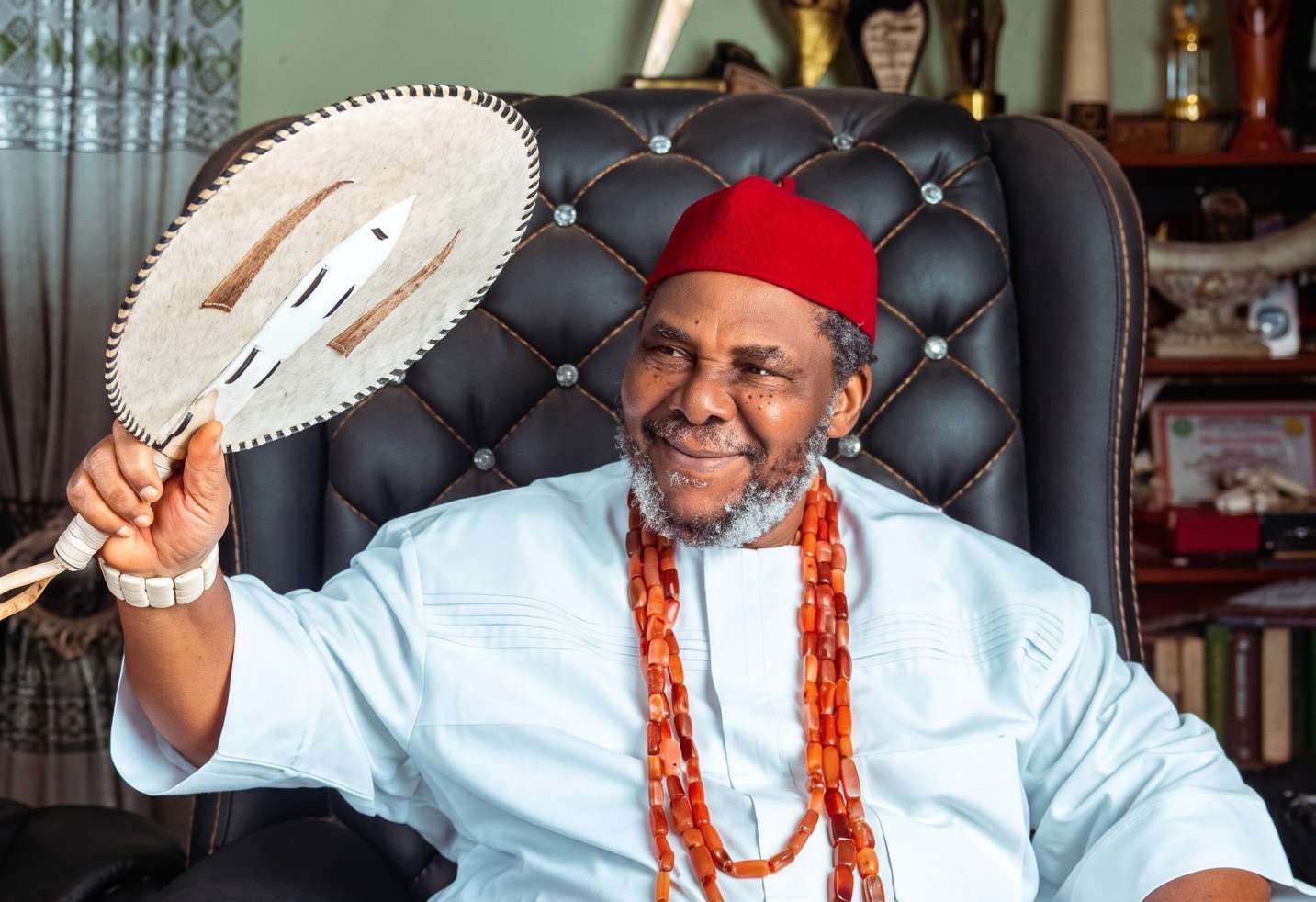

Pete Edochie’s legacy rests on something more enduring: the ability to make those worlds visible, to carry his culture into the frame, and to leave behind performances that continue to speak long after the screen has gone dark.
By Joseph Jonathan
“If God says the amount of time allocated to you on earth has finished, you can’t do anything but leave.”
Veteran Nollywood actor, Chief Pete Edochie, said these words while paying tribute to his late colleague and friend, Olu Jacobs. He spoke with the conviction of a man who understood the inevitability of death, the limits of human control, and the importance of accepting the time allotted to us. Little did he or any of us know how soon those words would return to us in a different, more painful context.
Now, Edochie himself has left. And the words he offered in mourning another great actor have become an unsettling reminder of the brevity of life, even for those whose presence on screen has always felt larger than life.
For decades, Edochie’s voice, face, and performances occupied a distinctive place in Nigerian popular culture. To many, he was Ebubedike, the name reportedly given to him by Chinua Achebe following his portrayal of Okonkwo in Things Fall Apart (1985). Others called him Ogadagidi or the Lion of Africa. To generations of viewers, however, he was simply Okonkwo: the actor whose interpretation of Achebe’s tragic warrior became one of the most enduring performances in Nigerian television history.
Yet, Pete Edochie was never merely the sum of his characters or nicknames. Beneath the commanding presence, the familiar image of the patriarch, and the proverbs that became part of his cultural currency was a performer whose career intersected with the development of Nigerian television, the emergence of Nollywood, and the continued visibility of Igbo language and culture in popular entertainment.
Before Nollywood, There Was Okonkwo
Long before the home-video boom made Nollywood a household name, Pete Edochie had already established himself as a formidable presence on Nigerian television. His portrayal of Okonkwo in the Nigerian Television Authority’s adaptation of Chinua Achebe’s Things Fall Apart remains one of the most consequential performances of his career.
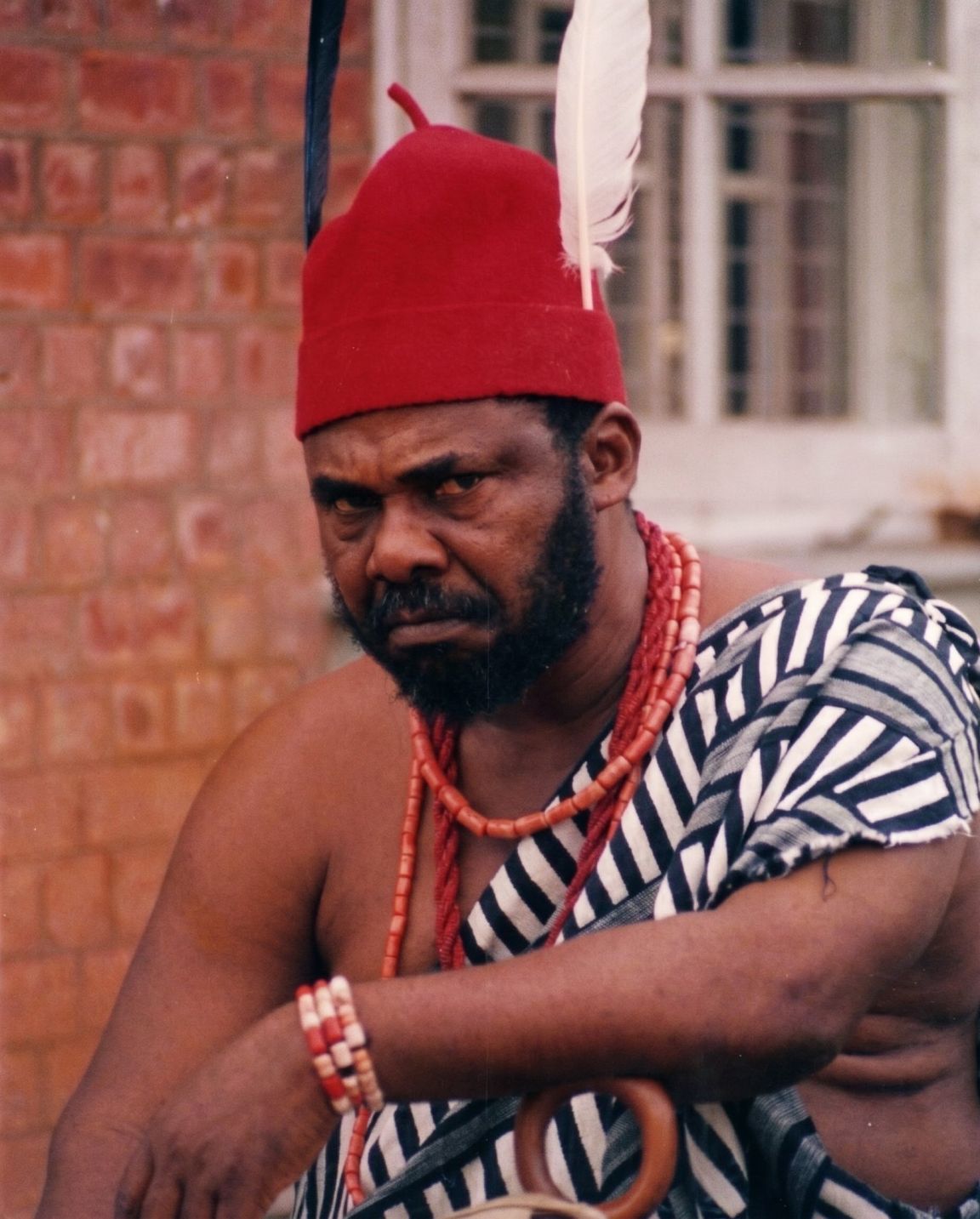
Achebe’s novel, published in 1958, follows Okonkwo, a respected warrior in Umuofia whose ambition, fear of weakness, rigid understanding of masculinity, and attachment to tradition become entangled with the changes brought by colonialism and Christianity. He is a character of contradictions: formidable yet vulnerable, respected yet deeply flawed, determined to preserve his standing yet unable to adapt to a world changing around him.
Edochie understood the weight of those contradictions. His interpretation did not reduce Okonkwo to a caricature of strength or anger. There was pride in his bearing, severity in his disposition, and a palpable anxiety beneath the authority he projected. The character’s tragedy was not simply that the world around him changed, but that he could not reconcile that change with the rigid ideals through which he understood himself.
The performance brought Edochie national recognition and international attention. The BBC reportedly came to Nigeria to interview him following the production, while Achebe reportedly praised his interpretation as one that captured the character to his satisfaction. The novelist would continue calling him Okonkwo, and reportedly gave him the name Ebubedike, a recognition that speaks to the extraordinary relationship between the actor, the character, and the writer whose work he brought to life.
There is something remarkable about an actor becoming so closely associated with a character from one of African literature’s most influential novels. But Edochie did not merely give Okonkwo a face. He gave the character a voice, a physical presence, and an emotional texture that audiences could encounter outside the pages of Achebe’s novel. That performance would become the foundation upon which a remarkable screen career was built. And when Edochie eventually moved from television into film, he did so with a recognition that many emerging actors in the industry could only dream of.
In 1995, he appeared in Ikuku, also known as Ikuku: Hurricane, a film directed by Nkem Owoh and Zeb Ejiro and written and produced by Owoh. This was his first movie role following Things Fall Apart. The production, which featured several familiar faces of Nigerian film including Owoh, Zack Orji, Sam Loco Efe, and Chiwetalu Agu, marked an important transition in his career from television performer to film actor.
It was also a transition taking place within a Nigerian film industry that was beginning to find new possibilities in video-film production and distribution. Edochie entered this emerging space not as an unknown newcomer but as an actor whose performance in Things Fall Apart had already travelled beyond Nigeria’s borders. His arrival in the film industry carried with it the weight of an established reputation, even as Nollywood itself was still taking shape.
The distinction matters. Edochie was not simply among the actors who helped Nollywood grow. His career had begun before the industry as it is now understood existed, and his transition into it connected an earlier era of Nigerian television drama with the new possibilities of the home-video revolution. In this sense, Pete Edochie’s career was never confined to one industry or one generation of filmmaking. He stood at the intersection of Nigerian television’s earlier ambitions and Nollywood’s emerging cultural and commercial force.
A Voice That Carried More Than Dialogue
Part of what made Pete Edochie distinctive was the manner in which he spoke. His deep, measured voice, deliberate delivery, and ability to command a scene without rushing through dialogue gave his performances a particular authority. Even when a character was not speaking, Edochie could communicate through his posture, expression, and the weight with which he occupied a room.
His years in broadcasting undoubtedly shaped his relationship with language. Edochie joined the Eastern Nigerian Broadcasting Corporation in 1967 and gradually rose through the profession, becoming Director of Programmes at the Anambra Broadcasting Service and serving in senior management positions. Before the Nigerian film industry made him a household name, he had already spent years working in a profession where voice, timing, articulation, and the ability to hold an audience mattered.
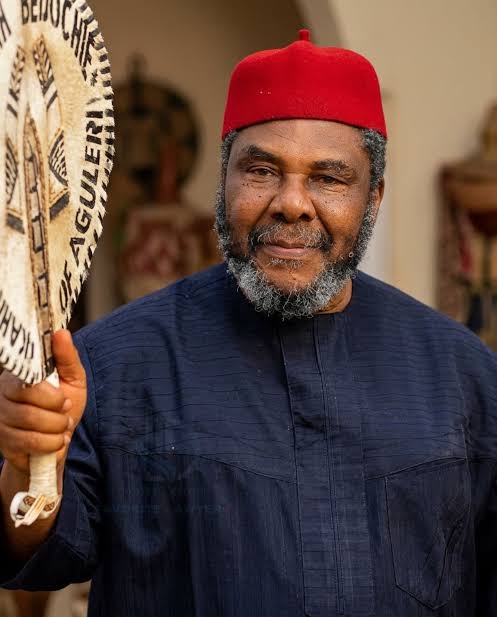
But his command of language was not restricted to English. For all his eloquence in the colonial language, Edochie never appeared to regard his native Igbo as something to be relegated to private conversations or cultural ceremonies. He spoke it proudly, frequently incorporated its expressions and proverbs into his performances, and remained visibly connected to the cultural traditions that informed his identity.
This was especially significant in an entertainment industry where English often served as the principal language of mainstream recognition. Edochie demonstrated that fluency in English and pride in one’s indigenous language were not mutually exclusive. He could articulate himself in English with considerable sophistication and, in the same breath, express himself in Igbo without apology or self-consciousness.
His proverbs became a defining feature of his screen persona. They were not simply decorative expressions inserted into dialogue to make a character appear wise. In many instances, they served as tools of persuasion, admonition, confrontation, and storytelling, drawing from a tradition in which language carries the accumulated wisdom, humour, and experiences of a community.
Edochie understood the cultural significance of these expressions and frequently made them part of his performances. In time, they escaped the films that introduced them, circulating through television clips, social media videos, memes, and everyday conversations. His words found new audiences, even among people who had never watched the productions from which they originated.
In an era when cultural expressions are often stripped of their context and repackaged for entertainment, Edochie’s enduring relationship with the Igbo language and tradition made him an important cultural presence. He did not simply play characters who spoke in proverbs. He helped make those expressions part of contemporary popular culture.
The Elder Nollywood Kept Returning To
As Nollywood developed from its home-video beginnings into a more expansive film industry, Edochie became one of its most recognisable performers. His filmography includes Igodo (1999), Rituals (1997), Billionaire’s Club (2003), Dogs Meeting (2004) and Lionheart (2018), among numerous other productions. Across these films, he frequently occupied roles involving power, wealth, kingship, family, and the complicated responsibilities that accompany authority.
The industry repeatedly returned to him for the patriarch, the traditional ruler, the wealthy businessman, and the man whose approval or disapproval could determine the direction of a family. His physical stature, voice, and natural authority made him particularly suited to these roles, and his presence often gave a film’s central conflicts a commanding figure around whom they could revolve.
In Igodo, his presence within a story rooted in communal survival and traditional belief placed him within the kind of cultural and historical storytelling that Nollywood has frequently drawn upon. In Rituals, he featured in a film exploring the intersection of ambition, power, occult practices, and the moral consequences of pursuing influence. In Genevieve Nnaji’s Lionheart, he played Chief Ernest Obiagu, a wealthy businessman whose family and company become central to the film’s exploration of responsibility, gender, inheritance, and the Nigerian business landscape.
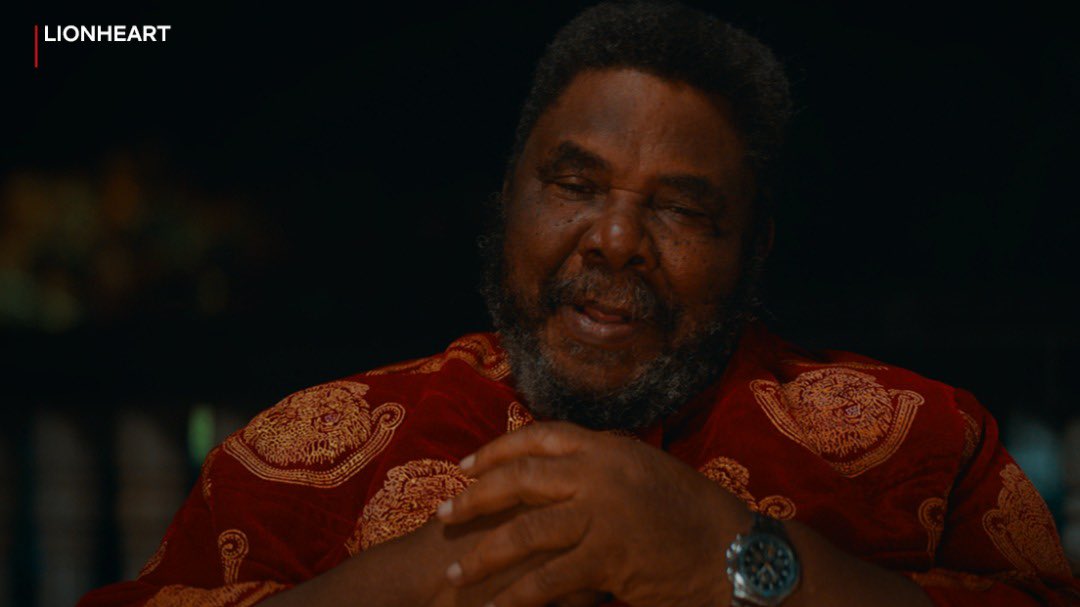
Yet Edochie’s career also illustrates the peculiar burden of an actor becoming exceptionally good at a particular kind of role. His association with kings, fathers, chiefs, and patriarchs was so strong that it sometimes threatened to become a shorthand for his artistry. Audiences knew what his presence could bring to a film, and filmmakers repeatedly capitalised on that familiarity.
But familiarity should not be mistaken for limitation. The fact that Edochie became a defining presence in these roles speaks to his ability to make authority compelling on screen. He could communicate the privileges, anxieties, contradictions, and responsibilities of power through performances that audiences immediately understood.


His characters could be admirable, oppressive, generous, manipulative, wise, or deeply flawed. The authority he brought to the screen was not always moral authority. Sometimes, it was the very power that other characters needed to challenge. And that distinction matters. Edochie’s legacy is not simply that he played men audiences respected. It is that he became an actor audiences could believe in when a story needed a man whose presence carried consequence.
A Culture He Never Left Behind
Pete Edochie’s relationship with Igbo culture extended beyond his film roles. His public identity was deeply tied to his heritage, and he frequently spoke about the importance of preserving African traditions, indigenous knowledge, language, and cultural values.
He understood that culture was not simply something to perform for an audience. It was a living inheritance, one that required people to practise, speak, remember, and transmit it. His attachment to the Igbo language was particularly striking because it remained consistent despite his considerable command of English and his prominence within Nigeria’s predominantly English-speaking entertainment industry.
His cultural identity was not a costume he wore when playing an Igwe or a traditional father. It was part of the person audiences encountered in interviews, public appearances, and conversations about Nigerian society. He could speak about the film industry, contemporary life, and cultural questions while drawing from the language and traditions that shaped his worldview.
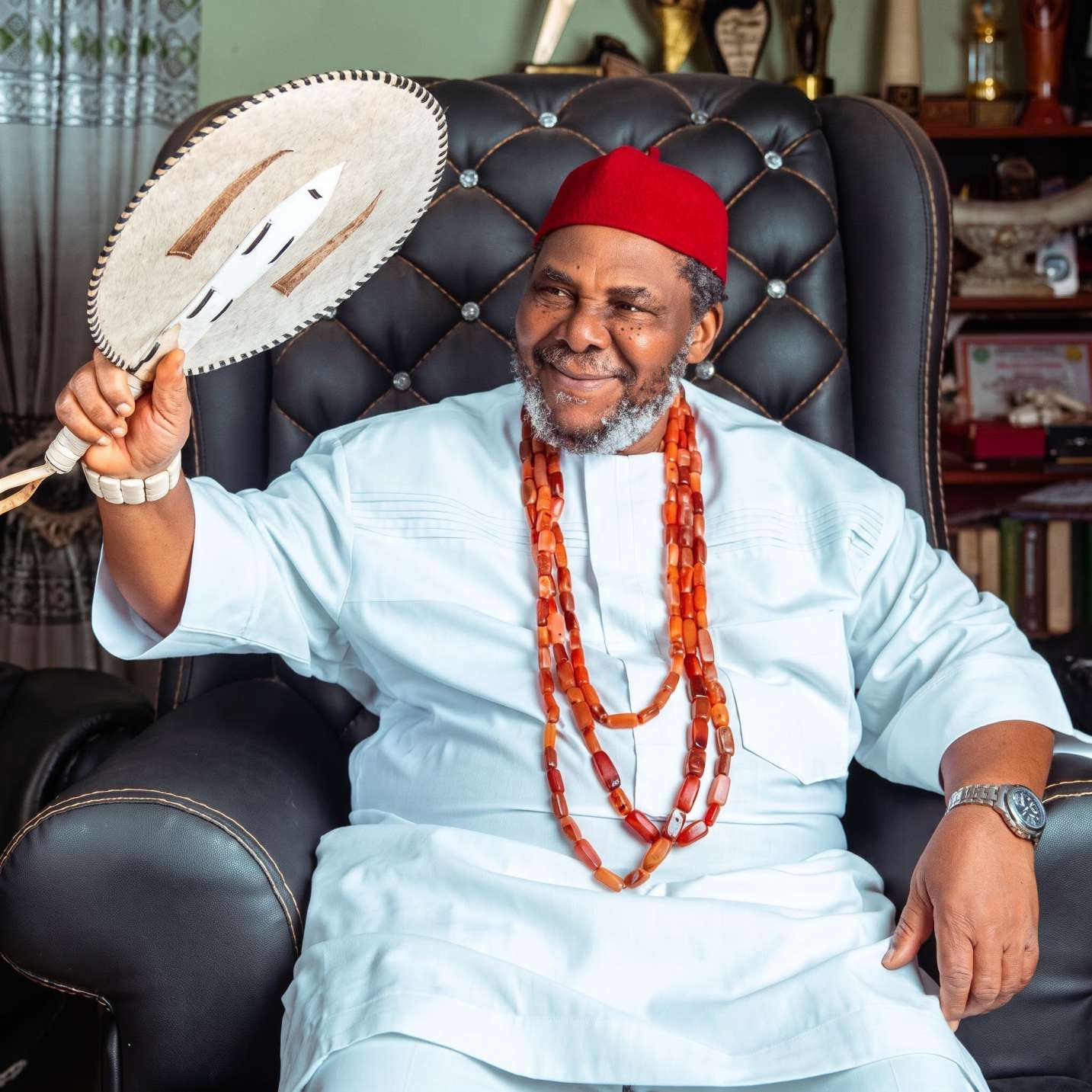
In many ways, the characters he played reinforced this public identity, but the relationship was not entirely dependent on the films. Edochie had become a cultural figure whose visibility extended beyond acting. He was recognised as a custodian of tradition, a public voice associated with Igbo heritage, and a familiar presence who could bring cultural expressions to audiences across Nigeria and beyond.
His popularity also revealed something about the place indigenous culture occupied in Nigerian popular entertainment. Audiences did not have to abandon contemporary entertainment to encounter traditional expressions. Through Edochie, proverbs, Igbo names, cultural references, and the language of elders could exist alongside modern filmmaking, celebrity culture, and digital media. He became a bridge between generations not because he represented an unchanging past, but because his presence made aspects of that past recognisable and relevant within the present.
Beyond the Titles, Beyond the Frame
Pete Edochie’s career was recognised with several honours, including the Member of the Order of the Niger (MON), conferred in 2003, and the Africa Magic Viewers’ Choice Awards Industry Merit Award. He also received lifetime achievement recognition for his contributions to African cinema.
But the most enduring measure of his legacy may be found in the cultural familiarity he cultivated over decades. His voice is recognisable. His expressions have been reproduced countless times. His proverbs circulate far beyond the films in which he delivered them. His name evokes a particular kind of screen presence, and his portrayal of Okonkwo remains a reference point in conversations about Nigerian television and African literary adaptations.
There is a tendency to celebrate actors of his generation by describing them as institutions. The phrase is often deserved, but it can also flatten the people it is meant to honour, reducing their careers to a list of accomplishments and their personalities to a collection of familiar traits.
Pete Edochie was an institution, but he was also an actor whose career began in broadcasting, whose breakthrough came through a landmark literary adaptation, whose work helped shape Nollywood’s representation of authority and family, and whose cultural identity remained visible throughout his public life.
He was Ebubedike, the name reportedly bestowed on him by Achebe. He was Ogadagidi, the Lion of Africa, and Ononenyi. He was Okonkwo to generations who encountered Achebe’s character through his performance. But none of these names could contain the entirety of the man or his contribution. The stories he told, the language he carried, the characters he inhabited, and the generations of audiences who encountered him through television and film will remain part of the cultural memory he helped shape.
Pete Edochie spent much of his career inhabiting men whose authority came from the worlds they occupied. His own legacy, however, rests on something more enduring: the ability to make those worlds visible, to carry his culture into the frame, and to leave behind performances that continue to speak long after the screen has gone dark.
Joseph Jonathan is a historian who seeks to understand how film shapes our cultural identity as a people. He believes that history is more about the future than the past. When he’s not writing about film, you can catch him listening to music or discussing politics. He tweets @Chukwu2big.