



Within the screening rooms, the festival explored Africa’s tense history, systemic drawbacks, and traditional spirituality.
By Vivian Nneka Nwajiaku
The iREPRESENT International Documentary Film Festival (iREP), convened by the Foundation for the Promotion of Documentary Films in Africa (FPDFA), celebrated its 15th anniversary edition in partnership with Ecobank Nigeria, at the Ecobank PanAfrican Centre in Lagos—an interesting venue which hosted the +234 Art Fair from 5th to 8th March 2026, only a little over a week before iREP’s run from 18th to 22nd March.

Outside the iREP screening rooms, the corridors and open halls were lined with beautiful African art pieces and photographs, residues from the fair. And within the screening rooms, the festival explored Africa’s tense history, systemic drawbacks, and traditional spirituality.
Set against a reawakened African cultural renaissance—as the conveners put it—and centred around “Transformation” as the theme, this year’s edition sought to examine the transformative power of documentary filmmaking in Africa over the past 15 years. In line with this vision, there were several throwback documentaries alongside more recent films from across the continent.
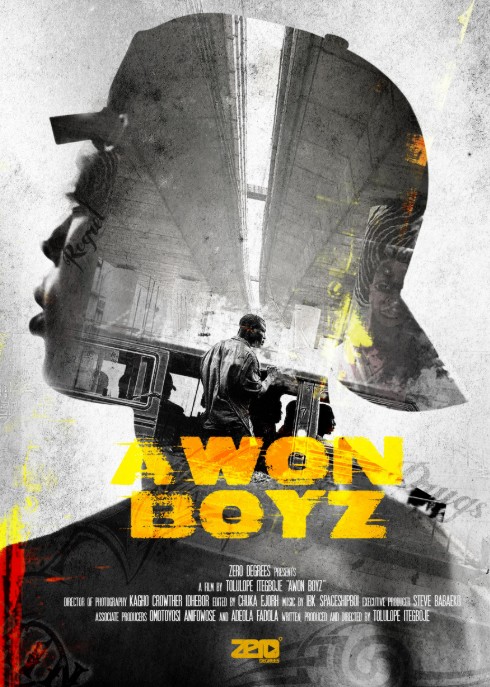
Awon Boyz
Tolu Itegboje’s Awon Boyz (2019) returns to iREP following its earlier screening at iRep 2019. The documentary short runs for just about 37 minutes, but it feels much longer in light of how much it accomplishes in capturing the lives of its captivating subjects. Itegboje mounts a camera in front of about eight “area boys”, men who live and hustle on the streets of Lagos, across Oshodi, Opebi, and the New Afrika Shrine in Ikeja.
Area boys are known for the rough lives they live and the danger they pose, and even Itegboje had initially set out (as he noted in a post-screening Q&A) to understand the power that they wield around Lagos. However, Itegboje ultimately takes a different, more sensitive approach, arriving at a documentary that seeks to understand these men, to humanise them but not to absolve them of their sins.
Awon Boyz frames them as victims of circumstances rooted largely in governmental and familial failures. And while the documentary acknowledges their often lifelong financial struggles, it is less interested in their deficiencies and more in their happiness and their capabilities—as fathers and husbands, and as artists and businessmen, whether engaged in acceptable ventures or the unsavoury kinds. These men who have been welcomed by the streets have made the streets their home, revelling in the freedom it affords them.
The subjects of Awon Boyz are gritty, with a startling sense of self-awareness, and some of them are excellent storytellers. The best parts of the film are the moments where they tell their stories: of sleeping on the street for the first time and getting robbed; of being on the receiving end of vengeance; of meeting and marrying their wives; of the birth of their children.
In one particularly devastating story—narrated casually but with remarkable flair—one area boy accidentally kills another, his friend, over a piece of cabbage in a wrap of suya. Other area boys pursue justice, handing him over to the police. In prison, his pain and regret push him to the brink, with dire consequences. Even these men, whom we never meet in the documentary, earn our empathy. How much more the ones who we follow as they strive for better lives for their children?
It is a tad romanticised, but Awon Boyz makes for a rather interesting watch.
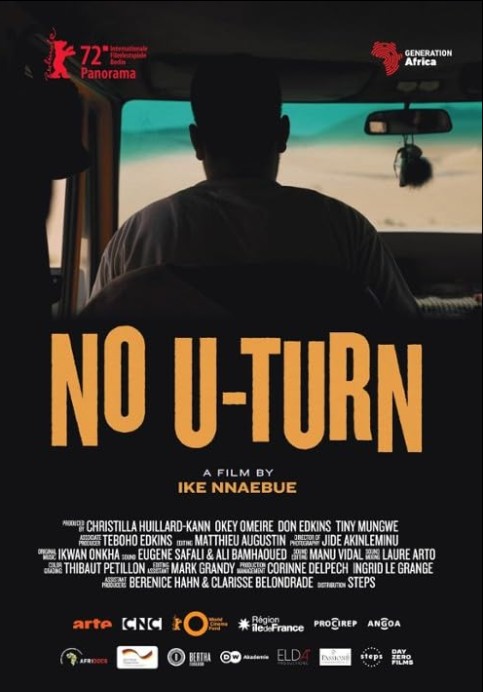
No U-Turn
When Ike Nnaebue was a young man finding himself after an unsuccessful period under the Igbo apprenticeship system, he set out to Europe from Lagos, travelling across Africa by road and hoping to cross the sea from Morocco to Italy. He eventually took a detour halfway through. Two decades later, however, he would re-attempt the journey as a global pandemic breaks out, capturing it on camera in the form of his poignant debut documentary feature, No U-Turn (2022), which received a Documentary Special Mention at the 2022 Berlinale.
On Nnaebue’s journey, he encounters all kinds of migrants who have left home for reasons ranging from genocide and violent conflict to a desperation to provide for their families. For some, like Nnaebue on his first attempt, it is a journey tied closely to an identity crisis and the search for self. And like Nnaebue—whose first journey to Europe came to a halt when, in Bamako, a stranger encouraged him to try The Gambia, where he would eventually restart his life, leading to a career in filmmaking—some do find identity on the way.
Many of the people he meets on the road are women, and he emphasises their perspectives. Nnebue reflects on how rare it was in his day to see women on these routes, how rampant it has now become, and how much more perilous the already precarious journey is for women who are also subject to sexual violence and gender-based mistreatments, in addition to all the racism and other exploitations that these adventurers risk.
In one sequence which Nnaebue observes, the risk of human trafficking—of which women are the primary victims—becomes glaring as a woman travelling with younger women is continuously accosted by fellow travellers who suspect her of trafficking. Unlike Nnaebue and many other travellers who voluntarily embark on this trip in search of greener pastures, too many women, including underage girls, are taken involuntarily or with consent obtained by fraud or deceit.
Throughout its 94 minutes, No U-Turn remains vibrant and fresh as every sequence presents a new chapter in a new setting and with new characters—other migrants, including those who have taken a detour and built lives in other African countries that they have become comfortable in, and those who remain willing to take the risk to cross the sea into Europe.
“That’s why we have the paddle,” one woman says to Nnaebue in Morocco, when he raises his concerns about the possibility of their boat capsizing. She and her friend study the water via a mobile app, trying to understand the waves and tides. As they visit the edge of the sea to strategise, it’s easy to become overcome with a sense of dread. Their fear is palpable, despite their remarkable strength of mind and their excitement about the prospect of making it into Spain.
We may never know whether they made it, but we hope their story is not similar to that opening sequence in Yassine Fennane’s The Ants (Les Fourmis) (2025), where a similar journey ends with a capsized ship, one dead woman, and a second woman who will eventually return to her home country after a dehumanising experience in Morocco.
Awani
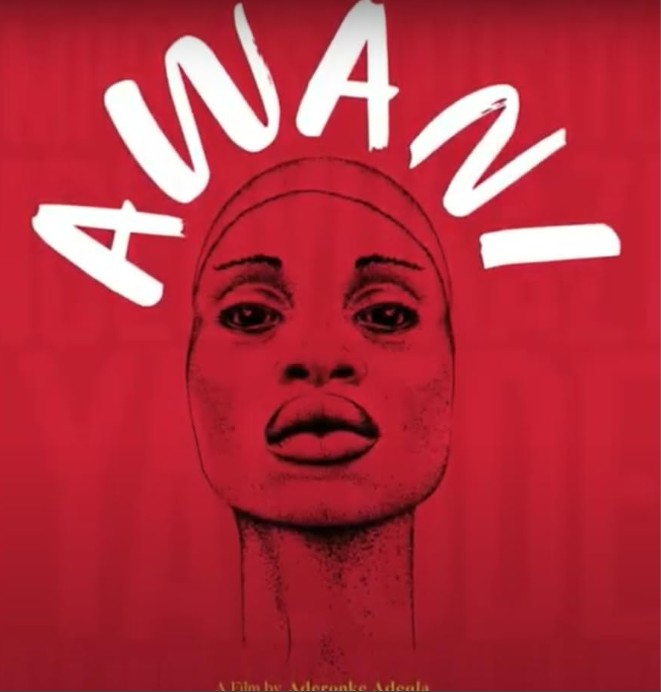
Awani: A Colonial History of Women (2019), Aderonke Adeola’s 38-minute documentary short, hurriedly traces Nigeria’s history of gender-based discrimination and violence from precolonial times to the colonial era women’s revolts—the 1929 Aba Women’s Revolt, the 1947 Abeokuta Women’s Revolt, and the involvement of the wives of the coal miners in the Iva Valley Colliery protests that culminated in the Enugu Colliery Massacre in 1949—before extending into post-colonial societal opposition to gender equality. It also attempts to track how religion helped establish the patriarchal systems that now shape various Nigerian cultures.
To chart this history and support the documentary’s arguments, Adeola enlists women’s rights advocates, historians, and journalists, from Dr Joe Okei-Odumakin, Ifeoma Fafunwa, and Kadaria Ahmed, to Minna Salami, Kemi DaSilva Ibru, and Ed Keazor. Their contributions are supported with archival footage, including video clips referencing the 2014 Chibok Schoolgirls Kidnapping and the Nigerian Senate’s rejection of the Gender and Equal Opportunities Bill in 2015.
As a crash course in already documented facts and events, merged with familiar opinions and commentary, Awani has its value. But it offers little beyond that. Perhaps, the most affecting segment of the documentary arrives towards the end, where young female students share their thoughts on and experiences with gender-based discrimination and violence. Even then, Awani registers more as an academic exercise than an evocative work.
Double Minority
When the Africa Movie Academy Awards (AMAA) announced its 2025 nominations, it was surprising to see that the powerful Mothers of Chibok (2024), directed by Joel ‘Kachi Benson, who holds Nigeria’s first and only documentary Emmy (for the Disney original documentary, Madu (2024)), did not make the cut. Instead, Nigeria’s sole nominee was Double Minority (2025), which, understandably, sparked curiosity—and expectations—for the political documentary, which also premiered alongside Mothers of Chibok at iREP 2025.
Directed by Nigerian journalist and media entrepreneur Kadaria Ahmed, Double Minority follows nine female politicians—Senator Natasha Akpoti-Uduaghan, Senator Ireti Kingibe, Hon. Nnenna Elendu-Ukeje, Hon. Munira Suleiman Tanimu, Simi Olushola, Adeola Azeez, Hawwah Gambo, Joyce Daniels, and Khadija Abdullahi-Iya—making their mark in Nigeria’s political landscape, where women account for less than five percent of representation.

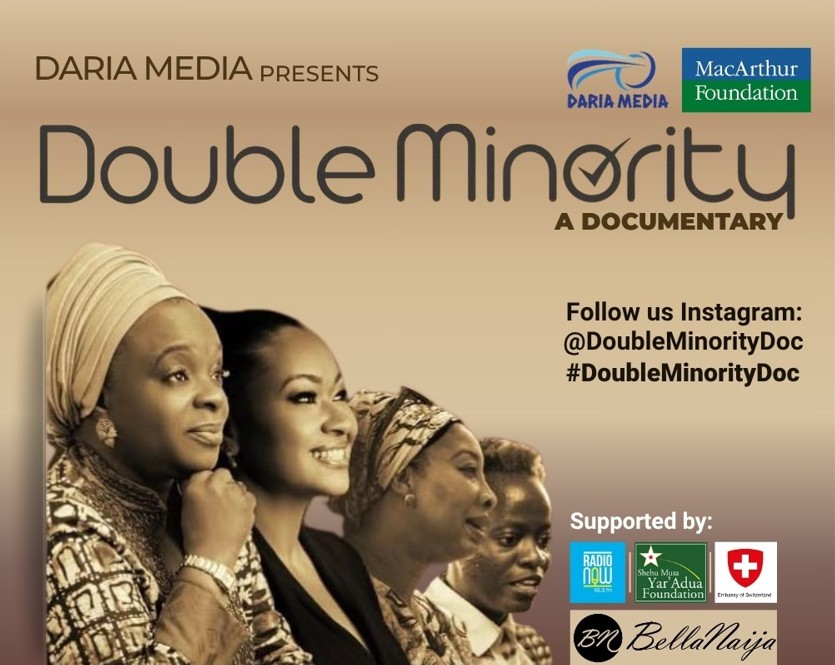
A 90-minute documentary with a promise of a follow-up to be released in the near future, Double Minority places these women before the camera, giving them a platform to recall their backgrounds, their journey into politics, and, for some of them, their gender advocacy and empowerment programmes. Backed by their families, campaign colleagues, and supporters, who also get the opportunity to speak on their behalf, these women relentlessly push against systemic barriers and pursue political office in spite of misogynistic discrimination, cultural limitations, and targeted political violence.
Through their stories and perspectives, Ahmed (who voices the narration) explores the fundamental challenges that perpetuate the minoritisation of women in politics: financial inequalities enforced by patriarchal systems; the weaponisation of poverty; the institutionalisation of godfatherism; and the normalisation of violence and harassment, both physical and sexual.
It may not be as evocative or as technically accomplished as Mothers of Chibok, but Double Minority is an important, insightful, and provocative work. It also carries an added somberness in its dedication to the memory of Simi Olushola, who sadly passed away in 2024. Ultimately, what matters most is that both documentaries have their place in championing the stories of women across age, social class, and circumstance.
Afterlife
“The embodiment of the black man has been altered,” says Segun Adefila, theatre practitioner and Lead Masquerade of the Crown Troupe of Africa, in another iREP returnee, Afterlife (2022), where Jubilian Anikazinma Ngaruwa, a documentary filmmaker and National Geographic Explorer, goes in search of traditional identity and spirituality.
From a young Ifa priestess and a young African traditional religion convert to an old Bori priest in Kano, Nigeria, where Bori religious leaders have been chased out or live in hiding, and from scenes of Ifa initiation to Bori spiritual rituals, Ngaruwa acknowledges and celebrates traditional religions that have long been demonised across the country.
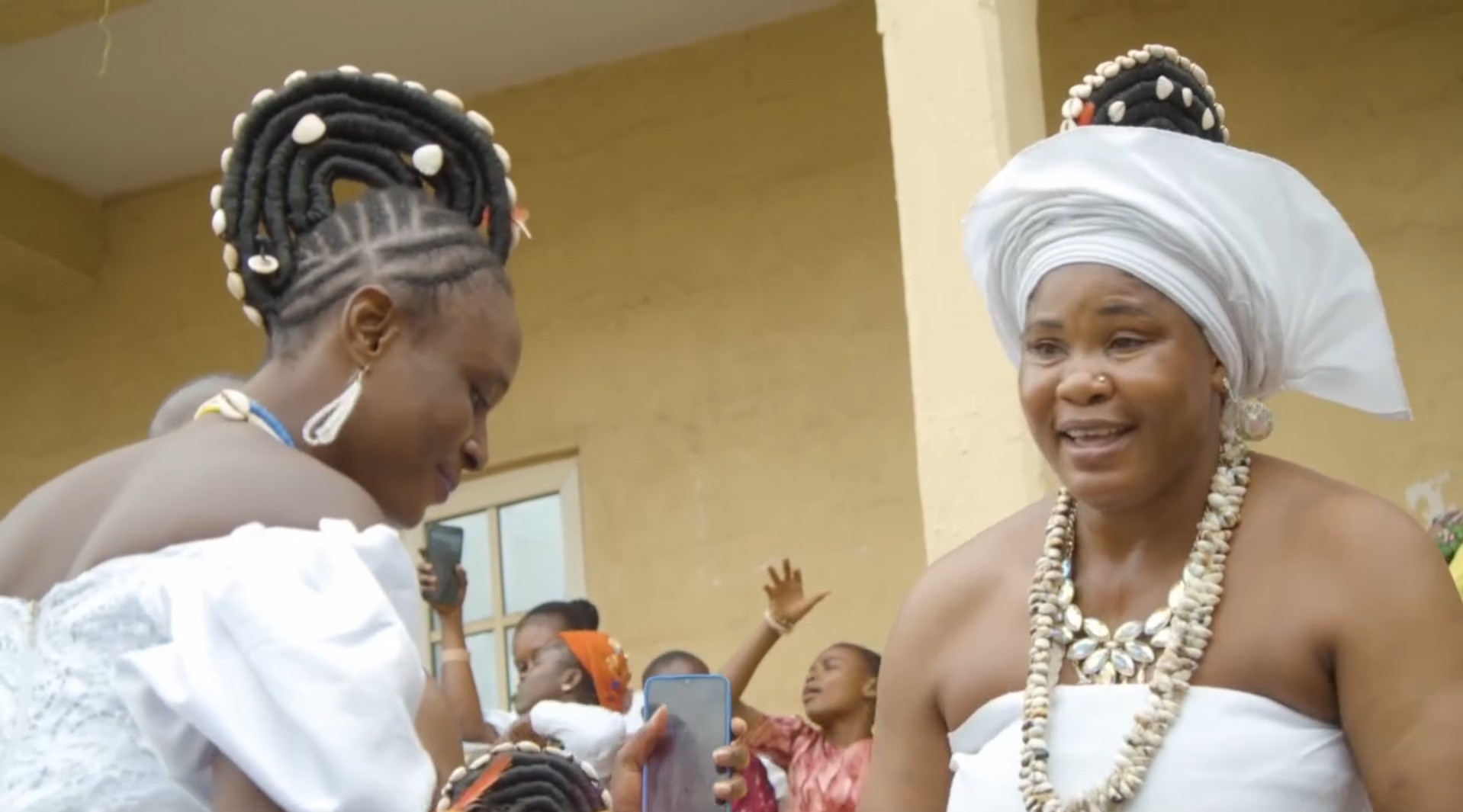
Afterlife records the road to reconversion for some of the adherents of these religions, and how worshippers incorporate the tenets of their religions into their daily lives—as followers of mainstream religions do—despite stiff societal opposition. The film also briefly explores the place of music and dance in African spirituality, as communication with the spirits and with the environment.
At the very least, Afterlife is admirable and timely, especially in a period marked by widespread identity crises and the reclamation of African identity. But its approach remains largely surface-level, never fully engaging with the depths of African spirituality. Perhaps, this is the inevitable result of attempting to distil the essence of ancient spiritual systems, as practised in contemporary times across three geopolitical zones of a multidiverse country like Nigeria, into a 30-minute runtime.
Isese
Segun Adefila’s musings on African spirituality continue in Isese: The Essence of Yoruba Spirituality (2026), where he, as director, collates the thoughts of other traditionalists, from the Ooni of Ife to Seun Kuti, including the perspectives of diasporan Ifa worshippers.
Isese attempts to offer a philosophical understanding of the Yoruba traditional religious and spiritual belief system, as well as insights into the compromises that adherents have to make to survive in a world that demands their suppression, and the ongoing evolution of the religion to adapt to modern life.
As with Afterlife, however, Isese is unable to engage beyond the surface so as to make for a truly in-depth exploration of African spirituality, even at 73 minutes.
Vivian Nneka Nwajiaku is a writer and film critic writing from Lagos. She has a master’s degree in law but spends most of her time consuming, studying and discussing film and TV. She’s particularly concerned about what art has to say about society’s relationship with women. Connect with her on X @Nneka_Viv