


“I wanted to explore how much progress can happen within three lifetimes, but also how regressive society can remain, even in the face of what we consider progress. We often assume that each generation automatically inherits a better reality than the one before it, but that isn’t always the case.” – Gold Gerry
By Vivian Nneka Nwajiaku
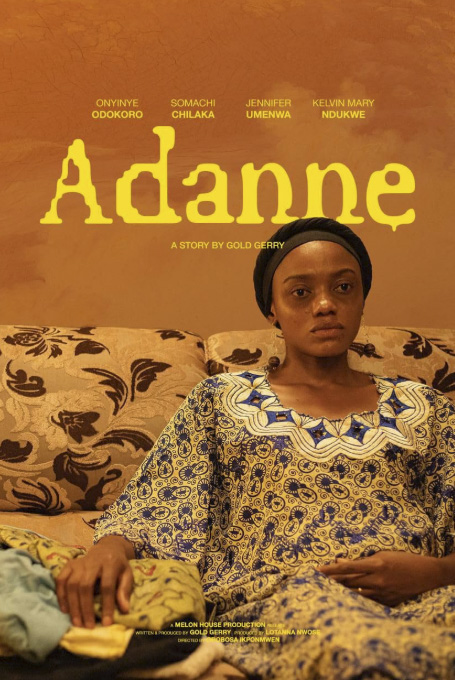
A recurring theme in African cinema is the portrayal of women navigating critical phases of their lives within cultures and societies that dictate how they should live. Nigerian director Orobosa Ikponmwen joins that canon with Adanne (2026), a social drama that follows three generations of Igbo women navigating a patriarchal society in which a woman’s worth is often measured by marriage and male children are the cultural preference.
The feature screenwriting and producing debut of Gold Gerry, who co-produces with Lotanna Nwose—also making his debut feature—Adanne explores mother-daughter relationships and how mothers’ experiences of marriage and their relationships with men and the larger society can shape how their daughters approach womanhood and relationships. The film stars Onyinye Odokoro, Somachi Chilaka, and Jennifer Umenwa in the central roles, alongside Kelvinmary Ndukwe and Martins Iwute.
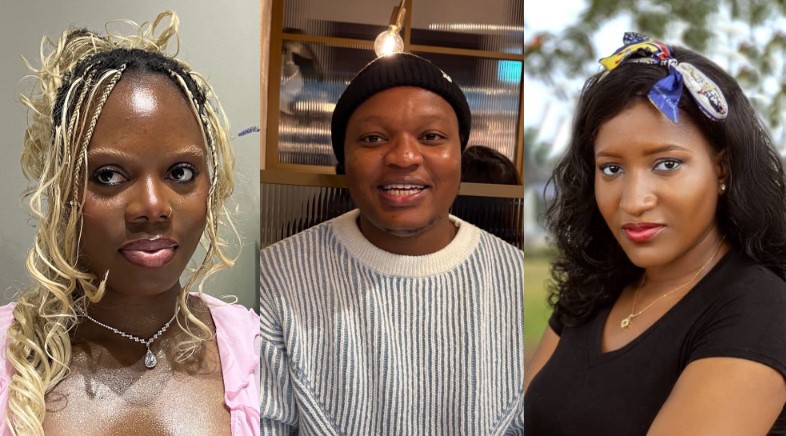
In this interview ahead of the film’s screening at the Africa International Film Festival on 3rd November 2026, Orobosa Ikponmwen, Gold Gerry, and Lotanna Nwose speak to Afrocritik about making Adanne, the complexities of mother-daughter relationships, and their plans for distribution.
What inspired this story, and why did you choose to explore these issues through the experiences of three generations of the same family?
Gerry: The current climate of the world, and the constant reduction of women’s lives, identities and achievements to marriage and motherhood, made this story particularly important for me to tell. It was, and still is, something I feel strongly about. I wanted to explore how much progress can happen within three lifetimes, but also how regressive society can remain, even in the face of what we consider progress. We often assume that each generation automatically inherits a better reality than the one before it, but that isn’t always the case.
Being Igbo myself, I also felt it was important to highlight the lived experiences of girls born into families where their gender can determine how they are treated. And God forbid you’re the firstborn daughter! The expectations, pressures and little comments often start from childhood. There is a very stark juxtaposition between the realities of a boy and a girl growing up in the same household. Sometimes, the world doesn’t even have to be unkind to you because you experience enough of that within your own home.
I wanted to examine how these experiences shape women, what they inherit from the women before them, and what they ultimately decide to pass on.
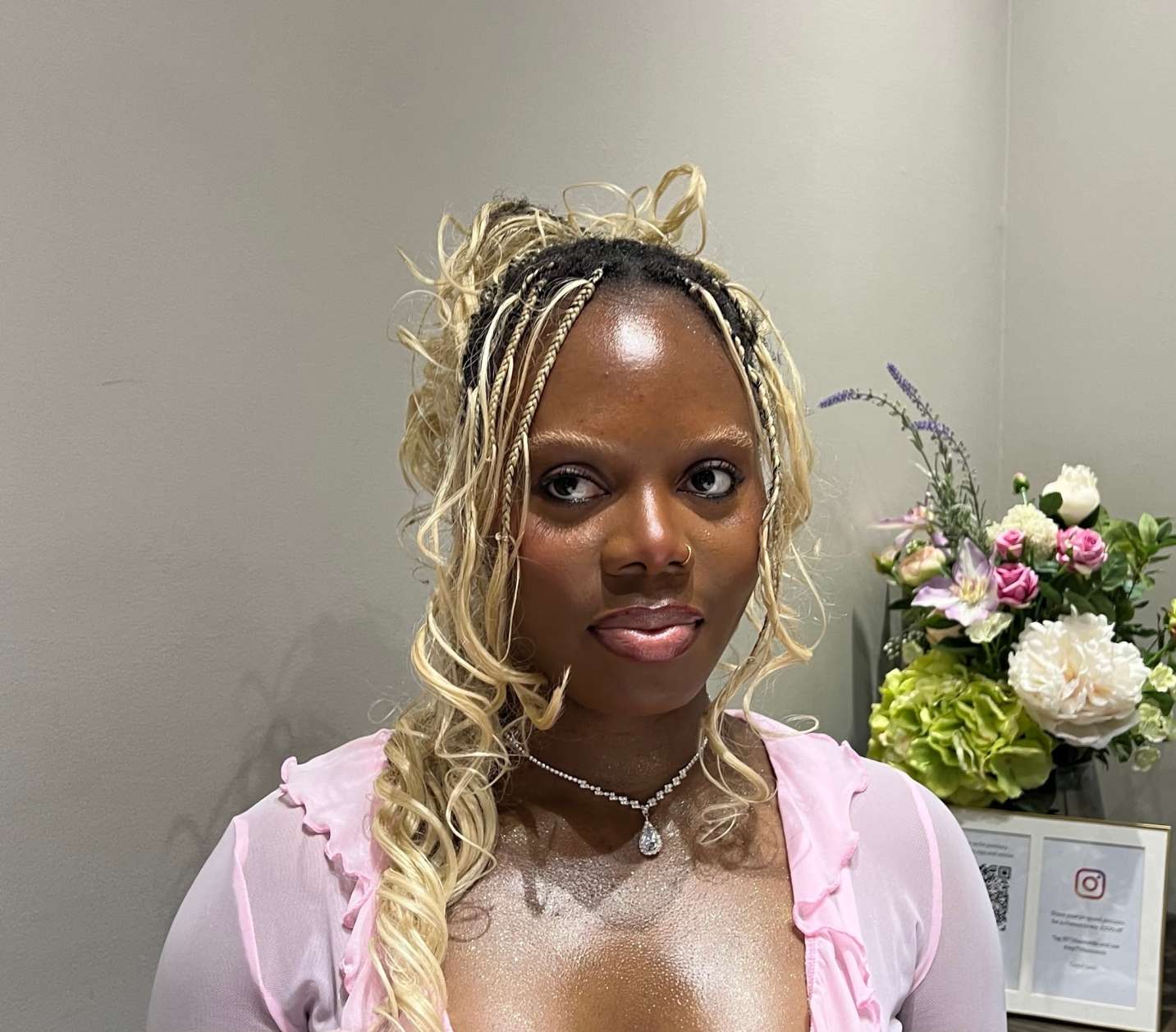
As a director joining a project whose story has already been established by its writer-producer, how did you approach interpreting the material and bringing your own creative vision to it?
Ikponmwen: I think one of the most important things a director has to learn is how to listen to a story before attempting to impose a vision on it.
Coming into Adanne, Gold had already built the foundation of the story and had a very clear understanding of the world, the characters, and what she wanted to communicate. My first responsibility was to understand that world, to understand what was at the heart of the story, and to identify the emotional experiences that held everything together.
From there, I began to explore how we could translate that into a cinematic experience. I was particularly interested in the emotional lives of the characters, what they were communicating beyond their dialogue, and how we could make the audience feel the weight of their individual experiences.
I think Gold and I approached the collaboration with a willingness to have conversations, challenge ideas, and remain open to possibilities. There were things she understood about the story that were important to preserve, and there were things I felt we could explore further through performance, visual language, and the overall treatment of the material.
Ultimately, I don’t think directing someone else’s story is about competing visions. It’s about finding the point where those visions meet and allowing the story to become something that both people recognise and believe in. For me, the goal was never to make Adanne my story at the expense of Gold’’s vision, but to bring my sensibilities to it in a way that made the story richer and more emotionally resonant.
“Adanne” literally means “mother’s first daughter”, which is particularly interesting given the film’s exploration of mother-daughter relationships. How did the title inform your thinking about the story, and vice versa, and what does the relationship between mothers and daughters mean within the film?
Gerry: “Adanne”, in its literal sense, means “mother’s first daughter”. When naming the character, I wanted something that embodied the central message and backbone of the film while tying it to the larger story we were trying to tell. Interestingly, I arrived at the name a few pages into writing the screenplay. When it came to me, it almost simplified the writing process because it gave me clarity on whose lens we were telling this story through and, more importantly, what exactly we wanted to say.
The mother-daughter relationship in Adanne is raw, emotional and, at times, heartbreaking. We get to see the closeness, the conflict, the healing and the bonds that form between mothers and daughters. Sometimes, these relationships are shaped by hardship, by things left unsaid, and by experiences that neither party necessarily knows how to navigate.
I think there’s something particularly interesting about how women can unconsciously pass down certain ideas about love, marriage and womanhood to their daughters, sometimes without realising it. Equally, there is the possibility of breaking those cycles.
The film unfolds non-linearly and is set across multiple timelines and different periods in the lives of the characters, none of which is set in our present day. What informed this storytelling approach as the writer, and how did that affect the logistics of making the film as the producer?
Gerry: I set out to write a story that honoured the women in my family, which is a large part of why we have characters existing in different periods of their lives. During development, I knew it was important for the similarities between these women to emerge despite their different circumstances and timelines. We see those parallels through their friendships, romantic relationships, aspirations and the choices they make. Although they exist in different periods, their lives are interconnected in ways that become increasingly apparent as the story unfolds.
Now, making a film with multiple timelines isn’t for the weak; I’ll tell you that for free! As a producer, it meant paying particular attention to the visual and logistical consistency of the different periods. It was essential that the audience could distinguish between these worlds while still feeling that they belonged to the same story.
Nwose: Navigating the different timelines was certainly a challenge. We had to be very deliberate about how each period would look and feel. We brought on board a strong costume, art and makeup department to help us achieve this. Finding the right people took time in itself, but it was important that we had collaborators who understood the world we were trying to create and could translate that into the smallest details on screen. The entire pre-production journey took over a year, and that gives you an idea of the level of planning, coordination and patience involved in bringing everything together.
Gerry: Having a team that understood the vision made an enormous difference. Orobosa started with a very detailed treatment, and that was my first opportunity to see the world of Adanne come alive beyond the screenplay. From Adamson Ali sourcing locations in Ibadan that could recreate the atmosphere of Eastern Nigeria, to our art director, Oma Diary, and costume designer, Elvis Uwagbenebi, everyone played an important role in building these different worlds. I’m incredibly proud of the team that came on board. It was such a thrill watching everyone interpret and bring something to a story that had lived in my head for so long.
Nwose: Beyond the logistical experience, working on Adanne has also influenced how I approach finding and developing future projects. It’s made me more grounded in the importance of telling stories that emerge from our unique experiences as Black people. There’s so much richness in our lived experiences, our cultures and the things we observe around us, and I think those are stories worth investing in and bringing to the screen.
What were the directing choices you had to make to translate that style to the screen, and were there particular challenges this presented as a director?
Ikponmwen: I would say the structure of the story definitely influenced my directing choices because, with a non-linear narrative, you’re not simply telling an audience what happened. You’re carefully deciding when they get to experience certain pieces of information and how those pieces change their understanding of the characters.
One of my biggest considerations was ensuring that, even as we moved between different timelines and different periods in the characters’ lives, the audience never lost sight of the emotional thread connecting everything.
I was also conscious of the fact that we were dealing with different periods, so it was important that each timeline had its own identity. This went beyond simply establishing that we were in a different year. It involved thinking about how the characters occupied those different periods, how their experiences had shaped them, and how that could be reflected in the performances, visual language, and the overall atmosphere of each period.
The challenge with a non-linear story is that you have to be very intentional about continuity, particularly emotional continuity. An audience might encounter a character at one point in their life before seeing the events that brought them there. As a director, you have to understand the entire emotional journey, even when the audience is experiencing it in fragments.
I also found that the structure required a great deal of communication and coordination across departments. The performances, costumes, production design, cinematography, and editing all had to work together to ensure that the different timelines felt distinct while remaining part of the same world.
But I think one of the interesting things about non-linear storytelling is that it allows an audience to discover a character rather than simply follow a sequence of events. You begin to understand people in layers. Sometimes, what you learn about their past completely changes how you interpret something you’ve already seen. That was something I found particularly exciting about Adanne.
How did you approach casting for the film, in general, but also to ensure continuity in portraying the same characters at different stages of their lives?
Nwose: Casting was led by Gold, who was very intentional about finding actors who could connect with the characters beyond simply fitting the roles. We had an intensive audition process, and you’ll notice quite a few new faces in the film. We were keen to give emerging talent an opportunity while ensuring we had the right people to bring these characters to life.
Our casting journey was interesting in itself. Kelvinmary Ndukwe was the first actor we brought on board, while Somachi Chilaka came through our audition process. Onyinye Odokoro was actually one of the last actors to be cast. Each person brought something distinct to their character, and it was important that they connected with the story beyond the demands of their individual roles.
One of our biggest considerations was ensuring continuity, especially where different actors were portraying the same character at different stages of their lives. We approached this through table reads, rehearsals and grouping cast members who shared the most scenes together. This gave the actors an opportunity to understand their relationships, explore their character dynamics and develop a shared understanding of the people they were portraying.
Ultimately, we wanted audiences to recognise the same person across different stages of their lives, despite the changes in age and the actors portraying them. Making those transitions feel organic was a collaborative effort between the cast and the wider creative team.
What have been the most important lessons from the process of developing and producing an independent Nigerian feature, and what has the experience taught you about getting original stories made and seen?
Gerry: I have so many lessons, I might as well write a book!
First, do not compromise on talent. Trying to save money by bringing the wrong people onto a project will cost you time and money you cannot get back. Secondly, if you have an idea, get stuck in. Write, experiment, make mistakes and throw things away if you have to. You only get better through practice, and sometimes you just have to start before you feel ready.
Perhaps the biggest lesson, and one I didn’t fully appreciate beforehand, is how mentally demanding the process is. Yes, my first feature film is complete and now travelling to festivals, which I’m incredibly excited about, but the work doesn’t end when you wrap production. There is an enormous amount of work that goes into positioning the film, getting it seen, building its audience and creating opportunities for it beyond the initial production.
This is Melon House Production’s first feature film, and we’re an independent company. I’m wearing multiple hats, learning on the job and figuring things out as we go. It’s been an insane exercise in character development, particularly because you’re not just doing the work privately; you’re also navigating the very public journey of putting a film into the world.

I suppose the lesson is to be prepared. It’s all exciting when you’re dreaming about making a film, but when those dreams start happening, your life can move at 360km an hour, and you have to brace yourself so you don’t get steamrolled!
Nwose: One of the biggest lessons for me has been learning to trust your story. With Adanne, we knew we had something solid. It was built on a combination of lived experiences, observations and conversations that many people could relate to. There were moments when the process was challenging, as it inevitably is with independent filmmaking, but we learned to trust the story and the reason we wanted to tell it in the first place.
Something else that stood out to me was discovering how many people connected with the story in their own way. We found a tribe of collaborators who didn’t just come on board to do a job; they understood what we were trying to communicate and brought their own experiences and perspectives to it. That made a tremendous difference to the process.
I think that’s one of the things about getting original stories made: you have to believe in what you’re creating, even before there’s an audience to validate it. You also have to find people who share that conviction and are willing to put something of themselves into bringing the vision to life.
As an independent production, we’ve had to learn and adapt along the way, but seeing the film completed and now travelling to festivals has reinforced just how important that initial belief in the story was.
With Adanne now journeying through the festival circuit, what are your plans for its eventual distribution and reaching audiences beyond the festival space?
Nwose: For us, the festival circuit is an important first step, but the ambition has always been to get Adanne in front of as many audiences as possible. We’re particularly interested in identifying screenings, film markets and distribution opportunities that can position the film for a theatrical release.
We’ve partnered with Trino Motion Pictures, who are representing the film for sales and distribution, and we’re looking forward to exploring the opportunities that partnership presents. Our immediate focus is on opening up theatrical opportunities across Nigeria, Ghana and the UK. These are important markets for us, not only because of the audiences and communities we hope to reach, but also because of the conversations we believe the film can generate within them.
Ultimately, we don’t want Adanne to have a life that begins and ends with its festival selections. We want people to experience it in cinemas, engage with its themes and take those conversations beyond the screen. The festival journey is exciting, but we’re equally focused on building a sustainable path for the film to reach its audience.
Gerry: Fortunately, my postgraduate degree in marketing has been useful in thinking about the film’s positioning, audience development and visibility. I’ve come to understand that making a good film is one part of the process; ensuring it finds the people who need to see it is another.
How does Adanne speak to women who recognise the experiences that the characters have, and what do you hope audiences take away from the film?
Ikponmwen: I think one of the things that makes Adanne particularly meaningful is that, although it is rooted in a specific cultural experience, the emotions at the centre of the story are very universal. We’re looking at three generations of Igbo women, but beyond that, we’re looking at the ways women inherit things from one another. Not just names, traditions, or cultural expectations, but also fears, sacrifices, unresolved experiences, dreams, and sometimes the consequences of choices they didn’t necessarily get to make for themselves.
I think many women will recognise something of themselves in these characters, whether it’s in their relationship with their mothers, the expectations placed on them, the tension between who they are expected to be and who they want to become, or the difficult process of finding their own sense of identity.
What I find particularly interesting is how much of women’s lives can be shaped by things that are never openly discussed. There are silences within families, things that are understood but never acknowledged, and experiences that are passed down without anyone necessarily realising it. I think the film creates room to examine some of those things.
As a filmmaker, I’m always interested in the emotional currents beneath everyday life, particularly the experiences of women that don’t always get the attention they deserve. For me, Adanne is a story about women, about family, about the things we inherit, and about the possibility of healing.
I hope women who watch Adanne feel seen, but I also hope the film creates room for reflection and conversation. I hope it encourages us to look at the women who came before us with a little more understanding, to examine what we have inherited from them, and to think about what we want to carry forward and what we need to leave behind.
Gerry: I think Adanne gives women the opportunity to see and say the quiet parts out loud. These are conversations we have with our friends, sisters and even strangers online. We talk about the expectations placed on us, the pressures of being women and the contradictions of navigating a society that often tells us who we should be.
But there’s something different about seeing those experiences reflected on screen. I hope audiences leave the film with a better understanding of themselves and the women around them. I hope they learn to extend a little more grace to one another, particularly across generations, while also recognising that understanding where certain expectations come from doesn’t mean we have to accept them.
Most importantly, I hope women feel encouraged to stand firm in their pursuit of independence and in defining their lives outside of what they’ve been told or expected to become. You are more than your marital status, more than your ability to have children, and certainly more than the expectations placed on you because you’re a woman. We are more than enough.
Ikponmwen: For audiences more broadly, I hope the film reminds us that understanding people sometimes requires us to look beyond who they are today and consider everything that has shaped them. I hope audiences leave with a deeper appreciation of the complexities of those relationships and perhaps a little more empathy for one another.
Vivian Nneka Nwajiaku is a writer and film critic writing from Lagos. She has a master’s degree in law but spends most of her time consuming, studying and discussing film and TV. She’s particularly concerned about what art has to say about society’s relationship with women. Connect with her on X @Nneka_Viv