


These essays, ultimately, may walk their respective roads but are—at the very root of their overarching concerns—in so sheer a solidarity that not even the ferment saw this spectacle of collectivism.
By Felix Eshiet
The last time the Nigerian literary community experienced a critical ferment was 2023. It was a year in the doldrums; an oil-shocked economy recovering from the throes of COVID, an immediate past venal government and the looming possibility of another getting rigged in made it a difficult year politically; more so for the masses bearing the brunt of it all, less for the rogue politicians getting mileage out of it. It followed then, asserting the preemptive fears of the people, that the presidential election that marked the year took to the pattern of the 1993 election of the Third Republic, where despite trouncing the National Republican Convention’s flagbearer Bashir Tofa, the masses’ favourite M.K.O was, by military veto, denied residence at the Aso Rock Villa despite a landslide victory at the polls. Nearly half a decade since the last poll and less than a hundred days to the next, it is still being debated who won the 2023 presidential election: INEC’s winner or the people’s?
But since one cannot draw blanks on every front, the year saw, at least, considerable literary gusto: it bore a bevvy of critical essays—first of their kind in decades—by contemporary Nigerian writers and critics alike, setting a precedent for literary discourses on the state of contemporary Nigerian literature, the primary sites of engagement being the rhetorics and praxes on the supposed death of Nigerian literature and the definitive aesthetics of Nigerian poetry.
A Principle for the New Nigerian Poetry, a 15-page essay by Kamolideen Oluwapelumi Arasi off the ferment, would go on to win the E.E. SULE/ SEVHAGE Prize for African Literary Criticism. For more context, this editorial by Afrocritik listing 18 notable essays out of Nigeria that year lists some of the essays no less as “The Debates of Fourth Generation Nigeria Poetry” curated by the then editors at Afapinen.
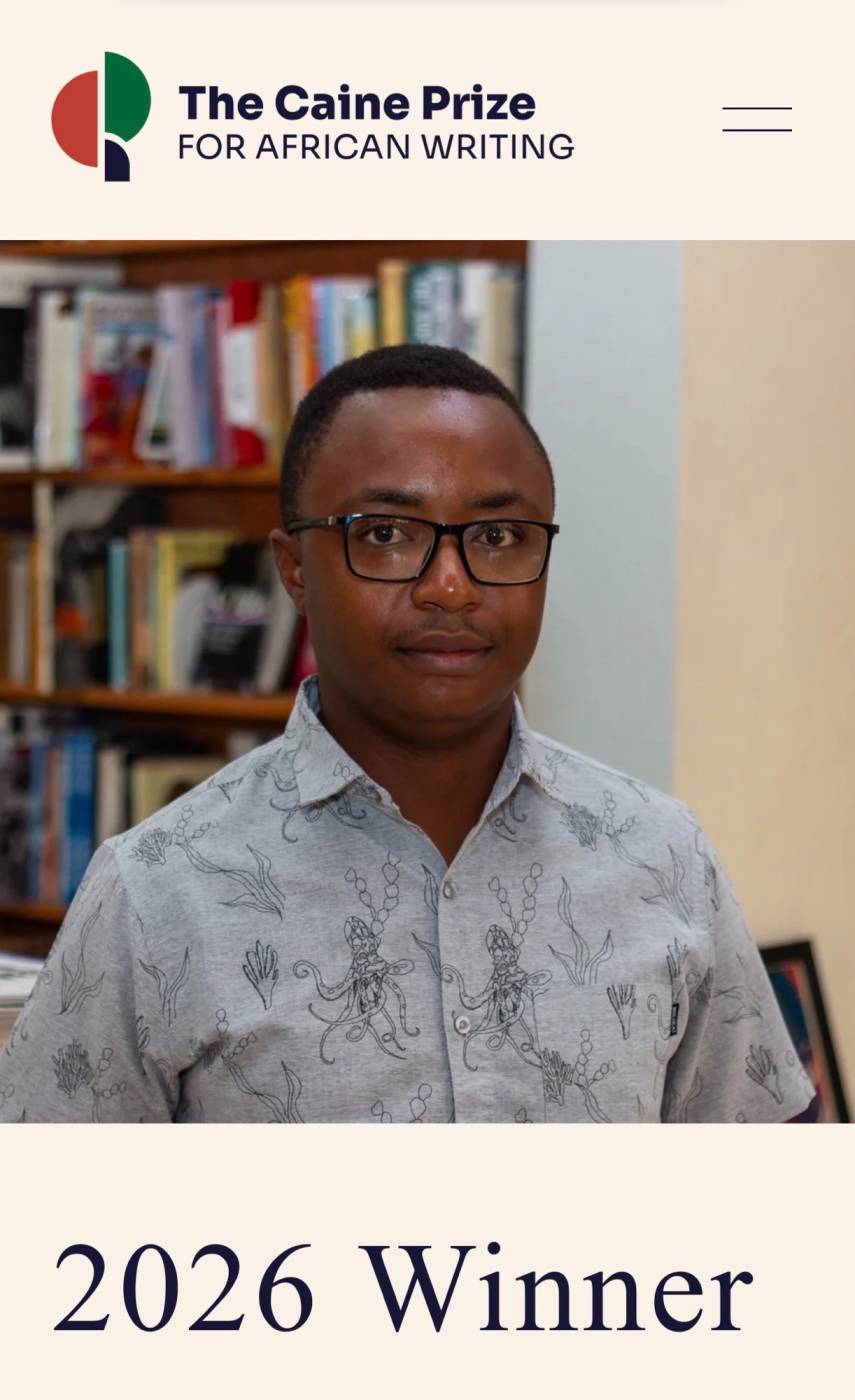
Three years down the line, Otosirieze Obi-Young of Open Country Mag—three days after Vauhini Vara’s sensational essay on The Atlantic accusing the 2026 Caine Prize winner Simbarashe Steyn Kundizeza of AI use (an allegation now dismissed by the prize’s governing body), set tongues wagging—may have partly roused the ranks when he tweeted: “again, the reason they publish pieces like that is that they know there’d be no big rebuttal, only tweets. Which means the real embarrassment would be if after this uproar there weren’t up to 5 disrespectful response essays in African publications. Return the disrespect.”
A noble rallying cry Obi-Young’s outburst would’ve been, if it were not only partly true, or so it seems. Not that there had not been apposite essays since AI scandals began to rock the literary world as far back as the first quarter of 2026. When, for instance, what began as cyber pillorying spiralled into a flurry of AI allegations against Trinidadian writer Jamir Nazir in May for his Commonwealth Short Story Prize-winning story “The Serpent in the Grove”, nearly half a dozen essays were published.
Ernest Jesuyemi had written “The AI Serpent in the Literary Grove”, Jide Salawu who just won the ANA poetry prize this November for his collection “Contraband Bodies” had, some time in June—just a few days to the CWSSP award ceremony—published “The AI Trial of Jamir Nazir” and then Chimezie Chika and Innocent Chizararam Iloh had, prior, published “Jamir Nazir’s Commonwealth-Winning Story “The Serpent in the Grove”: A Beautifully Told Story or an AI Mash-Up Job?” and “AI Cop Now: What Happens When an AI-Generated Story Wins a Prestigious Prize” respectively, the same day since May.
But despite the essays, one could say—even up until the Commonwealth Foundation cleared Jamir Nazir of the AI allegations and awarded him the prize in late June—too many camps ran riot within the culture for solidarity to have had a chance at brooding and that perhaps is where Obi-Young is right. The essays, brilliant in their own rights, were nonetheless too incongruent for a rebuttal.
When Vara’s essay stirred up a fresh wave of the controversy in October, Romeo Oriogun—who in fact believes the culture needs more than just intelligent essays to manoeuvre a decent pushback against detractions of this kind—somehow called to account the inconsequences of the pre-Vara essays when he tweeted: “This whole rubbish should have ended when the Commonwealth thing happened, because the argument was never really about whether the story was written by AI. Instead, Nigerians were fighting over who should get credit for being the first to accuse the story of being written by AI”. The point exactly? When this first rocked us, and we came back swinging at our supposed detractors, it perhaps was a time when solidarity could’ve served the culture better than the primacy contest we all were front-seat spectators to.
Weeks and many essay correspondences since the furore, we may not have had essays about the critical incisiveness and rigour of those in the 2023 ferment, but we’ve had, in their numbers, essays nuanced in ways unmissable, so to speak. These essays, ultimately, may walk their respective roads but are—at the very root of their overarching concerns—in so sheer a solidarity that not even the ferment saw this spectacle of collectivism. From Carl Terver’s metacritical treatise, Kenneth Kumater Katsina’s confrontational polemic, Tope Folarin’s interventionist stance and Ernest Jesuyemi’s diagnostic reading, these essays intersect at the politics of literary legitimacy in the age of AI and, by extension, the Black writer’s fate in the larger conversation.
- “Yet Another AI Birdoplane” — Carl Terver, Afapinen
Carl Terver primarily pulls a two-pronged argument: First, Kundizeza’s “The Blue Fighter” is not a badly written story: It is lethargic and rigourless in its opening parts…merely ordinary with a sprinkling shine, all of which he believes “remain open to subjective taste”. Secondly, if anything, Vahauni Vara, among other things, has a flawed, if not bland, critical judgement which he thinks is perhaps because “Vara’s reductionism and claims of AI writing robs her of reading the story closely.”
On the latter, Terver takes particular exception to Vara’s reading of the story’s characters and thematic concerns, especially her characterisation of the protagonist’s father as a hapless, unemployed man who squanders the family’s money on his fish-breeding obsession.
For Terver, this is a rather reductionist reading that overlooks the larger metaphorical and political implications of the father’s character. After all, in the absence of a “shared inheritance”, the family’s money is the father’s money and vice-versa. He’d draw a comparison with Fyodor Pavlovich in Dostoevsky’s The Brothers Karamazov (1880) and F. Scott Fitzgerald’s The Great Gatsby (1925), arguing that the father’s compulsive obsession, financial recklessness and individualistic pursuit of a dream are hardly unfamiliar literary tropes, and that what Vara dismisses as a stereotype could equally be read as a commentary on political wastefulness in African countries.
He then goes on to place the controversy within a larger anxiety about AI’s growing influence on how we read, think and process information. His concern is not necessarily that machines will eventually produce literature indistinguishable from human writing, but that readers might gradually surrender their faculties of discernment to them, preferring machine-generated literature or allowing algorithmic assessments to determine what deserves literary recognition. He therefore finds it rather ironic that Vara’s investigation and, by extension, her vigilantism, ostensibly concerned with protecting literary integrity from AI, might itself be contributing to the very problem she claims to be confronting.
Ultimately, Terver’s argument is not an outright defence of the literary merits of “The Blue Fighter,” nor does he dismiss the possibility of AI-generated literature. Rather, he is concerned with the critical carelessness that can accompany the suspicion of AI writing, particularly when a critic’s subjective preferences and reductive reading are elevated into accusations of technological misconduct. His concluding point is that an admission of uncertainty—Vara’s “I may be wrong”— does little or next to nothing to absolve the consequences of passing such a judgement on a story and, by extension, its writer. There will be more stories, he warns, that AI detectors flag, and if the algorithm becomes the principal evidence against them, the global system of literary recognition that Vara herself fears could be undermined.

- “Did this literary prizewinner really use AI? I’m sceptical” — Ernest Jesuyemi, The Spectator
Published in the heat of the scandal, the essay as a whole is a rejoinder to a Twitter post Ernest made defending Kundizeza’s short story: “I could do a careful analysis of that story—show the connections from paragraph to paragraph, the subtle (or not so subtle) working of meaning into the text, and other things—to show it was not written by AI. No tells at all.”
Primarily arguing that Vara’s supposed AI tells (not x, but y identifiers, glut of metaphors and platitudinous aphorisms) are not AI markers, the idée fixe of the essay is that if Kundizeza is guilty of something, it is bad writing and not AI use.
“AI pieces tend to lack a clear plot, they pile up shiny sentences that add up to nothing, and they run on an illusion of metaphor,” Ernest says of typical AI writing and The Blue Fighter, he believes, is everything but all of these. “That kind of tacit echoing (as evidenced in the paragraph-to-paragraph analysis he’d end up doing briefly in the essay as intended in the tweet quoted earlier) is a strong proof to me that a human creative imagination is at work”.
Flushed that he himself has satisfactorily ascertained the originality and humanness of Kundizeza’s prize-winning story using critical imagination supplemented by human judgement, Ernest concludes that “a machine cannot be the final arbiter” in telling apart fake literature from genuine literature, for even if human judgement may never be error-free, human errors still teach us something, but “a machine, whether it is wrong or right, teaches us nothing.”
- “A Question of Power: The African Story in the Age of Algorithmic Constructions” — Azubuike Obi, Afrocritik
Picking up first from when she—in the numbing tension of Jamir Nazir’s AI trial in May—asked Jenna Russell a research scientist at Pangram to feed stories from the past 15 years of the Commonwealth Short Story Prize into the AI-detection software to when she, herself, eventually feeds 25 stories from the Caine Prize archive into the software without permission from the authors nor their publishers, Azuibuike Obi is more interested in laying bare Vauhini Vara’s flat-out disregard for ethical boundaries, an undertaking he believes is fanned by an ulterior, if not motivated, rationale. “Could it be that this is no more than a question of power?”
Chimezie Chika says the only veritable instinct a critic should have…is how to identify literary quality. That “the critic can show us carefully, through the principles of good writing, why a piece of writing is good or bad”, and Obi builds upon this in his commentary on possible identifiers of AI writing just as much as he leans on Chidera Ike-Akaenyi’s take when he asked her how her team filters what comes into their submission pile at Afreada: AI writing is soulless writing, Ike-Akaenyi believes, “there’s a repetitiveness to the sentences” marked by an unvaried rhythm. His main dig here is a question: Might we come to a juncture where we are able to accept the changes that the emergence of AI is bringing to literature and how we consume it?
He then leans on the ordeals of seemingly targeted writers of colour (mostly the late professor Jason Arday and the Haitian-Canadian author Thélyson Orélien) to convincingly tag the controversy a racism-induced witch-hunt proxied by miseducated witch-hunters like Vara and her enablers, turning to Nigerian poet Romeo Oriogun and Ethiopian scientist Abeba Birhane to rally collective organizing on the part of the African writer and a jockeying for market share on the part of the African tech entrepreneur—which is how he believes we’d ever get to have a seat at the table of power which, to begin with, is what the whole controversy is hinged on.
- “Proof of Life: On Being Accused of Writing With AI” — Immanuel Fabian, Afapinen
Where Terver concentrates considerably on Vara’s flawed reading of Kundizeza’s story, Immanuel Fabian takes a broader institutional and evidentiary approach that interrogates the burden of proof—which goes hand in hand with the limitations of AI detection—and the unequal consequences of literary suspicion.
Fabian pokes a thumb in the growing reliance on AI-detection software in adjudicating literary authorship—an anxiety Ernest partly took issue with in his essay—particularly the tendency to treat detector scores as evidence of guilt. Drawing on the controversies surrounding Jamir Nazir, Thélyson Orélien and Kundizeza, he argues that writers are increasingly being made to prove their humanity (his titular sentiment), a burden that appears to fall disproportionately on writers outside the Anglo-American literary establishment only.
He questions the reliability of Pangram (quoting Chinese scientist and researcher Weixing Liang et al’s study at Stanford University), particularly its capacity to distinguish AI-generated prose from literary writing shaped by translation, regional varieties of English and extensive editing.
More importantly, he too parallels the controversy within a longer history of suspicion directed at writers from the margins, arguing that AI detection has merely given existing prejudices a technological veneer. Fabian’s foremost concern appears to be the growing imbalance between the speed with which accusations are made and the burden of establishing innocence, a menace he thinks the literary culture must curb.
- “The Paradox of African Writing and AI” — Tope Folarin, The Atlantic
This isn’t Folarin’s first comment on the scandal. In Vara’s essay, he was quoted as having admitted evidence of sheer humanness in Kundizeza’s story; it is “deeply human” and “deserves human expression”. His essay reads like a possible exposition of the latter part of his correspondence with Vara, where he said: “there are a lot of writers from the global South who feel this extreme pressure to write to expectations so their work is legible to the West, and obviously chatbots have glommed onto that.”
In this essay, Folarin, himself a Caine Prize winner (2013), takes a more expansive route that juxtaposes the controversy with the historical relationship between African writers and the “Western literary marketplace.” His central argument is that African writers have, for decades, been encouraged to produce a particular kind of fiction, one that revolves around familiar representations of poverty, war, migration, political instability and the continent’s various socio-economic misfortunes.
Drawing from his experience at the 2016 Caine Prize writing retreat in Lusaka, Zambia, Folarin recalls conversations about the tension between the stories African writers wanted to tell and those the international literary establishment was willing to reward. There was, he suggests, an implicit understanding that stories which departed from familiar representations of the continent would struggle for the same recognition as those that satisfied established Western expectations. A decade later, he finds this tension particularly relevant to the accusations against Kundizeza and his Caine Prize-winning story.
Folarin considers the narrative components of “The Blue Fighter” familiar (youthful narrator, financially irresponsible father bogged down by an impossible dream, enterprising mother holding the family together amidst economic hardship) and calls them recurring features of prize-winning African fiction.
His more interesting proposition is that AI might be reproducing these conventions because it has been trained on the very body of human writing that has normalised them. Consequently, African writers, he claims, might now find themselves competing with machines capable of reproducing the same literary conventions through which they have historically secured recognition.
He also probes the unresolved question of what constitutes AI-assisted cheating in literary production. “I don’t believe that a Pangram result should be enough, by itself, to condemn a writer”, he says. Expounding further in rhetorical terms, he asks: if writers routinely employ editors, proofreaders and other human intermediaries to refine their manuscripts, at what point does technological assistance become an infringement of authorship? More troublingly, he observes the disproportionate scrutiny directed at Black and brown writers, raising questions about the racial dimensions of the present controversy.
By and large, Folarin identifies a paradox, as his title already hints at, in the relationship between African writing and AI: the literary establishment has spent years rewarding particular representations of Africa, only to become suspicious when machines begin reproducing the same conventions. African writers are therefore caught between the expectations of a marketplace that has historically determined which stories are worth telling and a technological development that threatens to make those stories appear artificially manufactured. His eventual recourse is literary independence: African writers must resist the pressure to write towards external expectations and reclaim the freedom to tell stories on their own terms.


- “This Vara Sef: Safeguarding Literature from AI or the Mother Superior AI Detector” — Kenneth Kumater Katsina, Afapinen
Kenneth Katsina’s essay, the most confrontational of the responses, is, first, a direct (‘disrespectful’ as Obi-Young put it in his call for essays) rebuttal of Vauhini Vara’s accusation against Kundizeza, and secondly, an interrogation of what he considers her presumptuousness in passing literary and cultural judgement on an African writer, an undertaking he believes she is grossly underqualified for.
He also takes particular exception to Vara’s reliance on Pangram’s AI-detection results and her characterisation of “The Blue Fighter” as a story populated by familiar African stereotypes. For Katsina, her familiarity with technology does not necessarily translate into an understanding of Zimbabwean culture, much less the diversity of African literary expression.
On the journalist’s obvious lack of cultural license and display of armchair anthropology, he decries “posing as the Idi Amin Dada of global literature, who Vara be sef?” (‘Who Vara be sef?’ is Nigerian pidgin for “Who the hell is Vara?’)
Katsina is, however, careful to acknowledge that Vara’s anxieties about AI are not entirely misplaced. Drawing from her earlier essays on the capacity of AI to mimic established writers, deceive readers and potentially displace human literary production, he recognises the legitimacy of her concerns about the future of literature. His disagreement is with the manner in which those anxieties have been projected onto Kundizeza, particularly when a supposedly reliable detection software becomes the principal evidence for an accusation that could damage a writer’s reputation.
More germane to his argument, Katsina challenges Vara’s expectation that African writing must carry recognisable markers of cultural authenticity, the same anxiety Folarin’s essay preached. He argues that contemporary African writers, many of whom grew up in urban environments or have experienced varying degrees of cultural displacement, are not necessarily obliged to reproduce the grandfather, thatched hut and fireside storytelling that Western readers have come to associate with Africanness.
He invokes the historical debates surrounding the 1962 Makerere African Writers Conference, particularly the disagreements among Achebe, Soyinka and Ngũgĩ, to reinforce the point that African writers retain the liberty to determine what they write about and how they write it. Maybe subservient to his general argument but particularly interesting, he torches Vara’s sycophancy towards Kenyan Ngũgĩ Wa Thiong’o, especially his take on language and her fondness for quoting (she’s done it twice in different essays) the poor man out of context.
Unlike some of the responses, say Terver’s, Katsina does not particularly defend the literary quality of “The Blue Fighter.” He admits to finding its prose flat and its dialogue burdened by clichéd approximations of wisdom, aligning himself with those who have questioned the story’s stylistic merits, particularly Chimezie Chika and Felix Eshiet. His point is that if Pangram were to examine that story, it might equally flag it as AI-generated. The distinction, consequently, is between finding a story poorly written and having sufficient evidence to accuse its writer of using AI.
Taken together, Katsina’s argument is that Vara’s subjective dissatisfaction with Kundizeza’s prose, compounded by her overreliance on fallible detection software, has led her to mistake poor writing for artificial writing. He invokes Karl Popper’s falsifiability theory to question the scientific authority of AI detectors and points to their documented bias against non-native English writers. His concluding position is particularly blunt: Kundizeza may have written an ordinary, even poorly executed story, but that is not sufficient evidence of AI authorship. As he puts it, the writer may simply have “a mild case of bad writing.”
- “How to Accuse a Black Writer of Using AI” — Felix Eshiet, Substack
Not without first admitting that Kundizeza’s story is poorly written—an appraisal held since this review of the Caine Prize shortlist in September—this essay of mine is predicated on the invocation of Kenyan writer Binyavanga Wainaina’s satirical construct in his 2005 seminal essay “How to Write About Africa” to comment on the absurdities of the literary policing and censorship of the “non-white artist”, imagining how Wainaina himself, judging from his confrontation with the Western literary establishment in his active years, would have written about it if he were alive.
Since the “black writer no longer needs to explain himself and his writing” but now “needs to disclaim if he does his writing himself or outsources it”, I posit that the literary establishment is hardly a purveyor of good faith and that the supposed level playing field for the black writer (in contrsast with his non-black contemporary of probably lesser creative appeal) remains an illusion, a caveat that extends as far as taking issue with Ernest Jesuyemi’s characterisation—not in his essay but his tweets in the heat of the scandal—of certain responses, particularly Kenyan Troy Onyango, to the scandal as defeatist, arguing that acknowledging hostility is not the same as accepting its consequences because, commonsensically, naming the conditions one intends to resist, is never always an admission of defeat.
To reinforce the larger implications of this controversy, I foreground Toni Morrison’s argument that racism functions as a distraction, keeping its subjects perpetually occupied with explaining and proving their humanity, then go on to coalesce the raised concerns in a satirical instruction for accusing a Black writer of using AI: rely exclusively on Pangram, treat cultural knowledge as evidence of machine training, interpret bad writing as AI and good writing as AI assistance, and ensure that no possible outcome can disprove the original suspicion. Lastly, when the accused or their defenders push back, dismiss and accuse their counterarguments as AI-generated distractions.
- “This Wind of AI Accusations Blowing Across the Atlantic” — John Eriomala, Culture Custodian
John Eriomala’s essay essentially anchors the AI accusations against Black writers within the longer history of Western literary policing of African writing. Drawing on Ben Okri’s The Famished Road (1991), he casts the Western literary establishment as a hungry river that continually finds new ways to consume, discredit and dictate the terms of African literary expression.
He dissents from Vara’s reading of Kundizeza’s story, arguing that its literary shortcomings and supposed stereotypical characterisation do not constitute evidence of AI use. For Eriomala, Black writers are caught in a double bind: their writing is either too good to have been produced without AI or too poor not to have been generated by it.
His indictment of the controversy as a motivated witch-hunt on black writers is different from the lot in that he weighs in on the reluctance of Western media outlets, before the scandal, to publicise or cover the Caine Prize (or even the Commonwealth Short Story Prize) but did so in solidarity when Kundizeza’s story was accused of AI use. “The Atlantic has existed almost seven times longer than the Caine Prize has been awarded, yet Vauhini’s is the first ever The Atlantic story covering the prize.”
Chiefly, he considers the wider consequences of these accusations for African literary institutions and emerging writers whose access to publishing opportunities, mentorship and literary development may be undermined by the growing climate of suspicion. While acknowledging the need to interrogate AI use and preserve literary standards, he rejects AI-detection scores as sufficient evidence and calls for African literary communities to take greater responsibility for shaping their own literary culture.
The net effect, Eriomala believes, is that even if Kundizeza were proven to have used AI, one writer’s misconduct cannot invalidate an entire literary tradition, a polemic Gimba Kakanda may have, in supple prose, harped on when he wrote on “Black Excellence”.
Felix Eshiet is a Nigerian writer and Efik-Ibibio poet. His work appears in Only Poems, Madrid Review, Prairie Schooner, Efiko, Lolwe, Chestnut Review, Porter House Review, Palette Poetry, 20.35 Africa. A recipient of the Brigitte Poirson Literature Prize in Poetry, he’s a 2025 Obsidian Foundation fellow.