


Death does not end the earning life of a music catalogue. What determines whether that value continues, grows, or disappears is not sentiment but structure, and in most cases, structure is what is missing.
By Deborah Oyedijo
A music catalogue can continue generating income long after an artiste has died. Streams do not stop, broadcasts continue, films still license old records, and advertising agencies still look for familiar sounds. The real question is not whether the money exists, but whether anyone is properly positioned to collect and manage it when the artiste is no longer here to do so.
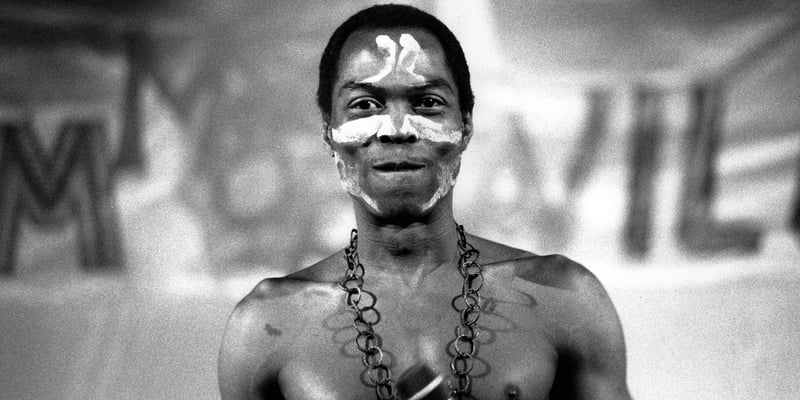
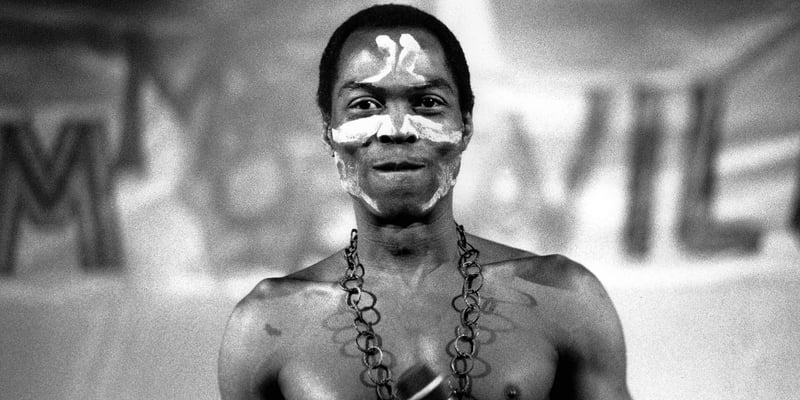
Consider the catalogue of Fela Anikulapo Kuti, who died in 1997. Almost three decades later, his music remains one of the most commercially active archives in African music history. His works continue to generate income through streaming platforms, reissues, live performances of his compositions, and, importantly, synchronisation licensing. His music has appeared in global productions such as Netflix’s The Harder They Fall (2021), where his sound was used to heighten a key action sequence, introducing his work to a new generation of international viewers. More recently, his 1971 track “Let’s Start” was featured in Apple’s global marketing campaign for the MacBook Air with the M5 chip, placing his catalogue in front of millions of consumers worldwide in a commercial context that goes far beyond traditional music consumption.
The commercial strength of Fela’s catalogue is not accidental. It is the result of deliberate rights retention and structured management. His estate retained ownership of both publishing and master rights, allowing licensing decisions to remain under the family’s control rather than being permanently assigned to third parties.
Over time, this approach has supported a steady stream of income from streaming, film placements, theatrical productions such as Fela!, and commercial synchronisation deals. That outcome, however, also depended on legal navigation, probate processes, and sustained administrative coordination across multiple jurisdictions and rights systems. Even a catalogue as globally recognised as Fela’s requires continuous management to ensure that value is not lost in the gaps between platforms, territories, and collecting societies.
The contrast becomes clearer when set against the reality of many African artistes whose estates are not structured the same way. Across the continent, music continues to earn after death, but the earnings do not always reach the intended beneficiaries. In many cases, royalties accumulate in collecting society systems or remain unclaimed due to missing documentation, unresolved succession issues, or lack of registration with the relevant rights organisations.
The legal foundation for posthumous copyright ownership exists across most African jurisdictions. In Nigeria, the Copyright Act 2022 classifies copyright as movable property capable of being transferred by will or through intestate succession under Section 30, with protection for musical works lasting for the lifetime of the author plus 70 years. Sound recordings are protected for 50 years from the date of publication. In South Africa, the Copyright Act 98 of 1978 (as amended) protects sound recordings for 50 years from the end of the year of publication, while musical compositions are protected for the life of the author plus 50 years. Kenya’s Copyright Act 2001 (as amended in 2019) also provides protection for the life of the author plus 50 years for literary and musical works, and 50 years for sound recordings. In Ghana, the Copyright Act 2005 (Act 690) similarly protects the life of the author plus 70 years for musical works. On paper, these frameworks are clear. In practice, they depend entirely on whether there is an identifiable rights holder who can activate them.
Where no will exists, the situation becomes significantly more complex. A large number of artistes across African markets die intestate, leaving their intellectual property to be distributed under general succession laws that were not designed with creative assets in mind.
Depending on the jurisdiction, estates may be governed by statutory inheritance rules, customary law systems, or a combination of both. In Nigeria, for example, estates may fall under statutory regimes or customary inheritance structures depending on the nature of the marriage and family system involved. The result is often fragmentation, where rights are divided among multiple heirs who may not have the technical or industry knowledge required to manage a catalogue effectively.
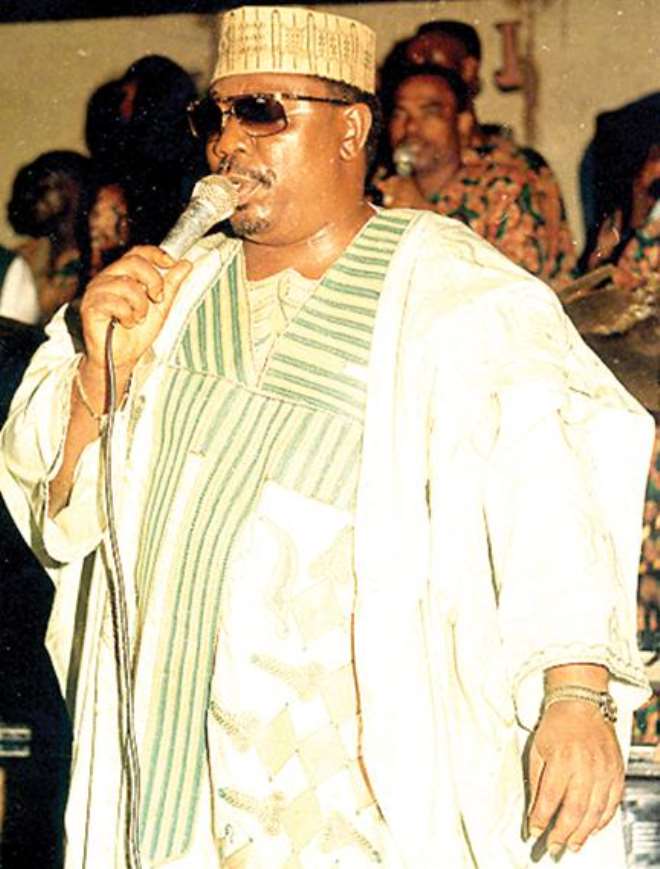
The estate of Sikiru Ayinde Barrister illustrates this complexity differently. As one of the most influential figures in Fuji music, his catalogue carries both cultural and commercial value. Yet managing such a body of work after death involves more than inheritance in the traditional sense. It requires coordination across rights ownership, royalty collection systems, licensing negotiations, and catalogue preservation. In situations like this, professional administration often becomes necessary not because families are unwilling, but because the structure of the music industry itself demands specialised knowledge to operate effectively within it.
Organisations such as Digital Music Commerce and Exchange (DMCE) have been involved in supporting estates like Barrister’s and Dagrin’s in navigating these systems. Their role typically involves coordination across metadata management, distribution platforms, collecting societies, and licensing processes, ensuring that works remain commercially active and legally protected. This is less about control and more about bridging the gap between legal ownership and functional access to revenue systems that are often highly technical and fragmented.
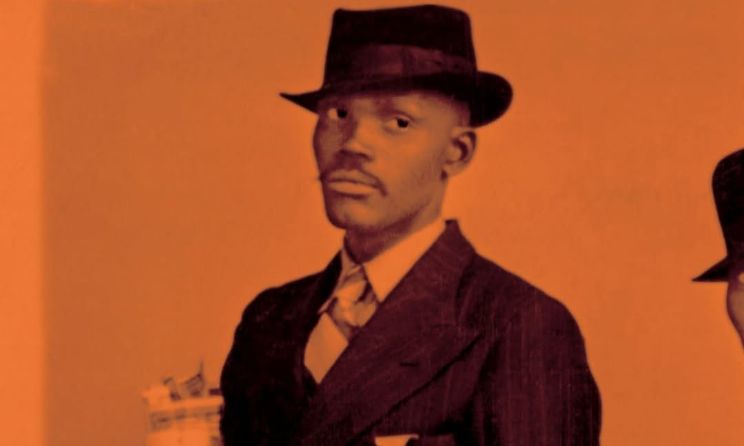
The administrative challenge is not unique to Nigeria. Across Africa, the same structural issues appear in different forms. In South Africa, the estate of Solomon Linda, the original composer of “The Lion Sleeps Tonight”, became one of the most widely cited examples of posthumous royalty disputes. Although the song generated significant international revenue through adaptations and licensing, his family spent decades in legal battles to secure recognition and compensation. In many cases like this, the issue is not that the law does not recognise ownership, but that enforcement and access to revenue streams require sustained legal and institutional engagement that estates are often not equipped to maintain.
Even where rights are clearly established, the practical ability to collect royalties depends heavily on infrastructure. Collecting societies play a central role in this process. In Nigeria, organisations such as COSON manage performance rights collections, while in South Africa, SAMRO performs a similar function for composers and authors. Kenya’s Music Copyright Society of Kenya (MCSK) and Ghana’s GHAMRO perform equivalent roles in their respective jurisdictions.
These organisations are responsible for collecting and distributing royalties from public performance, broadcasting, and other uses. However, their effectiveness depends on accurate registration, complete metadata, and active engagement from rights holders or their representatives. Without these, royalties may remain in distribution systems without being properly allocated.


This is where the gap between legal entitlement and practical recovery becomes most visible. A catalogue may be legally protected for decades, but without active administration, the income it generates can become difficult to trace or collect. In some cases, royalties accumulate in what are often referred to as “black box” pools within collecting societies, awaiting claim by verified rights holders. The longer these claims remain unresolved, the more complex recovery becomes.
The Fela Kuti estate demonstrates what becomes possible when these systems are actively managed. His catalogue continues to operate across multiple revenue streams because there is clear ownership, an active licensing strategy, and institutional coordination behind it. Even then, maintaining that position requires ongoing negotiation, legal oversight, and industry engagement. The catalogue does not manage itself; it requires continuous intervention to remain commercially relevant.
For most African artistes, however, such systems are not in place at the time of death. The result is often fragmentation. Songs continue to circulate, but ownership becomes unclear. Revenue continues to be generated, but not always collected. Families may inherit rights in theory, but lack the infrastructure to exercise them in practice.
The broader issue is not simply legal awareness but operational readiness. Copyright law across African jurisdictions provides for posthumous protection, but it assumes that rights holders will have the documentation, registration, and institutional access needed to activate those rights. Without that, the law exists in principle but not in practice.
Ultimately, the survival of a music catalogue after an artiste’s death depends on whether it was ever treated as a structured asset during their lifetime. Fela Kuti’s catalogue continues to earn money because it was positioned within a system capable of sustaining it. Sikiru Ayinde Barrister’s estate reflects the ongoing effort required to manage culturally significant works in a complex rights environment. Solomon Linda’s legacy shows what happens when that system fails to function across borders.
Death does not end a music catalogue. It simply transfers the responsibility of managing it. Whether that responsibility produces value or loss depends entirely on what was put in place while the artiste was still alive.
Deborah Oyedijo is a music business writer and entertainment lawyer-in-training with a focus on the African music industry. When she is not writing about music rights and culture, she is watching K-dramas or absorbing yet another documentary. Connect with her on IG and X: ayooyedijo