

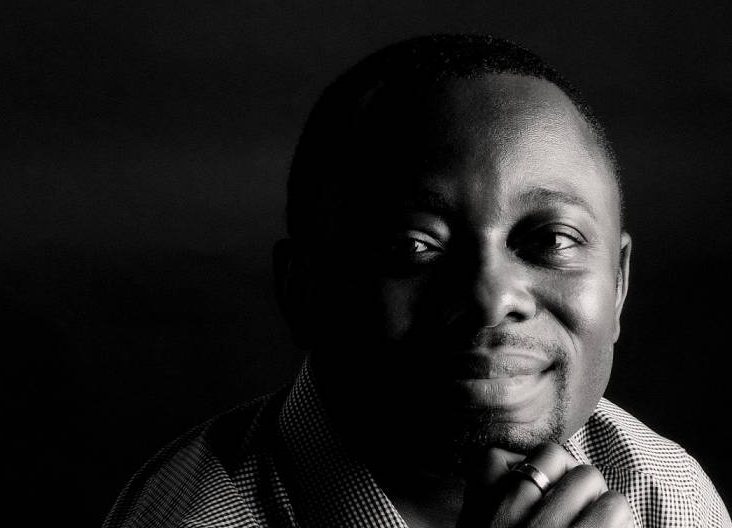

“I’ve always believed literature can enlarge our capacity for empathy. A novel allows us to inhabit a life that isn’t our own, to suspend judgement long enough to understand another person’s humanity. That, to me, is one of fiction’s greatest gifts.” — Jude Dibia
By Azubuike Obi
When Jude Dibia published Walking With Shadows in 2005, it was an act of radical bravery. It was the first Nigerian novel to explore the interior life of a gay man with honesty and compassion, not simply as caricature or cautionary tale. Being openly queer in Nigeria is in itself a radical choice, one whose danger has been exacerbated by the 2014 Same Sex (Prohibition) Act, which allowed the state to legislate on the matters of individual bodies and sexuality.
Following that law, Dibia would leave his homeland for Sweden, but not before publishing Unbridled (2007), a novel that took on Nigeria’s patriarchal society and its devastating impacts on one woman’s life, and Blackbird (2011), which examines Nigeria in line with the emotional landscape of the quartet of characters at its centre.
For Unbridled, he was a finalist in the race for the Nigerian Prize for Literature, the largest prize for a single book in Africa, and he received the Ken-Saro Wiwa Prize for the same novel in its publication year. Across Dibia’s oeuvre, there is a generosity, a restless devotion to telling stories of those burdened with marginal identities. In his work, their lives bloom; they take up centre stage in their quest for full lives.
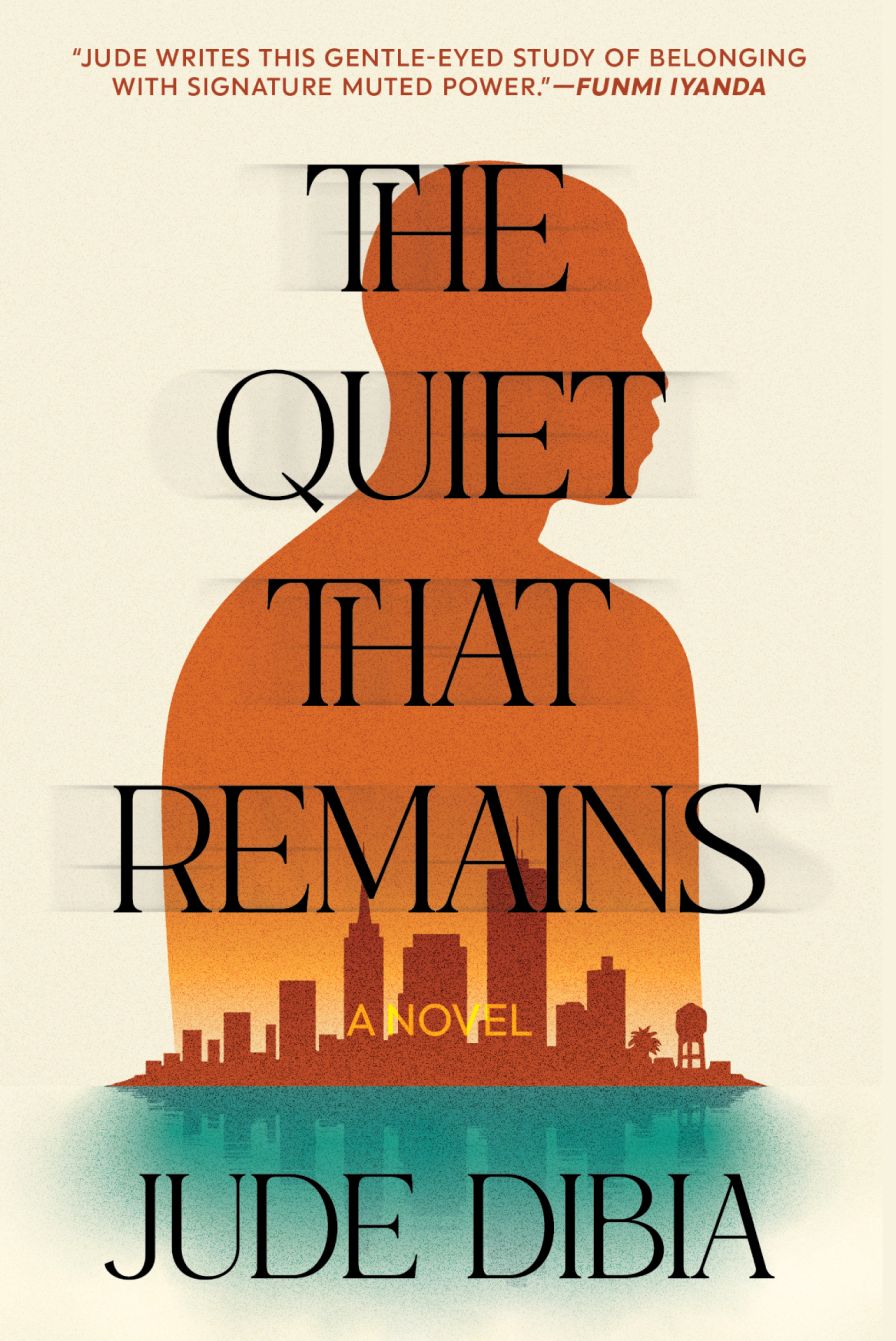
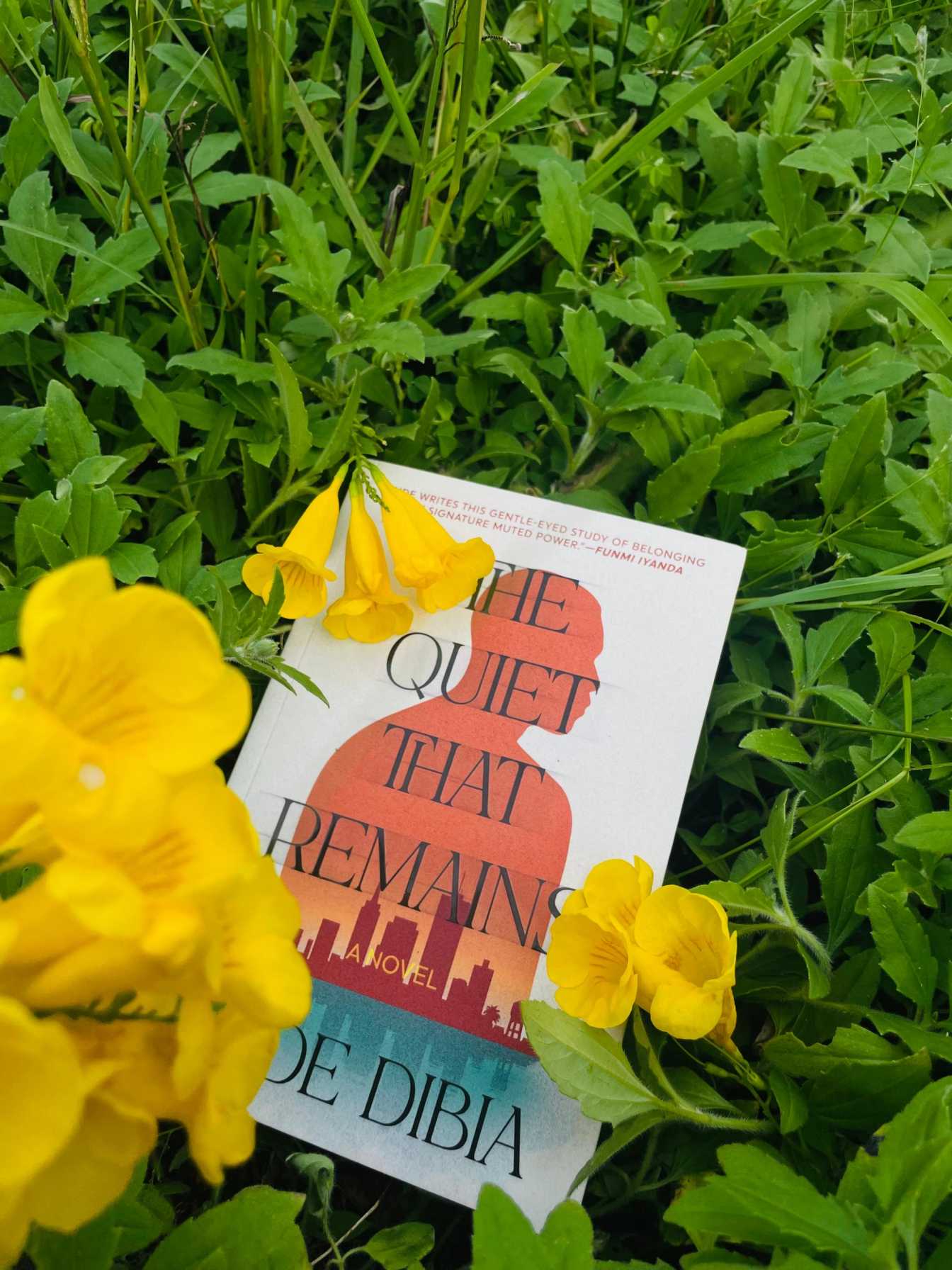
In his latest novel, The Quiet That Remains, the first in fifteen years, we meet a trio of characters, Dilibe, Dakota and Abazu. All of them middle-aged, all of them friends, all of them reckoning with choices and seeking true selves. In Afrocritik’s review of the novel, it noted that “Dibia’s strongest forte is emotional terrain. We encounter a writer who displays unflagging empathy in understanding the human condition and the place of his characters within that vast space. With this empathy, he can map the emotional landscape of the fictional beings who populate the pages of his novels.”
In this exclusive interview with Jude Dibia, his first in recent memory, he digs into his coming-of-age and the books that shaped him, what it took to write the novel that “grew” with him, how much his writing has changed with time, and what the future of creative writing holds in the face of Artificial Intelligence.
The James Baldwin epigraph about love that sets the novel off is both instructive and moving. What does love mean to you?
When I was growing up, love felt like a very adult word. Part of that was cultural. In many Nigerian homes of my generation, parents didn’t often say, “I love you” to their children. Love wasn’t absent, but it was rarely spoken aloud. It seemed to belong to marriage, romance and the serious business of adulthood. My understanding of it has changed completely.
Today, I think love is less about agreement than acceptance. You don’t have to approve of everything someone does to love them. You can disagree with them, be disappointed by them, even be angry with them, and still recognise their humanity. To me, that’s a far more enduring form of love than simply feeling affection when everything is going well. I also think love is both a feeling and a responsibility.
There’s the warmth you experience in the presence of someone you care deeply about, but there’s also the responsibility that comes with wanting what’s best for them. Sometimes that means protecting them. Sometimes it means telling them difficult truths. And sometimes, perhaps the hardest lesson of all, it means protecting yourself. I’ve come to realise that love doesn’t require endless self-sacrifice. People can genuinely love you—or believe they do—and still cause you harm. Maturity has taught me that loving someone and creating healthy distance from them are not always contradictions.
That’s one of the reasons James Baldwin has always resonated with me. He also wrote, “Love takes off the masks that we fear we cannot live without and know we cannot live within”. I don’t think he saw love as sentimental. He saw it as something that asks us to become more honest versions of ourselves. The first Baldwin novel I read was Another Country (1962), and what struck me wasn’t simply the romantic relationships, but the emotional complexity of all the relationships in the book—between lovers, friends and family members.
Love, in Baldwin’s hands, is never simple, but it is always transformative. Perhaps that’s what love has come to mean for me as well. Not perfection or permanence, but the willingness to see another person clearly, to accept them fully, and to hope that they extend the same grace to you.
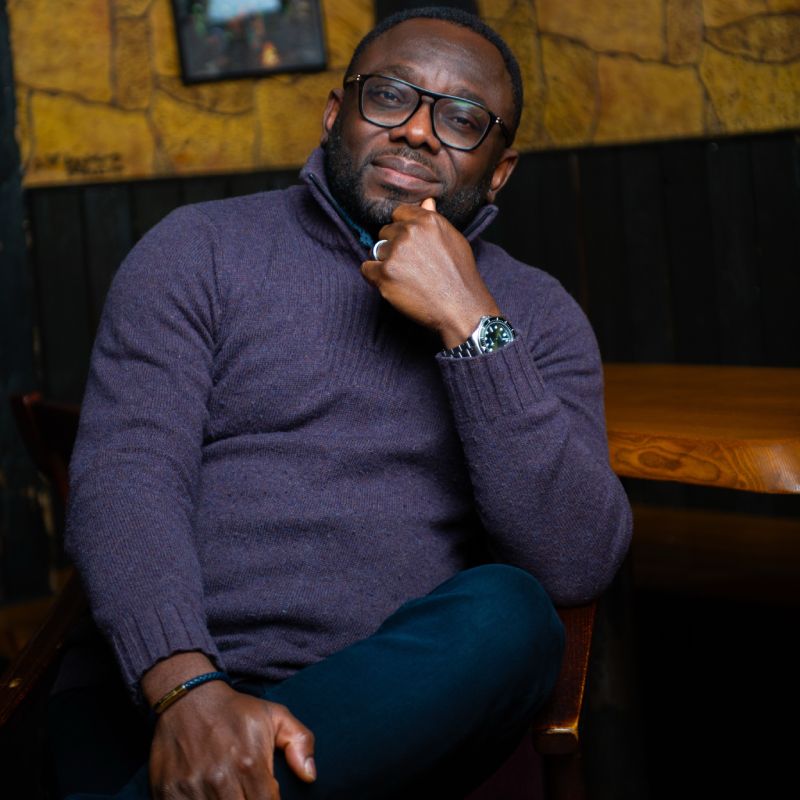
Just as epigraphs can lead to an understanding of a particular work and its writer, the books we read growing up, particularly those that hold immense significance for us, can help to understand the legacy we are building with our work. What books did you grow up reading, and was there any one that told you, certainly, that you wanted to do this?
I was fortunate to grow up in a home where books were everywhere. My parents often gave me books for birthdays and Christmas, and my father had a vast personal library. I still remember the shelves lining our living room. Looking back now, I realise how much that environment shaped me. In fact, one of my ambitions is to recreate something similar in my own home someday. I was definitely a reader long before I thought of myself as a writer.
I devoured Enid Blyton’s Famous Five (1942) and Secret Seven (1949) books, read plenty of Pacesetters and African Writers Series titles, and discovered James Hadley Chase while I was in secondary school. At some point, I stumbled upon Harold Robbins’ novels in my father’s collection and worked my way through virtually all of them. I was also very fond of Charles Dickens and received several of his books as gifts when I was younger. The book that genuinely moved me, however, might surprise people. It was Aleksandr Solzhenitsyn’s The Gulag Archipelago (1973).
My father actually gave it to me as a punishment. I honestly can’t remember what offence I had committed, but he instructed me to read it and then provide him with a detailed summary and my thoughts on it. It was probably the first book I ever had to study rather than simply read. I was in my early teens and approached it reluctantly, but somewhere along the way I became completely absorbed. I was horrified by the cruelty described in its pages. The abuse of power, the indignities inflicted on ordinary people, the casual destruction of lives. Looking back now, I suspect that book left a deeper mark on me than I realised at the time. Much of my own work has focused on people pushed to the margins—the LGBTQ+ community, women, social outsiders, people whose suffering is often ignored or dismissed. Perhaps that concern for injustice began there.
The book that made me want to write novels, however, was Toni Morrison’s Song of Solomon (1977). I encountered it in the late 1990s or early 2000s and was completely awed by it. The language was lyrical, beautiful and emotionally expansive in a way I had never experienced before. It made me realise what literature could do. At the same time, I was becoming increasingly aware of something missing from the books available to me.
I could find Western novels that explored queer lives, but I struggled to find contemporary African novels that treated queer characters as fully realised human beings. I wasn’t looking for sensationalism or pornography. I was looking for literary fiction that reflected realities I recognised and understood.
Around that time, a friend introduced me to the work of the American novelist E. Lynn Harris. His novels about Black queer life in America meant a great deal to me. I admired both his storytelling and his courage. After discovering his website, I sent him an email and thought nothing more of it. To my surprise, he replied. Later, he even sent me signed copies of his books. He also introduced me, indirectly, to a Toni Morrison quote that stayed with me: “If there’s a book that you want to read, but it hasn’t been written yet, then you must write it”. That idea lodged itself in my mind and never left. A few years later, I wrote Walking with Shadows (2005)
From your blog, it is clear that The Quiet That Remains has been in the works since as far back as 2012. How did this novel begin for you?
The novel actually began with a short story of mine called “A Life In Full”. Almost every unmarried Nigerian man who has crossed into his thirties is familiar with the pressure that comes from family—particularly parents—who want to see him settled, married, and raising children. There is often a mixture of concern, expectation, guilt, and sometimes even shame wrapped up in those conversations.
I was interested in that tension and explored it in the short story. But when I finished writing it, I found myself still thinking about the protagonist. I wanted to know what would happen if he met someone who shared his outlook on life. Someone who questioned the same assumptions about marriage, family, and happiness. That’s really where The Quiet That Remains began. Dilibe came first.
Initially, the novel was very much his story. But as I spent more time with the manuscript, it became clear that the lives of his friends were demanding equal attention. Abazu and Dakota weren’t supporting characters in the traditional sense. They each carried their own emotional burdens, their own desires, their own journeys.
Eventually, the novel became a conversation between the three of them, which is why readers will notice that all three characters occupy significant narrative space. The first complete draft was finished sometime around 2013 or 2014. I still have the emails from when I sent the manuscript to trusted beta readers. The novel had a different title then, but the core framework of the story remains surprisingly intact. The published version has gone through multiple revisions and extensive editing, but the emotional architecture is largely the same. I occasionally go back and read sections of that early draft. It’s fascinating to see what changed and what survived.
At the time, however, I wasn’t entirely satisfied with the manuscript. Rather than forcing it, I decided to leave it alone and let it marinate. Sometimes a novel tells you it isn’t ready yet. During those years, I wasn’t sitting idle. I wrote two other manuscripts, both of which remain unpublished. I also submitted The Quiet That Remains to various publishers before it eventually found a home with Masobe. One thing writers learn very quickly is that finishing a manuscript and publishing a manuscript are often two very different timelines. Especially if you’re an unrepresented writer, a great deal of the process is beyond your control. What kept drawing me back to the novel wasn’t the plot; it was the questions at its centre.
I found myself returning again and again to ideas of solitude and loneliness. To chosen family. To the tension between what society expects from us and what we genuinely want for ourselves. To the compromises people make to belong, and the courage it sometimes takes to refuse those expectations. These questions stayed with me for more than a decade. In many ways, I think I had to grow older before I could answer them honestly. Perhaps that’s why the novel took as long as it did.
The reality of being a creative writer makes it clear that not many writers are able to create full-time. What is the case for you? What does a typical writing day of yours look like?
Like many writers, I have a full-time job, so writing has to find its place around the rest of my life. Fortunately, my work is deeply connected to the arts. I coordinate an artist residency programme, so I’m constantly surrounded by writers, journalists, filmmakers, musicians, visual artists and other creatives. It can be emotionally demanding because a large part of my work involves supporting artists who are often navigating difficult personal and professional circumstances. But it is also incredibly rewarding. I’m continually exposed to new ideas, conversations and questions about art, freedom of expression and the world we live in. All of that inevitably feeds my own writing.
I don’t write every day unless I’m actively immersed in a new project. I’m not someone who forces myself to produce a set number of words simply to maintain a streak. I’ve learned that my best work comes when I’m genuinely engaged with what I’m writing. I’m an early bird, so when I’m working on a novel or an essay, I usually write in the stillness of the early morning from my home office. But inspiration doesn’t always arrive according to schedule. If I’m having a less demanding day at work, I’ll often open my laptop and write for an hour or two. And whenever I feel creatively stuck, I head to a café.
I love writing in cafés. There’s something about sitting in a busy space while remaining completely anonymous that stimulates my imagination. I enjoy people-watching. I’ll observe how someone laughs, how a couple sits in silence, how strangers negotiate space around each other. Sometimes it’s a fragment of overheard conversation or an unexpected gesture that stays with me. I’m constantly collecting these moments because I never know when they will find their way into a novel or an essay. In many ways, I think writing begins long before I actually put words on the page.
My relationship with writing has also changed over the years. When I was younger, I think I was trying to prove something—to myself as much as anyone else. Publication felt urgent. These days, I’m much more patient. I’m less concerned with getting a book into the world quickly and more interested in getting it right. If that means letting a manuscript sit for a while, I’m comfortable with that. I don’t set daily word-count targets either. There are days when everything seems to click, and I can write five thousand words without noticing the time. Then there are days when producing a single paragraph feels like a victory. I’ve even abandoned a manuscript that was more than sixty thousand words long because I eventually realised it was the wrong book. It wasn’t a pleasant decision, but I don’t see abandoned work as failure. Sometimes you have to let go of one story to find the story you’re actually meant to write.
My process is probably the opposite of what people expect. I draft quite slowly because I’m constantly thinking my way through the emotional lives of my characters. The first draft is always the hardest part. Once that’s done, however, I genuinely enjoy revision. Editing is where I begin to understand what the book has been trying to say all along.
You have come a long way since your first novel was published in 2005. What has changed as regards your writing since Walking with Shadows, to The Quiet That Remains, your fourth novel?
When I think about Walking with Shadows, I mostly smile. I smile because of the innocence and honesty of the novel and its characters. It was written by someone who genuinely believed in the story he was telling and wasn’t afraid to tell it. The fact that, twenty-one years later, readers in Nigeria are still discovering the novel and finding it relevant is both surprising and deeply gratifying. It suggests that many of the questions the book raises remain unresolved.
If I were writing it today, I think I’d probably be a little bolder in exploring Adrian’s relationships with other men, particularly Antonio. Not for the sake of being provocative, but to help readers better understand the intimacy, tenderness and danger that existed around queer relationships at that time. Having said that, I also believe the novel became exactly what it needed to be in 2005. Every book belongs to the period in which it was written, and I wouldn’t want to rewrite history by imposing today’s sensibilities on yesterday’s work.
I don’t think my fundamental interests as a writer have changed all that much. I’ve never sat down intending to shock readers or make political statements. My curiosity has always been about people. If a novel encourages readers to think differently about society or exposes an injustice, I’m happy about that, but those things have always been consequences rather than objectives. What has changed is where my curiosity now settles. I’m much more interested in psychological complexity than I was twenty years ago. I’m fascinated by contradiction, by the stories people tell themselves to survive, by ageing and how it changes our understanding of love, friendship, ambition and regret. Increasingly, I find myself drawn to ordinary lives that contain extraordinary emotional landscapes.
I’ve also become more trusting of readers. I’ve always believed that once a book is published, it no longer belongs to the writer. It belongs to those who read it. Every reader brings a different history, different experiences and different questions to a novel, so every interpretation is, in its own way, valid. What I intended while writing is only one part of the conversation. What readers discover in the work is equally important.
From a craft perspective, I can see clear changes. I think my pacing has become more assured, my characters’ interior lives have grown richer, and I’ve learned the value of restraint. Earlier in my career, I sometimes felt the need to explain. Now I’m happier leaving space for readers to make connections for themselves. I trust silence more than I used to. Perhaps that’s the biggest difference between the writer who published Walking with Shadows and the one who wrote The Quiet That Remains. In the beginning, I was eager to be heard. Now, I’m just as interested in listening—to my characters, to my readers, and to the spaces between what is said and what is left unsaid.
From Walking with Shadows to Blackbird, it is obvious that you are keenly aware of society’s injustices. There is a generosity in your work and its restless activism. What is it that draws you to this persistent exploration of the lives society has confined to the periphery?
I’m not sure I’ve ever thought of myself as an activist writer. I understand why people might describe my work that way, but that’s never been the place from which I begin. For me, everything starts with a person.
Long before I think about issues or themes, I’m interested in an individual life. I’m curious about who this person is, what keeps them awake at night, what they long for, what they’re ashamed of, what they’ve survived. Once I begin asking those questions honestly, I inevitably find myself writing about people who exist on the margins of society. Not because I set out with the intention of focusing on them, but because their stories are so often overlooked or misunderstood.
I’ve always believed literature can enlarge our capacity for empathy. A novel allows us to inhabit a life that isn’t our own, to suspend judgement long enough to understand another person’s humanity. That, to me, is one of fiction’s greatest gifts. I also think every society has people it would rather not look at too closely. Sometimes it’s because of sexuality. Sometimes it’s class, gender, illness or poverty. Sometimes it’s simply because certain lives make us uncomfortable. As a writer, I’ve always found myself drawn towards those uncomfortable spaces—not to make a political argument, but to ask what happens when we truly see the people we’ve learned to overlook.
That doesn’t mean my characters are saints. I’m actually much more interested in their contradictions than their virtues. The people I write about make mistakes, hurt one another, act selfishly, and occasionally fail spectacularly. But they also love, hope, forgive and change. I think that’s what makes them human. If there’s a generosity in my work, I hope it comes from resisting the temptation to reduce people to a single identity or experience. None of us is just one thing. We are all far more complicated than the labels society gives us.
Looking back now, I suspect what has remained constant throughout my writing isn’t activism but curiosity. I want to understand people before I judge them. Fiction permits me to do that. It asks me to sit with discomfort a little longer, to listen a little more carefully, and to remember that every life, however ordinary or overlooked it may seem, carries a story worth telling.
Abazu in The Quiet That Remains has an interesting character arc. At times, it feels as though he intends to self-sabotage. What did the conceptualisation of his character and the way he sees his illness and the world look like during the writing process?
Abazu probably surprised me more than any other character in the novel. When I first began writing The Quiet That Remains, he was entirely imagined. But somewhere along the way, he began to absorb fragments of people I have known over the years—particularly one person whose humanity stayed with me long after we met. That’s often how my characters evolve. They begin in imagination and gradually borrow emotional truths from real life until they become people in their own right. There is also a very personal experience woven into his story: When I was in secondary school, my father and his driver came to pick me up for the holidays. We were driving back to Lagos when one of the tyres burst at high speed near Benin. The car left the road and rolled several times. I suffered a deep gash to my left hand; The driver’s injuries were even more severe. My father, remarkably, escaped without any visible injuries.
We were taken to a government hospital, and it was there that I witnessed something that has stayed with me ever since. I saw how differently people were treated depending on whether they had money, influence or connections. As a teenager, I couldn’t quite process what I was seeing, but I never forgot it. Years later, that memory found its way into the novel and shaped Abazu’s first experience of the public healthcare system.
I always knew he was going to be HIV-positive. That wasn’t a decision I arrived at halfway through the writing. It was there from the beginning because I wanted to write about a life I felt was largely absent from contemporary African fiction. We know people living with HIV exist all around us, yet they’re often reduced to statistics, cautionary tales or symbols. I wanted Abazu to be a fully realised human being whose diagnosis was part of his life, but never the entirety of it. People often describe him as self-sabotaging, and I understand why. But I don’t think he sets out to destroy his own happiness. I think he’s trying to protect himself from anticipated rejection.
By the time we meet him, he’s already internalised so many messages about his own worth. He has experienced rejection within his own family, particularly from his father, and he carries the weight of living with HIV in a society where stigma remains deeply entrenched. Eventually, he begins to believe that he is fundamentally undeserving of love. Once someone reaches that place emotionally, they often reject themselves before anyone else has the opportunity to do it for them.
That’s what interested me psychologically. The secrecy, too, made sense to me. Many people living with chronic illnesses become fiercely protective of their privacy—not because they enjoy carrying the burden alone, but because they’ve learned how easily vulnerability can be weaponised. Abazu only tells Dilibe and Dakota because they represent safety. Neither of them has any connection to his past, his family or the circles that might expose him. They become the family he chooses rather than the one he inherited.
Ironically, he’s also the funniest member of the trio. I don’t think that’s accidental. Humour is one of the ways he survives. Through Dilibe and Dakota, he gets to imagine possibilities for himself that he struggles to claim directly. He lives some of his dreams through the people he loves. More than any other character in the novel, Abazu broke my heart.
Even when his fear and stubbornness frustrated me, I never stopped rooting for him. I wanted him to believe that he deserved the very thing he had spent years convincing himself he could never have. For me, that’s the real tragedy of Abazu—not HIV, but shame. And the novel, in many ways, is his slow journey towards believing that love is still possible.
There seems to be an inclination in your novels towards tidy, emotionally satisfying endings. How do you think about endings, and what do you hope readers carry with them after they close one of your books?
I’m not sure I’d describe my endings as tidy, and I don’t think every novel owes readers that kind of resolution. What I hope to offer is emotional completion rather than absolute closure. Life doesn’t end because a novel does. The characters continue living beyond the final page; we simply stop following them. I actually enjoy the idea that readers are left wondering what happens next. When I know I’ve said everything I need to say about the particular story I’m telling, that’s usually when I know the novel is finished. It’s not that the characters have exhausted their lives; it’s that I’ve reached the end of the emotional journey I set out to explore. That’s the point where I hand the story over to the reader.
Take Walking with Shadows. The novel ends with Adrian at the airport, about to leave Nigeria. We don’t know what his life abroad will look like. Will he finally live openly? Will he find love? Will he discover that leaving one place doesn’t necessarily mean leaving himself behind? Those questions belong to the reader as much as they do to me. The same is true of Unbridled. Ngozi leaves the novel carrying the devastating knowledge that her mother knew about the abuse she suffered as a child. I don’t answer what that truth ultimately does to her relationship with her mother or her family, nor do I say whether she and Providence build a life together. Those possibilities continue beyond the novel. Blackbird probably comes closest to what people might call a conventional ending, although I think it still leaves readers with emotional uncertainty rather than neat certainty.
As a reader myself, the endings that stay with me are rarely the ones that explain everything. They’re the ones that invite me to participate, to imagine the lives that continue after the last sentence. That’s something I’ve always admired in writers like Toni Morrison and James Baldwin. Their novels may conclude, but they never feel finished in the sense that the characters stop existing. That’s the kind of ending I aspire to write. For me, a novel should arrive at an emotional truth, even if life itself remains unresolved. The final page isn’t a full stop. It’s simply the moment when the writer steps aside and trusts the reader to continue the conversation.
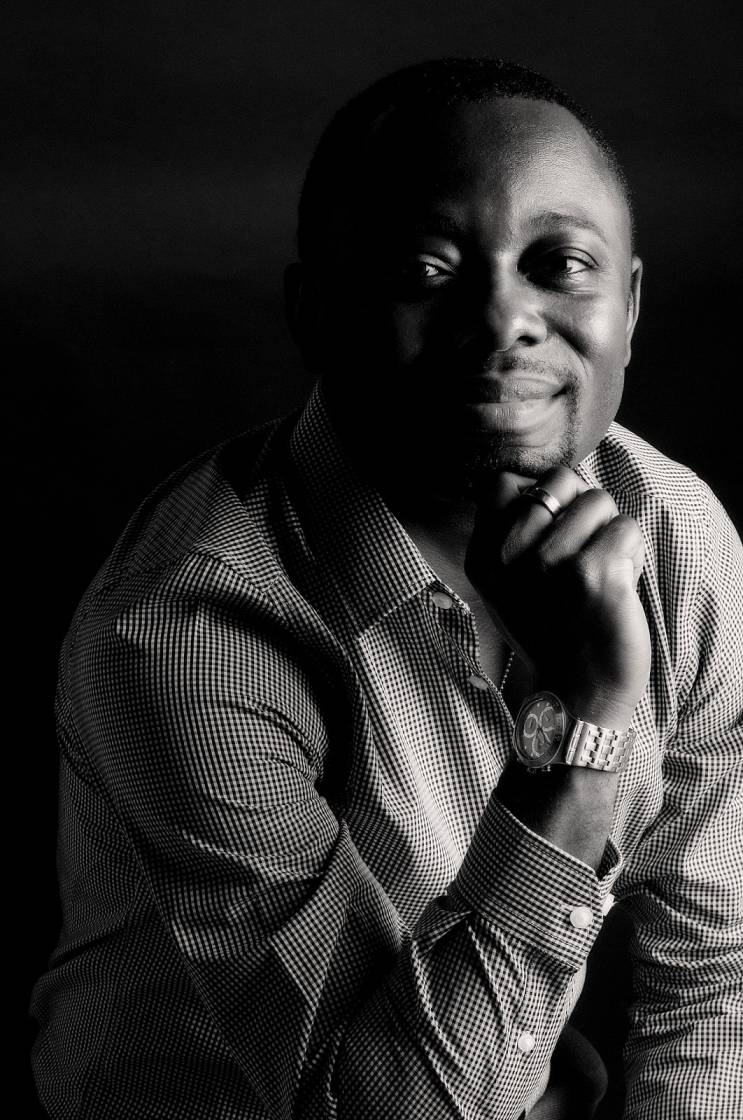
Your novels often come with more than one narrative voice. Readers get the opportunity to experience the full breadth of the story due to this multiplicity of voices. How do you approach and decide on voice in your work?
I’ve never consciously sat down and thought, This novel needs three voices, or This one should only have one. I’m sure those decisions are being made somewhere in my creative process, but they happen quite instinctively. For me, the more important question isn’t voice—it’s scope. I ask myself what kind of story I’m trying to tell, and whether one perspective is enough to carry it. Sometimes it is. Sometimes it isn’t.
With The Quiet That Remains, the novel began as Dilibe’s story. But as I spent more time writing, it became obvious that Abazu’s and Dakota’s lives weren’t orbiting around him; they were stories of equal importance. Once I recognised that, I knew a single narrator wouldn’t do justice to the novel I wanted to write. Each of them was carrying a different emotional truth, and the book needed all three perspectives to become whole. The characters are also very distinct in my imagination. I know how they look, how they speak, how they think, even how they would react to the same situation. If Dilibe, Abazu and Dakota all walked into the same room, they wouldn’t simply describe it differently—they would notice different things. Their personalities determine not only what they say, but what they choose not to see.
That last part is important to me because every life has its blind spots; no one sees the whole picture, and I think that’s true both in fiction and in life. One character can illuminate what another completely misses. That’s why my narrators rarely compete with one another. They’re not there to repeat the same story from different angles. Each of them reveals something the others cannot. Of course, I don’t always get it right the first time. There have been occasions when I’ve written an entire scene and only realised during revision that it belonged to a different character. Those are usually easy decisions to make because, by then, I know the characters well enough to recognise whose emotional territory the scene really occupies.
Interestingly, editing other writers has made me even more attentive to voice in my own fiction. When you’re editing, you become acutely aware of consistency, rhythm and authenticity. You notice when a character suddenly starts sounding like the author rather than themselves. That awareness naturally carries over into my own work, although I’m careful to keep my editorial practice separate from my creative one. They’re related, but they’re not the same discipline.
Ultimately, I don’t think multiple narrators make a novel richer simply because there are more of them. They matter only if each voice earns its place. For me, different perspectives are a way of acknowledging that no single person possesses the whole truth. The fuller picture only emerges when those voices are allowed to exist alongside one another.
An online search does not yield much on how your older novels can be accessed. What are you and your publishers doing—both past and present—to make your work available to young readers who may pick fresh interest?
That’s a fair observation. My books are certainly out there, but finding physical copies of some of the older editions has become increasingly difficult over the years. That’s something I’ve been thinking about a great deal. The good news is that I hold the rights to my earlier novels, which means I’m now in a position to give them a new life. There are plans to republish all of them in new print editions, eBooks and, in some cases, anniversary editions. Blackbird, for example, is scheduled to be republished in 2027 under a new title and with an alternative ending. I’m quite excited about that because it allows me to reintroduce the novel to a new generation of readers while allowing the book itself to evolve.
Walking with Shadows has also enjoyed a life beyond its original publication. It was translated into Swedish after I moved to Sweden, which was a particularly meaningful experience because it allowed the novel to reach readers in the country I now call home.
I’m also in the process of launching my own author website, which will become a central place where readers can find information about all of my books, essays, translations, upcoming projects and events. One of the things I’ve realised over the years is that writers need to take an active role in preserving and presenting their own literary history.
What continues to move me most is when younger readers discover Walking with Shadows for the first time. Some of them weren’t even born when it was published in 2005, yet they still find something in Adrian’s story that speaks to them. Moments like that remind me that literature often has a much longer life than we imagine. A novel belongs to its own time, but if we’re fortunate, it also finds ways of speaking to generations that come afterwards.
That’s really my hope for all of my books—that they remain available, continue finding new readers, and keep generating conversations long after the moment in which they were first written.
How has your relationship with writing about the city of your birth, Lagos, changed since moving from Nigeria?
Distance has changed my relationship with Lagos in ways I didn’t anticipate. If I’m honest, my memories of the city have become increasingly fragmented over the years. Some places remain remarkably vivid, while others have blurred into feeling rather than fact. I’ve also become more aware that memory is an unreliable narrator. It edits, exaggerates, omits and rearranges. So when I write about the Lagos of my childhood or early adulthood, I’m writing from memory and emotion rather than documentary precision. They’re my recollections of that period, and I accept that someone else who lived through the same years might remember them very differently.

Living away from Nigeria has also given me the distance to see the country differently. Looking back, I realise how much of my adult life was spent believing in the promise of a Nigeria that was always just over the horizon—a country that would eventually fulfil its extraordinary potential and work for everyone, not just a fortunate few. That hope probably kept me in Nigeria much longer than people realise.
I had opportunities to relocate as far back as the early 2000s, but I chose to stay. I had a career I genuinely enjoyed, work that challenged me, and opportunities that many people would have envied. I kept believing things would improve. Instead, I watched many of the same structural problems persist, held back by leadership that too often seemed more interested in short-term gain than long-term nation-building. It was painful to witness because Nigeria has always possessed enormous talent, resilience and possibility.
Of course, nostalgia still visits me from time to time. But it isn’t really nostalgia for Lagos itself. It’s nostalgia for childhood—for a time when my greatest concerns were playing with my siblings and friends, and the world felt infinitely simpler. As we grow older, I think we sometimes mistake longing for a place when what we’re actually longing for is a version of ourselves that no longer exists.
Moving to Sweden hasn’t made me write less authentically about Lagos. It has simply altered my perspective and, perhaps, my pace. My prose has become more reflective, more attentive to interior lives, but the emotional core of my writing remains rooted in the experiences that shaped me. There are certainly aspects of contemporary Lagos that I no longer know intimately. If I were writing a novel set in the city today, I wouldn’t rely on memory alone. I’d research extensively, spend time there again, talk to friends, observe how the city has changed, and allow the present-day Lagos to speak for itself rather than forcing it to resemble the one I remember.
These days, I don’t think I write Lagos so much as I write what Lagos left behind in me. In a recent essay, I wrote that home is not a physical space but the memories we carry. I still believe that. The Lagos that appears in my fiction today is no longer simply a city. It has become a repository of memory—a place where the people I once knew, the lives I lived and the questions that continue to shape me still reside.
The emergence of Artificial Intelligence is changing the way we relate to the written word, both as readers and as writers. Some writers have taken to eschewing “obvious tells” of AI, like the em dash, from their work. In your opinion, what does the future of creative writing hold in the light of this new technology?
It’s a fascinating question because AI has become almost impossible to avoid. Whether we’re using word processors, search engines or research tools, some form of artificial intelligence is already embedded in much of the technology writers rely on. The conversation has therefore shifted from whether we use AI to how we use it.
Personally, AI hasn’t changed the way I write. What it has changed is my awareness of language. Because AI has become so adept at reproducing certain stylistic patterns, writers have become much more conscious of habits that were once simply part of their natural prose. People now debate em dashes, contrast framing, repeated sentence structures and all sorts of stylistic signatures because they fear these may be mistaken for AI-generated writing. Whether those fears are justified or not, they have certainly made many of us more attentive to our own craft.
Where I find AI genuinely useful is as a research tool. It can help locate historical information, academic papers, reference materials and other sources remarkably quickly. But that’s only the beginning of the work. The writer still has to read those materials, evaluate them, understand them, and decide what belongs in the story. AI can shorten the journey to information; it cannot replace the intellectual and creative labour that follows.
What it cannot do—at least not in the way a human writer can—is live a life. Memory, desire, contradiction, embarrassment, grief, joy, love, regret—these are not simply words on a page. They’re experiences accumulated over a lifetime. They shape how we observe the world and, ultimately, how we write about it. Literature isn’t only the arrangement of sentences; it’s the expression of consciousness. That’s something I still believe comes from living.
I’m not especially worried about AI replacing novelists. The technology will continue to evolve, and writers should pay attention to it rather than dismiss it outright. But I think we’re still a long way from artificial intelligence creating literature with the emotional complexity and lived authenticity that human beings bring to the page. I also think readers have a role to play. They should care about where stories come from, not because technology itself is the enemy, but because literature has always been a conversation between one human consciousness and another. That’s part of its power.
For me, AI can be a useful tool and, at times, a kind of editorial aid. It can help organise ideas, challenge assumptions, accelerate research and sharpen revision. But it isn’t a creative substitute. The stories I most want to read—and the ones I hope to write—still begin with the messiness, vulnerability and unpredictability of being human.
Some schools of thought believe that theme is a critic’s vocabulary and not a novelist’s. However, in addressing societal ills, it can become pertinent that a writer think, in clear terms, about what ideas they want to explore. How do you reconcile this conundrum in your work? Story first, or ideas first?
It has always been story first for me. More specifically, character first. I never begin a novel with a list of ideas I want to examine or a message I hope readers will take away. My starting point is almost always a person. I want to know who they are, what burdens they’re carrying, what has wounded them, what they long for, and how those experiences shape the choices they make. Once I understand the people, the narrative begins to reveal itself.
The larger ideas usually emerge much later. They’re often clearer by the time I’ve finished the first draft and begun revising, but even then I don’t consciously chase them. I’ve learned that the things I think I’m writing about are not always the things readers discover. Every reader brings a different history and a different set of questions to a novel, so there are as many interpretations of a book as people are willing to engage with it.
In fact, some of the most interesting observations about my work have come from critics and reviewers after publication. There have been occasions when they’ve identified patterns or ideas that I hadn’t consciously recognised while I was writing. Rather than resisting those readings, I find them fascinating. They tell me something about the work that even I didn’t fully understand at the time.
That’s also why I’m cautious about reducing any of my novels to a single idea. Take Abazu in The Quiet That Remains. Some readers might say his storyline is about HIV, but I don’t think that’s what it is fundamentally about. It’s about Abazu—his fears, his shame, his humour, his capacity for love, and the ways he tries to protect himself from being hurt. HIV is part of his life, but it isn’t the sum of who he is.
The same principle guides me when I’m editing other writers. I often encourage them not to chase an abstract idea but to follow the character. If the people on the page feel authentic, the larger concerns will usually emerge naturally. Trying to force a novel to illustrate a particular point can sometimes flatten the very complexity that makes fiction so compelling.
Perhaps that’s why I think critics and novelists often approach books from opposite directions. A novelist begins with individuals and, through them, creates a world. A critic looks at that world and identifies the patterns that have emerged. Neither approach is wrong—they’re simply different ways of arriving at the same place.
Sometimes I wonder if the recurring ideas in a writer’s work are less a matter of intention than of instinct. They may simply be the footprints we leave behind without realising we’ve made them.
Are there activities you do that you believe seep into the writing and enrich it, whether professionally or for fun?
Absolutely. I sometimes think writing occupies far less of my day than people imagine. Living, observing and paying attention are just as important.
If I couldn’t write for six months, I’d probably spend that time making serious progress on the ever-growing pile of books on my bedside table and bookshelves. I’d also watch an unhealthy amount of television and films without feeling particularly guilty about it. If I happened to be on leave from work as well, I’d probably travel around Europe with my dog, discovering new cities and collecting new experiences. I don’t think any of that would be time lost. Quite the opposite. It would all find its way back into the writing eventually.
I also love cafés. Partly because I love coffee, but mostly because cafés allow me to observe the world while remaining quietly outside it. People come and go, conversations begin and end, strangers cross paths without ever knowing they’ll never meet again. The world keeps unfolding around you, and all you have to do is sit there and pay attention. Some of the smallest details—a gesture, a look across a table, an overheard sentence—can stay with me for years before finding a home in a story.
Reading remains a huge part of my life, although it’s changed over time. In my twenties, I read purely for pleasure. These days, the editor in me is never completely switched off. I’ll find myself noticing structure, pacing, characterisation or why a particular scene works so well. It’s one of the occupational hazards of editing. You lose a little of the innocence of reading, but you gain a deeper appreciation of how books are made.
Working with artists has also enriched me in ways I couldn’t have anticipated. Every day, I encounter writers, filmmakers, musicians and visual artists who approach creativity from completely different angles. Watching them wrestle with ideas, solve problems and remain committed to their work is constantly inspiring. It reminds me that making art is always an intentional act. In one way or another, every artist contributes to the cultural memory of their time.
Editing other writers has had a similar effect. Rather than diminishing my own creativity, it has strengthened it. Every manuscript teaches me something new about storytelling, whether it’s a fresh way of constructing a scene, an unexpected narrative choice or simply the sheer range of human imagination. It’s impossible not to be energised by that.
Ultimately, though, I think what nourishes my writing most is ordinary life. I’m endlessly fascinated by people. Not necessarily extraordinary people, but ordinary people doing ordinary things. A conversation in a café. Someone waiting for a train. A family sharing a meal. A stranger walking a dog. Those are the moments that stay with me. Writing, for me, has always begun with paying attention.
What do you want your work to be remembered for?
I hope my books help future readers understand something about the people and the period in which I lived and wrote. More specifically, I hope they offer a window into the lives of those who have often existed at the margins of society, and the many ways they found to navigate, endure and, ultimately, live. If someone were to read my work fifty years from now, I’d be honoured if they simply said, “These books helped me understand people a little better”. I don’t think a novelist can ask for much more than that.
To be honest, I’m less concerned with how I’ll be remembered than whether the books themselves continue to find readers. We have very little control over our own legacy. People will remember—or misremember—us in all sorts of ways. Books, on the other hand, remain remarkably constant. Every new reader enters them with fresh eyes and discovers something different. I find great comfort in that. I’ve always believed that once a book is published, it no longer belongs to the writer. In the same way, I think a writer’s legacy ultimately belongs to readers. They’re the ones who keep stories alive by returning to them, recommending them, arguing with them and finding new meanings in them.
Looking back across my novels, I think I’ve been writing about the same things without always realising it. Belonging. Acceptance. The longing to be seen for who we truly are rather than who society expects us to be. Those concerns have appeared in different forms and through different characters, but they’ve remained remarkably constant. Perhaps that’s because they’re not simply literary concerns; they’re deeply human ones.
More than anything else, I hope someone who feels like an outsider—a young reader questioning where they belong, someone carrying shame, grief or uncertainty—might encounter one of my books and come away feeling a little less alone. If my work can offer that kind of companionship, even to a handful of readers, I think that would be a legacy worth leaving.
Azubuike Obi is an Igbo storyteller who believes in the transformative power of language. He won second place in The Republic Student Writing Competition (2025), and was nominated for Chika Unigwe’s Awele Creative Trust Award (2024). His fiction and nonfiction have appeared online and in print in The Republic, The Weganda Review, Naira Stories, Afapinen, Efiko Magazine, and elsewhere. He is a regular contributor at Afrocritik.