

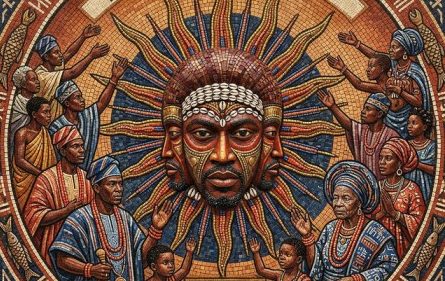

Yorùbá Healer is steeped in identity, philosophy and personality, which feels particularly important for an artiste whose career has been defined by existing between two worlds.
By Yinoluwa Olowofoyeku
Moelogo has spent more than a decade developing a distinctive space between Nigerian and British music cultures. Born in Lagos and raised in London from the age of 11, the British-Nigerian singer-songwriter began singing in his school choir at 14 before developing his craft at London’s Starlight Music Academy. His early career quickly established the hybrid sensibility that would become central to his music, bringing together Afrobeats, R&B and Hip-Hop while drawing naturally from both sides of his upbringing.
His 2013 debut EP, Moe Is My Name, Music Is My Logo, marked the beginning of that journey, while subsequent releases including Ìréti, Magic, and 2022’s Euphonic steadily expanded his catalogue. His career has also included collaborations with artistes such as Adekunle Gold, Davido, Sarkodie and M.anifest, alongside a UK Singles Chart appearance through his contribution to Jonas Blue’s “We Could Go Back”.
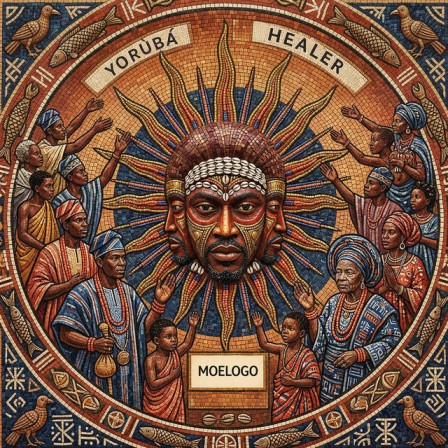
Now, more than a decade after that first EP, Moelogo arrives at a significant milestone with Yorùbá Healer, his debut album. Released on 31 July 2026 through Motrakz Records, the 13-track project represents a new chapter for an artiste whose career has long been shaped by the meeting point between his Nigerian heritage and British upbringing.
The title itself places Yorùbá identity at the centre of this latest body of work, while the album’s arrival gives Moelogo the space to present the accumulated experience of his years as a singer, songwriter and collaborator in a more expansive format. After years of building his reputation through singles, EPs and songwriting contributions, Yorùbá Healer arrives as the fullest statement yet from an artiste who has spent his career refining what it means to sound distinctly like himself.
Yorùbá Healer opens with “Elédùà”, a sombre acoustic guitar ballad that immediately establishes an emotive sonic landscape. Strummed guitars and bass provide the foundation as Moelogo enters with powerful, clear vocals sitting in the mid-to-upper register, delivering smooth, expressive melodies that are further enriched by layered harmonies. The song carries a deeply personal quality in its writing, with Moelogo reflecting on the struggles, sacrifices and sleepless nights behind his journey.
He sings, “And I do this so they could walk / Is the reason I had to crawl / I do this so they could jump / That’s the reason I took that fall / I do this so they could sleep at night / That’s why I always have sleepless nights”, framing his hardship as something endured for the benefit of others. The Yoruba passages deepen that personal reflection, while bright, warm group vocal ululations give the chorus a communal lift. As the song progresses, cinematic, stadium-sized drums enter in the second half, expanding the emotional scale without overwhelming the vocal performance. It is a powerful, moving introduction to Yorùbá Healer, with Moelogo immediately establishing both the emotional and vocal weight of the project.
From that sombre beginning, “Sundown” introduces a brighter rhythmic palette without abandoning the reflective quality established by the opener. Grand piano chords sit above clacking triplet snares and percussive hits, while soft singing from Moelogo gives the opening a gentle quality before string stabs and an increasingly swelling arrangement broaden the sound.
Log-drum bass and wailing strings eventually fill out the chorus, while his cadence becomes progressively more animated, including rapid-fire rhythmic melodies in the second verse. The song’s central idea is one of perseverance, gratitude and continuing forward despite whatever has happened before.
That sentiment is particularly clear when Moelogo sings, “Bi mo se dupe t’emi y’Olohun / Mi o de le so tan oh / After the sundown / Still I go rise up [As I give thanks to God / I cannot finish saying it / After the sundown / Still I go rise up.]”, expressing gratitude to God while reaffirming his determination to rise again. Rich layers of harmony vocals and sweet ad-libs swim through the stereo field, making the vocal arrangement particularly immersive, before Moelogo closes with falsetto ululations that recall the expressive vocal flourishes of Wande Coal. Yorùbá Healer begins to reveal its balance of emotional writing and rhythmic movement here, with the production constantly swelling and receding around Moelogo’s voice.
“Broke and Mighty” then settles into a softer, more introspective space, opening with filtered piano tones that establish a sombre mood before thumping four-to-the-floor kicks, percussive hits and rattling shakers provide a steady pulse. Moelogo leaves generous negative space between his agile melodic phrases, allowing his grounded humming and call-and-response vocals to gradually build tension before the chorus erupts with rich bass, cinematic syncopation and expansive vocal layers.
The song rises and falls dynamically, creating an emotionally transportive quality that keeps its considerable runtime from feeling cumbersome. Its lyrical perspective is similarly reflective, weighing personal difficulties against an awareness of life’s fragility and the need for gratitude. “I should be grateful / Hmmmm / People dey for hospital / Hmmmm / Dem no know if dem go wake up / Hmmmm / I still have my issues”, he sings, acknowledging that his own problems remain while recognising the importance of being grateful simply to be here. The second verse leans heavily into Yoruba, further rooting the song in the language and cultural identity that sit at the heart of Yorùbá Healer. It is the album’s longest song, but its evolving arrangement and steadily building vocal performance keep the momentum intact.
“Broke and Mighty” gives way to the lighter romantic energy of “For Us”, where staccato mallet chords and natural ambient sounds create an airy backdrop for rattling shakers and soft-spoken Afro-R&B drums. Dami Oniru, whose smooth vocal presence has made her a natural fit for intimate contemporary R&B, takes the lead at the beginning, opening the song with a gentle performance that flows into a sweet chorus built around a subtle bassline.
Sharp whistling synths mirror the layered humming around the vocals, adding a delicate melodic accent to the otherwise warm and enveloping arrangement. Moelogo takes a more relaxed approach when he enters, remaining largely in the middle of his range while allowing Dami to occupy the higher notes, creating a pleasing contrast between their voices.
The lyrics reinforce the song’s affectionate focus, with Moelogo singing, “Abeke mi, iwo naa ni / Omobolanle, iwo naa ni / Mo n fase lo tori e naa ni [My Abeke, it is you / Omobolanle, it is you / I swear, it is because of you.]”, before the song slips into its playful references to money, fashion and luxury. Their voices layer particularly well together, with shorter melodic passages and an easy Afropop cadence giving the track a relaxed, romantic character. The result is one of Yorùbá Healer’s most immediately pleasurable vocal pairings, with the instrumental almost enveloping both singers in a warm embrace.
“Sorry You Couldn’t Love Me”, already released as a single, returns to the more intimate emotional territory that marked the album’s opening. Shakers and soft-spoken Afro-inflected percussive syncopation move beneath filtered chords and strummed guitars, while Moelogo adopts a low-register delivery that makes the performance feel particularly close and vulnerable.
Log-drum and 808 bass thumps sit beneath the kicks, with sporadic snares adding sharp edges to the otherwise sombre sonic environment. Much of the song’s emotional weight comes from the sheer density of additional vocals surrounding the lead, with harmonies and background layers swimming through the arrangement and building an atmosphere around Moelogo’s expressive singing.
The lyrics centre on the pain of a relationship that has ended, balancing affection, confusion and an acceptance that the other person had their own reasons. He asks, “Ife mi, on lo, on lo / Nibo lo n lo? / Oh, how I wish you held on / A little longer / Sorry you couldn’t love me / Sorry, sorry / I know you had your reasons”. The combination of restrained production, layered vocals and low-register singing gives Yorùbá Healer another intimate emotional turn.
“Back To You” takes a similarly spacious approach, beginning with filtered chords and a vocal sample before stop-start drum hits create pockets of silence around Moelogo’s voice. The arrangement deliberately leaves plenty of room for him, with an ear-catching bassline and eventual beat drop providing the transition into fuller Afro drums. Those pauses and sudden returns give the track some of its strongest dynamic moments, allowing the instrumental to move between restraint and impact without becoming crowded.
Moelogo keeps his melodies relatively simple and largely remains within a comfortable register, using occasional falsetto runs to fill the spaces between phrases and provide a final vocal flourish. Lyrically, the song presents its addressee as a source of identity, guidance and emotional reassurance, with Moelogo singing, “You have been right where I stand / Cause of you I know who I am / Can you meet me ‘cause I’m running to you, to you / Running over to you / I’m becoming closer to you / Still running back to you”.
The repeated movement towards this figure, alongside lines about hearing their voice and needing understanding, gives the song a searching, yearning quality. “Fọkan mi balẹ [Calm my heart]” crystallises that need for reassurance, while the sparse arrangement gives the sentiment plenty of space to breathe.
“Bless Me” shifts Yorùbá Healer from the emotional weight of “Back To You” into a more subdued but quietly assertive space. Swelling pad and organ chords, wailing synth strings and a gradually building synth bass create the foundation, while Moelogo initially sits almost entirely exposed against the sparse instrumental. That restraint keeps his voice at the centre as he moves through the song with a mixture of reflection, frustration and self-assurance.
The writing speaks directly to the pressures surrounding him, pushing back against unnecessary questions while making clear what he actually needs from the people around him: “Don’t ask me if I’m good / You know wassup / Help me if you wan help me / Bless me just bless me”. The song then digs further into the experience of having to rebuild himself, with Moelogo declaring, “I remembered who I am so I had to pick me up / I had to lift me up”, before turning his attention towards the people who doubted him.
As the arrangement swells towards its crescendo, additional vocal layers and harmonies thicken the texture, giving the performance an increasingly expansive quality. The contrast between the restrained instrumental and the growing vocal mass allows the song’s sense of personal affirmation to land without needing to overstate it.
That sense of self-belief continues into “Phoenix”, where piano runs and strummed rhythm guitar chords sit over subtle clacking percussion and soft-spoken rhythmic elements. Moelogo surrounds himself with broad, warm layers of vocals, harmonising with himself while dynamic backing vocals follow the melody as it floats and flits through the arrangement. A string solo and whistling synth provide additional colour alongside his steady singing, but the vocals remain the centre of gravity.
The songwriting reinforces that assured sense of identity, with Moelogo stating, “I speak my truth, and I move accordingly / Funfun ni mi mi o ni tẹ, asẹ Elédùà / Àwọn to ro’bi si mi dem go feel am, asẹ Elédùà [I am pure, I don’t bend, so it is, Elédùà / Those who wish me harm will feel it, so it is, Elédùà]”. Musically, the arrangement mirrors that confidence by allowing the vocal layers to remain prominent while the instrumental gradually expands around them.

“You Know” slows the movement down again, beginning with filtered synth chords and subdued guitar licks beneath Moelogo’s relaxed, almost breathy delivery. The drums are deliberately restrained, built from half-time filtered percussive foley that evokes the ticking of a clock, with a versatile kick providing subtle rhythmic movement. Bright synth notes enter around the chorus, swimming through a bed of female group vocals that bring a gentle choral energy and provide a counterpoint to Moelogo’s considered cadence.
The writing is similarly conversational and understated, with the singer leaning into the intimacy of saying less and allowing the other person to understand without explanation: “I don’t need to say too much, you know / If you know (You know) / You know / I don’t need to say too much, you know”. That repeated idea of being understood without having to spell everything out gives the song a quiet self-assurance, while Moelogo’s gentle singing keeps it warm rather than confrontational. As the layers build, a saxophone solo and reverberating talking drums provide the final expansion, giving the song a graceful instrumental flourish as it closes.
From there, Yorùbá Healer moves into the deeply spiritual “Àlààfía”, whose simple bassline and filtered pad chords immediately establish a gentle, contemplative atmosphere. Wide string synths, prominent shekere and metallic percussion provide a light rhythmic framework as Moelogo begins primarily in Yoruba, singing comfortably within his mid-register with relaxed but highly expressive melodies. The performance has the quality of a prayer, with his vulnerable delivery gradually drawing the song outward through subtle harmonies and increasingly layered vocals.
The lyrics explicitly frame that prayer through images of hardship and a search for peace, with Moelogo singing, “When I am down / And the weight of the world / Is on my shoulders / I feel like all hope is lost / Fall on my knees oh oh oh / Pray for silence to come / Make these noise go away / Alaafia”.
The Yoruba passages that precede these lines deepen that spiritual framing, with references to storms, enemies, danger and gratitude to God before the English section brings the sentiment into sharper focus. As the chorus expands, effects and vocal layers make the performance feel larger and more emotionally enveloping, tugging directly at the heart of the song. It is one of the clearest moments on Yorùbá Healer where Moelogo’s vocal performance, language and subject matter converge into something immensely beautiful.
“Odamiloju” carries that spiritual thread forward but gives it a more buoyant rhythmic body. Gentle triplet snare hits sit over softened, upbeat guitar chords as Moelogo builds the song around a call-and-response prayer, surrounded by bright additional vocals. Extra drums and log drums gradually enter, while layers of traditional percussion spread across the stereo field, creating a fuller communal texture.
DOTTi The Deity, whose Yoruba delivery brings a strong spiritual and lyrical presence, slots naturally into this environment, contributing a verse marked by agile melodic runs while the surrounding backing vocals continue answering the lead. The song’s central message is one of faith, expectation and divine favour, captured in the repeated declarations, “I see it, I see it, I see it / I feel it, I feel it / O damiloju o, o damiloju o / Nnkan nla wa l’ona ti mo fe gba / Amin o [It is certain, it is certain / Something great is on the way for me to receive / Amen]”. The call-and-response structure makes the prayer feel communal rather than solitary, while the additional rhythmic layers keep the song moving with an upbeat, uplifting energy.
“Adé Ògo” then takes that celebratory spirit and places it firmly inside a Highlife setting. Four-to-the-floor kicks and bright, rhythm guitars establish the foundation before warm wah-guitar chords, Highlife percussion, talking drums and bass guitars join the arrangement.
Moelogo slips fully into character, adopting Yoruba and a bright, fluid delivery that recalls the expressive personality of Highlife veterans. His cadence moves playfully between Yoruba and Pidgin as the talking drums cascade beneath him, while gliding rhythm guitars and subtle live drum hits give the arrangement the feel of a live band performance.
The song’s lyrics tell a story of arrival and transformation, looking back at a time when Moelogo was underestimated before turning towards the blessing that has followed. He sings, “Once upon a time / Let me tell you where my story start / No be say I no dey try / Asiko ni gbogbo nnkan laye / Dem dey look down on me, dem think say o ti tan / Mo ni ‘Baba so ri won?’ / O ya gbe iranwo dide [Everything in life has its time / They looked down on me, they thought it was over / I said, ‘Father, did you see them?’ / Then He raised help.]”.
The full stylistic commitment makes the song especially vivid, from the band-like backing vocals to the spoken delivery that closes it. It feels like a carefully executed rendition of a Highlife celebration, right down to the smallest details of the performance.
“Best Part Of Me” closes Yorùbá Healer in a more intimate, diaristic space. Gentle strummed acoustic guitars cradle Moelogo’s introspective upper-register vocals, with sweet melodies floating over the arrangement as bass synth and clacking drums gradually enter alongside subtle live percussion. His additional backing vocals create soft layers beneath guest contributions from Show Dem Camp, whose veterans bring deep, considered rapped verses into the song’s reflective atmosphere.
The writing is personal but also celebratory, centred on discovering something greater than oneself and recognising the value of that blessing. Moelogo captures that feeling immediately with, “I will give you all of me / Best part of me / I thought I was bigger / But I got something bigger than me / And it’s perfect for me”. We then get the steely vocals of Tec and Ghost offering him their own blessings: “I pray for more blessings your way / I pray that God strengthens your faith / I pray you don’t end up as prey / And your steps ordained to walk better terrains”. The song’s tenderness is reinforced by the spare arrangement, which leaves the acoustic guitar, vocals and carefully placed rhythmic elements plenty of room to breathe.

Honestly, Yorùbá Healer left me blown away. I was not entirely sure what to expect from Moelogo’s long-awaited debut album, but what becomes clear very quickly is that both he and the project were in no big rush. There is little sense of an artiste trying to saturate the tracklist with commercial appeal, chase obvious hits or manufacture mainstream success for its own sake.
Instead, Yorùbá Healer is steeped in identity, philosophy and personality, which feels particularly important for an artiste whose career has been defined by existing between two worlds. The grounding and significance of the album’s title become deeply integral to its execution, themes and perspective, and Moelogo approaches that idea with remarkable confidence. The result feels less like an attempt to simply announce his arrival and more like a deliberate statement of where he stands and what he wants his music to mean.
That restraint is evident from the production. From the opening moments, there is no need to pretend this has to be a pure Afrobeats or Pop record built around immediate energy. The guitar-led opening, with its ballad sensibility and absence of hard-hitting drums, establishes the tone for much of what follows. There is a general air of introspection, sobriety and groundedness to the production, with roughly half of the songs allowing themselves to exist without forceful drums so that the listener can properly absorb their atmosphere and mood.
Guitars, soft keys, filtered pads and whining strings form a consistent instrumental palette, creating a cinematic foundation that facilitates the storytelling happening above it. That does not mean Yorùbá Healer is devoid of energy. There is bounce when the songs call for it, the romantic warmth of “For Us”, the pulse of “Broke and Mighty” and the Afro energy of “Sundown”, but energy is never the point in itself.
Instead, the production takes the listener through a series of rises and falls, pressing in and pulling back, waxing and waning across the tracklist. There are moments where the shared palette causes certain songs to melt slightly into one another, but overall, it provides a remarkably solid foundation for the album’s central presence.

That presence is, of course, Moelogo himself. For anyone unfamiliar with his voice, Yorùbá Healer puts almost every facet of it on display. His soft, breathy lower register, solid and confident mid-range, powerful emotive upper register and even angelic falsetto are all tested and expressed across the project. More than any other element, the vocal performances make these songs what they are. For a project this emotionally driven, the voice is the soul of the music, carrying the listener through its highs and lows through sheer expressiveness, control, power and dexterity. Every note, run and harmony contributes to that effect.
The songwriting proves an equally powerful accomplice. There is no healing without vulnerability, and Moelogo’s writing repeatedly looks inward, embracing introspection with an honesty and sincerity that rarely becomes saccharine. His use of Yoruba adds another layer of poeticism and expressiveness, giving the language both sonic and thematic weight throughout the album. These songs often feel like intimate conversations, personal prayers or therapy sessions set to music, each one pushing towards the healing that Yorùbá Healer promises.
The featured artistes contribute meaningfully to that process too, matching Moelogo’s vulnerability and openness while bringing their own vocal abilities and perspectives into the songs. Rather than simply decorating the tracklist, they externalise and reflect some of the ideas already being explored, adding further substance to the project.
All of this is tied together by bold engineering that makes particularly effective use of the album’s vocal architecture. The handling of vocal layers consistently emphasises space, depth and warmth, whether the listener is being wrapped in carefully stacked harmonies or confronted with powerful group vocals filling the stereo field as a chorus expands around them.
There are a few moments where certain elements feel slightly overpowering, although that could easily be an intentional creative choice given how efficient and effective the engineering is across the majority of the project. The technical execution largely succeeds in preserving the intimacy of the performances while still giving the bigger moments the room to bloom.
By the end of Yorùbá Healer, I had been moved to tears a couple of times. That feels like particularly high praise for an album that appears so committed to connecting, embracing and healing. Most debut albums are concerned with introducing an artiste: here is my sound, my name, my vibe. Moelogo, an artiste already long into his career, takes that introduction a step further. Here is my heart. It is difficult not to be moved by that degree of openness, especially when it is expressed with such confidence in the music, language and identity that have shaped him.
If even one listener finds some measure of healing in what Yorùbá Healer has to offer, that is already an accomplishment for both the album and the artiste behind it. I can only hope the world is paying attention quickly enough, because if this is Moelogo preparing us for the next healing session, I am ready to listen.
Lyricism – 1.7
Tracklisting – 1.5
Sound Engineering – 1.6
Vocalisation – 1.8
Listening Experience – 1.6
Rating – 8.2/10
Yinoluwa “Yinoluu” Olowofoyeku is a multi-disciplinary artist and creative who finds expression in various media. His music can be found across all platforms and he welcomes interaction on his social media @Yinoluu.