



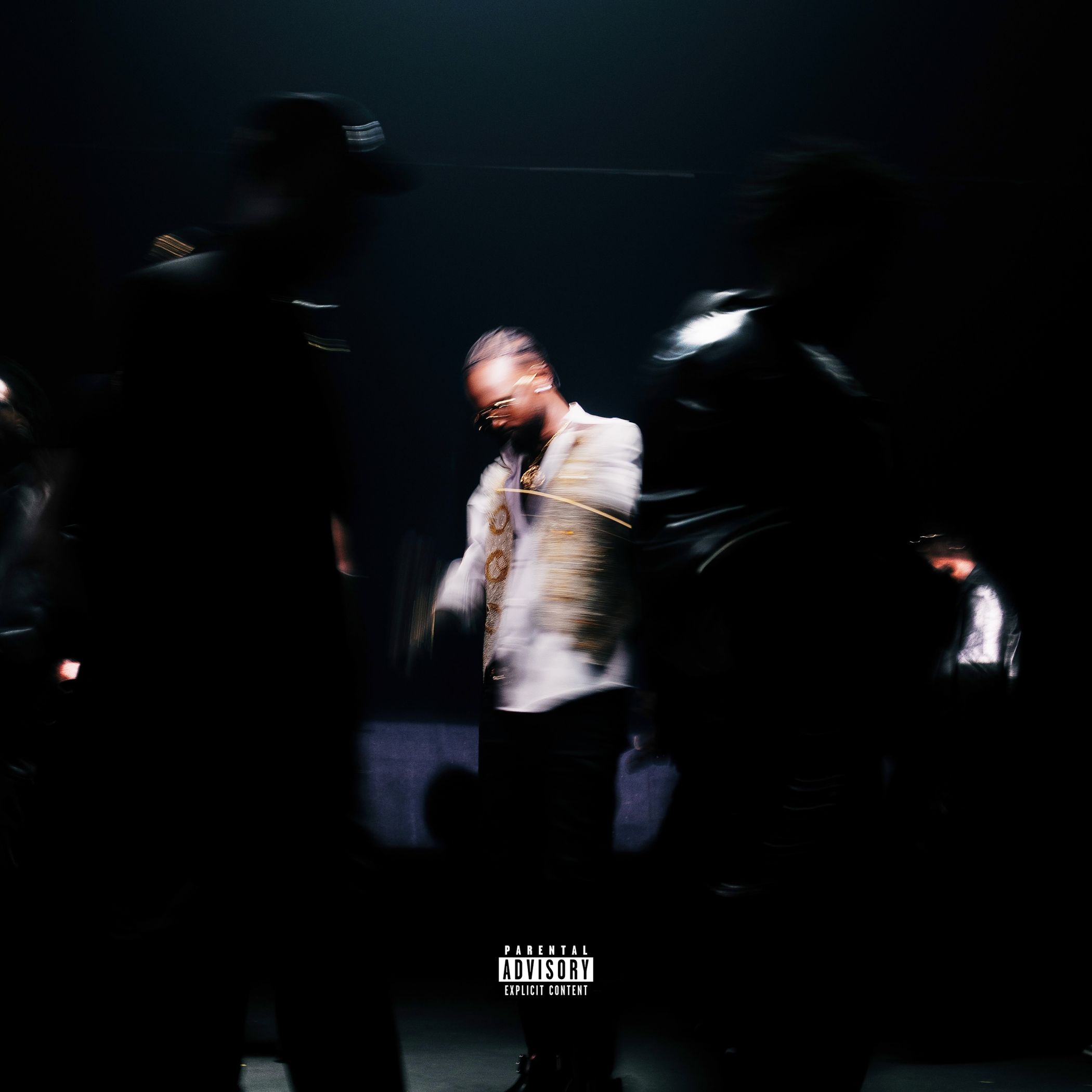
SUN SHERIF does not ask us to forget the darkness that came before it. Instead, it asks us to consider what that person might look like when he finally steps into the sun.
By Yinoluwa Olowofoyeku
Black Sherif has spent the better part of the last decade building one of Ghanaian music’s most distinctive voices, turning the language of struggle, ambition and self-reflection into a sound that moves fluidly between Hip-Hop, Drill, Highlife, Reggae and Afrobeats.
Born Mohammed Ismail Sherif in Konongo, Ghana, he began releasing music in 2019 with the demo “Cry for Me”, before his 2020 debut single “Money” and the 2021 arrival of “First Sermon” and “Second Sermon” brought his intensely personal storytelling to a much wider audience. The latter in particular became a major turning point, with its Burna Boy-assisted remix helping accelerate his rise beyond Ghana.
By the time “Kwaku the Traveller” arrived in 2022, Black Sherif had developed a reputation for marrying raw, syncopated delivery with mournful melodies and deeply introspective writing, and the song became a continental breakthrough, reaching the top of the Nigerian and Ghanaian Apple Music charts.
That momentum carried into his 2022 debut album, The Villain I Never Was, a 14-track exploration of pain, self-sabotage, perseverance and self-actualisation that established the philosophical dimension of his songwriting as firmly as his musical versatility. The project earned Album of the Year at the 2023 Ghana Music Awards, while Black Sherif himself won Artiste of the Year alongside several other honours that year.
His sophomore album, IRON BOY, followed in 2025, further extending his artistic evolution, and in May 2026 he became the youngest artiste to win Ghana’s Artiste of the Year award twice after another victory at the Telecel Ghana Music Awards. Now, following that rapid ascent, Black Sherif enters another chapter with SUN SHERIF, a six-track EP released on 4 September 2026 through Blacko Management and EMPIRE. Running for roughly 15 minutes and featuring AratheJay and Trinidadian duo Full Blown, the project moves through ambition, relationships, vulnerability, self-discovery and a noticeably more hopeful perspective, with Black Sherif exploring what it means to allow himself greater openness after years of music shaped by survival, isolation and uncertainty.
“Expresso” opens SUN SHERIF with a striking sense of lightness, beginning with bright, expressive piano figures that immediately establish the song’s sweet, almost indulgent character. Strings sit behind the piano, gradually becoming more prominent as the arrangement develops, while a warm bass grounds what otherwise remains a remarkably airy instrumental. Black Sherif enters lightly, favouring a melodic, rapid-fire cadence that leans more towards singing than rapping, and his delivery has the quality of someone simply allowing his thoughts to spill out rather than constructing an elaborate vocal performance.
The lyrics move between English and Twi, with Sherif moving from reflections on his success and the life he has built to a more romantic opening in the song’s framing. He begins by addressing someone as “The best / You and me are special / You don’t need expresso”, establishing the affectionate tone before the verses become more reflective. There is a stream-of-consciousness quality to the writing as he moves through ambition, survival and the passage of time, eventually arriving at a more intimate space.
The production remains focused on his voice, with backing vocals used sparingly rather than crowding the lead, allowing individual phrases to sit clearly against the piano and strings. As the song progresses, the strings swell into bright, wailing lines, while sustained notes stretch across changing chord progressions and give the arrangement a cinematic quality. The result is an unusually graceful introduction to SUN SHERIF, with the orchestral sweep making Sherif’s reflections feel both intimate and expansive.
“Running Around” takes that newfound lightness into a more explicitly romantic setting, beginning with soft piano chords before introducing a jazzy Hip-Hop flourish through incessantly rattling hi-hats, delicate snare rolls and little flam-like accents. The percussion remains light and uncluttered, leaving plenty of room for acoustic guitar, lively bass guitar and warm pads to shape the song’s tropical character.
There is something vaguely Bossa Nova- and Salsa-like in the relationship between the guitar and bass, giving the instrumental a bright, almost sunlit quality that fits the broader emotional shift described around SUN SHERIF. Black Sherif responds with a soft, breathy upper-register performance, sounding unusually gentle as he sings about the uncertainty of affection.
The chorus repeatedly circles around, “You’re running around like I don’t love you”, turning the phrase into something that sounds less accusatory than pleading. That sense of yearning becomes even more pronounced through the “oohs” and “aahs”, background ululations and layered vocals that gather around his lead. The lyrics move between declarations of commitment and frustration at someone who appears reluctant to fully accept his affection, with Sherif asking, “If you were my person I’d be easy, do you care?”.
There is a tenderness to the entire performance, particularly because the instrumental never becomes overly dramatic. Instead, the warmth of the guitars, bass and pads gives his voice enough space to carry the emotional tension, making “Running Around” one of the clearest expressions of the romantic curiosity that defines this new phase of his music.
“Forever” continues that sense of spaciousness but introduces a more Afro-Pop-oriented rhythmic framework. Delayed and reverberated pads and guitar textures establish the atmosphere before a light drum pattern enters, built around triplet snares, kicks and claps that sit somewhere between Afropop and Afro-Swing. As the song develops, four-to-the-floor kicks, filtered keys and an 808-like low-end texture add movement without disrupting the song’s airy quality.
Black Sherif’s delivery remains remarkably rapid, but his phrasing is still melodic, with sections of the vocal often revolving around a small group of notes while the emotion comes from his cadence, articulation and layered harmonies. That restraint is especially effective because AratheJay enters with a strong melodic performance of his own, bringing rich harmonies and a bright vocal presence that contrasts beautifully with the bass beneath them.
The lyrics frame Sherif’s determination through the language of battle and devotion, with him singing, “In thy kingdom I’m a soldier / Kingdom I’m a soldier”, while the recurring “Mercies that flow forever” gives the song a spiritual undertone. AratheJay’s contribution then shifts the song into a more uplifting register, repeating, “Lift me up, make them know”, before Sherif returns with verses about ambition, sacrifice and the journey that has brought him here.
The production remains deliberately restrained throughout, allowing the two vocalists to occupy most of the emotional space. Even the ending resists a grand resolution, instead focusing on the drums and a guitar pluck that alternates across the stereo field before gradually fading away. “Forever” consequently feels less concerned with spectacle than with creating enough room for its vocal performances to breathe.
“Jolie” reaches further backwards, recreating the feeling of an older era of Afropop through both its songwriting and its sonic palette. Piano and warm pads provide the foundation, while the broad, flat kicks, slightly plastic-sounding snares, metallic hi-hats and clav-like tones recall the stock sounds and production textures of older synthesisers.
Live rhythm-guitar plucks and a rich bassline give the arrangement additional warmth, but there remains considerable space between the individual elements, allowing the instrumental to develop a droning, almost hypnotic quality. Black Sherif fills that space with some of his richest vocal layering on the EP, using expressive melodies and stacked harmonies that spread through the reverb around his lead.
The lyrics capture the openness and devotion at the centre of the song, as he sings, “Come show me you can have it / Me love obiara ne wo nkyi / I’ll love to love you, put no one above you”. [Come show me you can have it / I love no one but you / I’ll love to love you, put no one above you.] The repeated “Jolie, jolie” chorus then reduces that affection to a simple, endearing refrain, with Sherif stretching the phrase and allowing his voice to ache around it.
There is a wailing quality to his delivery that gives the song its sense of longing, while the guitars, pads and bass continue to carry much of the instrumental atmosphere beneath him. The melodies themselves remain relatively simple, but the vocal harmonies and sustained phrasing give them considerable emotional weight. There is something deliberately nostalgic about the entire construction, as though the familiar language of older African Pop has been used to create a softer environment in which Sherif can simply open his heart.
“Frontline” is the EP’s most pronounced return to the harder, grittier Black Sherif of previous eras, and even its title immediately establishes the language of conflict that runs through the song. Against a sustained atmospheric pad, Sherif launches straight into a rapid-fire rap performance, moving between English and Twi as the production settles into a deep, bass-heavy Hip-Hop framework. Rattling hi-hats, sizzling open hats, round punchy kicks and a hard Trap snare create a much more aggressive rhythmic foundation than the songs preceding it, while the melodic arrangement remains intentionally sparse. A droning pad and bassline do most of the work, with occasional chugging guitar accents adding texture.
Sherif’s voice correspondingly becomes grittier and more forceful, returning to the streetwise energy that has long characterised his rapping. He speaks about hustling, drugs, the bando, survival and the consequences that accompany that life, moving between hard-hitting punchlines and a more fatalistic sense of someone accustomed to living under pressure.
The chorus distils that mentality into a repeated demand: “Find me on the frontlines / Same body like it’s not mine / 16 rounds wobete shots fired”. The inclusion of gunshot effects and ambulance sirens makes the metaphor literal within the soundscape, transforming the production into an environment of danger and conflict. Even as the EP explores a more hopeful and emotionally open version of Black Sherif, “Frontline” demonstrates that the harder-edged parts of his identity have not disappeared.
Instead, they remain available whenever the subject matter demands them. The closing instrumental, stripped largely to drums and guitar, allows that Hip-Hop energy to linger after the final bars, leaving the listener immersed in the atmosphere of the track before the EP turns towards its final release.
“Love Again” provides that release in emphatic fashion, ending SUN SHERIF with its brightest and most celebratory song. Pads and keys introduce the track before an energetic percussion pattern arrives, bringing four-to-the-floor kicks, shakers, bongos and lively percussion into a vibrant Afro-Pop groove. Rhythm guitar is central to the arrangement, contributing the same tropical, Salsa and Caribbean-leaning quality heard earlier in “Running Around”, but here the energy is much more pronounced. The song carries the feeling of a carnival or island fiesta rather than conventional Reggae or Dancehall, with the percussion and guitar creating an almost Soca-like sense of movement. Black Sherif embraces that brightness vocally, singing almost entirely in his upper register and building a large chorus through harmonies, backing vocals and counter-melodies.
More importantly, the lyrics reveal the emotional destination towards which the EP has been moving. “Like the woman said / I need to fall in love today / I live to fall in love again” is a remarkably straightforward declaration from an artiste whose music has so often been defined by survival, isolation and emotional guardedness. Full Blown then arrive with a distinctly Caribbean delivery, bringing Jamaican Patois into the song and reinforcing its Trinidadian and island-inspired character.
The contrast between their relaxed Caribbean phrasing and Sherif’s bright melodic chorus makes the collaboration feel completely integrated into the song’s world rather than simply appended to it. By the end, the arrangement becomes almost entirely celebratory, with tropical African percussion, shakers and bongos carrying the groove while deep male group chants bring the EP to a close.
It is a fitting ending to SUN SHERIF, after moving through romance, vulnerability, ambition, spirituality and the harder realities of life, Black Sherif finishes by choosing openness, allowing himself to fall in love again and leaving the listener with the feeling of someone finally willing to embrace the warmth that has been waiting for him.
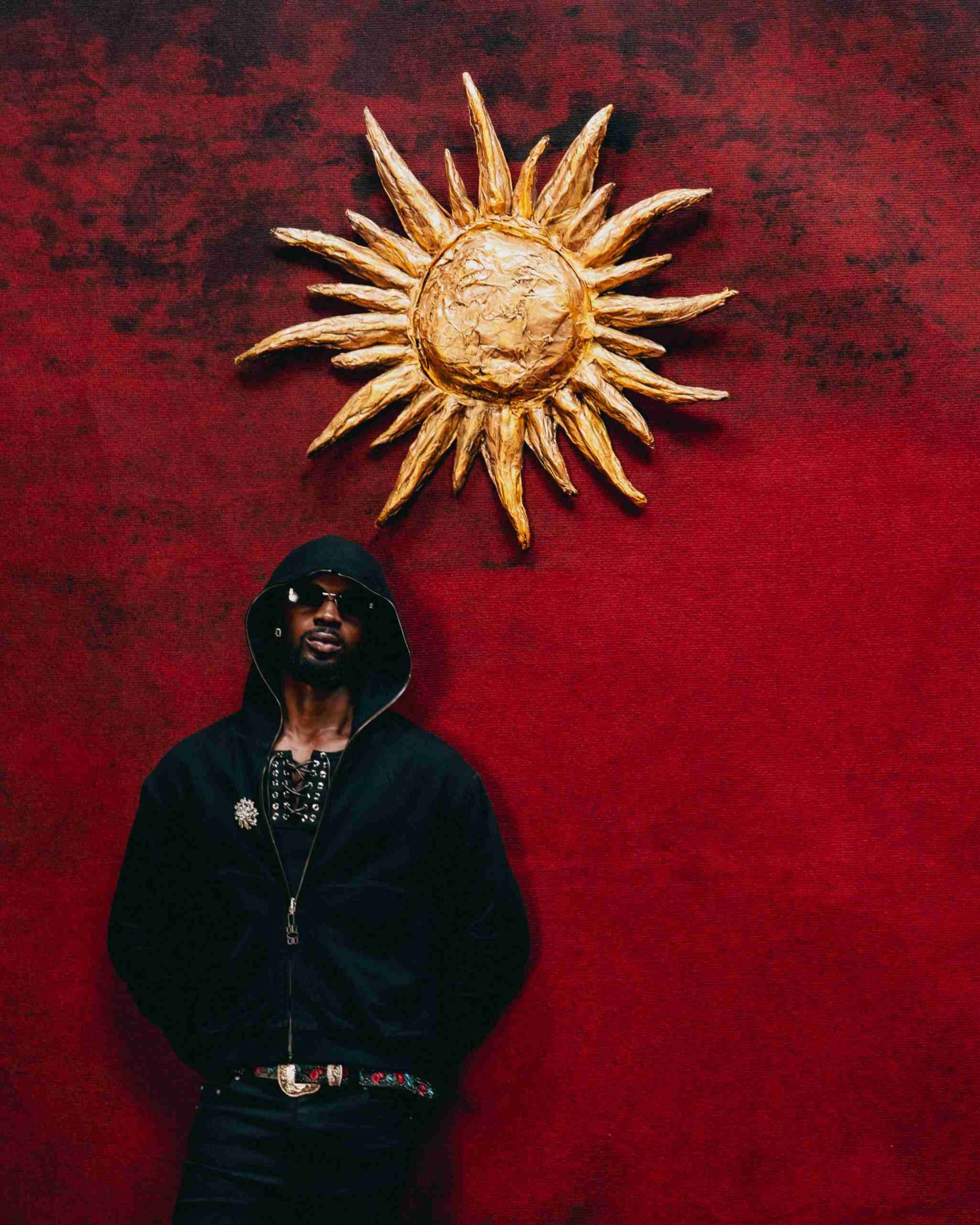
As a whole, SUN SHERIF feels like a deliberate step out of the darkness that has long surrounded Black Sherif’s artistic persona and into something warmer, brighter and more emotionally open. Even the title gives the project an identity, positioning him in the sunlight after years of music associated with isolation, loneliness, battles, struggle and grit.
There is a noticeable lightening of tone across the EP, and that thematic shift is sustained from beginning to end. Rather than abandoning the persona he has spent years building, Black Sherif allows us to see another dimension of it, one that is more receptive to tenderness, romance and emotional vulnerability. The result is an interesting expansion of the character at the centre of his music, because SUN SHERIF does not ask us to forget the darkness that came before it. Instead, it asks us to consider what that person might look like when he finally steps into the sun.
The production is one of the primary ways that transformation is communicated. Bright pianos, soft strings, warm pads, gentle guitars and relatively sparse percussion create a noticeably lighter, airier soundscape than the heavier environments Black Sherif often occupies. There is a deliberate reduction in sonic mass, with drums that rarely feel overwhelming and melodic arrangements that tend to revolve around a small number of carefully selected elements: bass, piano, pads and occasional guitar accents.
Even when the EP moves into Hip-Hop on “Frontline”, the production remains comparatively spacious around the vocal. Elsewhere, that openness develops into distinctly sunny, tropical and playful textures, particularly on “Running Around” and “Love Again”. In that sense, the production effectively opens the sonic sunroof for Black Sherif, creating the space for the thematic movement of the EP to become audible. The instrumental arrangements are not simply brighter because the subject matter is brighter. Their lightness actively gives him somewhere to place this new emotional expression.


Black Sherif responds to that environment by bringing forward a more melodic version of himself. His familiar vocal timbre, fry, inflections and recognisable phrasing remain intact, but SUN SHERIF places much greater emphasis on his singing voice, upper register and melodic instincts. Even when he accelerates his cadence and reminds us of the rapper we already know, his performances remain largely melodic, with the emphasis placed on how he sings through a feeling rather than simply how he delivers a bar.
The featured artistes reinforce this emphasis too. There are no guest rappers here; instead, AratheJay and Full Blown bring additional melodic personalities into the project, complementing rather than competing with Sherif’s vocal direction.
Across the EP, harmonies, backing vocals, counter-melodies and sustained upper-register passages allow him to explore longing, desire, affection, disappointment and vulnerability with the same expressive intensity that has previously characterised his darker material. The difference is that the emotional palette has changed. We already know how effectively Black Sherif can sound wounded, defiant or battle-hardened. Here, we hear that same expressive instinct applied to tenderness, romantic uncertainty and the willingness to open himself up.

Lyrically, SUN SHERIF is comparatively straightforward, but that simplicity serves an important purpose within the broader progression of Black Sherif’s artistic universe. The project allows him to explore emotional territory that feels less familiar for the persona he has established: romantic desire, attraction, partnership, trust, commitment, longing and the possibility of falling in love again.
“Running Around” captures the uncertainty of wanting someone who seems reluctant to accept that affection, while “Forever” moves through devotion, spirituality, ambition and the feeling of being carried forward by something larger than oneself. “Jolie” finds him openly declaring his affection and allowing himself to be emotionally vulnerable, while “Love Again” perhaps most clearly expresses the EP’s central shift, with its repeated declaration, “I need to fall in love today / I live to fall in love again”. Even “Frontline”, with its return to the language of danger, hustling and survival, becomes more interesting when placed within this new context.
Across these songs, Sherif continues to combine simple personal experiences, anecdotes and observations with broader ideas about life, belief, ambition and the lessons he has accumulated along the way. His writing therefore retains the directness that has always made his music accessible while opening up a different part of the character he has spent years developing.
What makes SUN SHERIF particularly engaging, then, is the experience of watching an established persona encounter unfamiliar emotional territory. There is something compelling about seeing the same Black Sherif who has spent so much of his career navigating battles, isolation and survival begin to explore what it means to trust someone, desire someone, lean into romance and allow himself to be vulnerable.
The EP broadens rather than replaces his artistic identity, revealing that the grit and toughness that have defined him can coexist with a much softer, more affectionate side. That expansion carries the listener along because we are not simply hearing new songs from Black Sherif; we are hearing a familiar character acquire new dimensions through new experiences.
For existing listeners, SUN SHERIF offers another side of an artiste they already know, while its greater emphasis on melody and emotional openness creates a different entry point into his artistry. Most importantly, it suggests that stepping into the light does not mean abandoning everything that came before. It means allowing those experiences to inform what comes next, and SUN SHERIF is an engaging exploration of what that next chapter can sound like.
Lyricism – 1.5
Tracklisting – 1.5
Sound Engineering – 1.5
Vocalisation – 1.6
Listening Experience – 1.5
Rating – 7.6/10
Yinoluwa “Yinoluu” Olowofoyeku is a multi-disciplinary artist and creative who finds expression in various media. His music can be found across all platforms and he welcomes interaction on his social media @Yinoluu.