

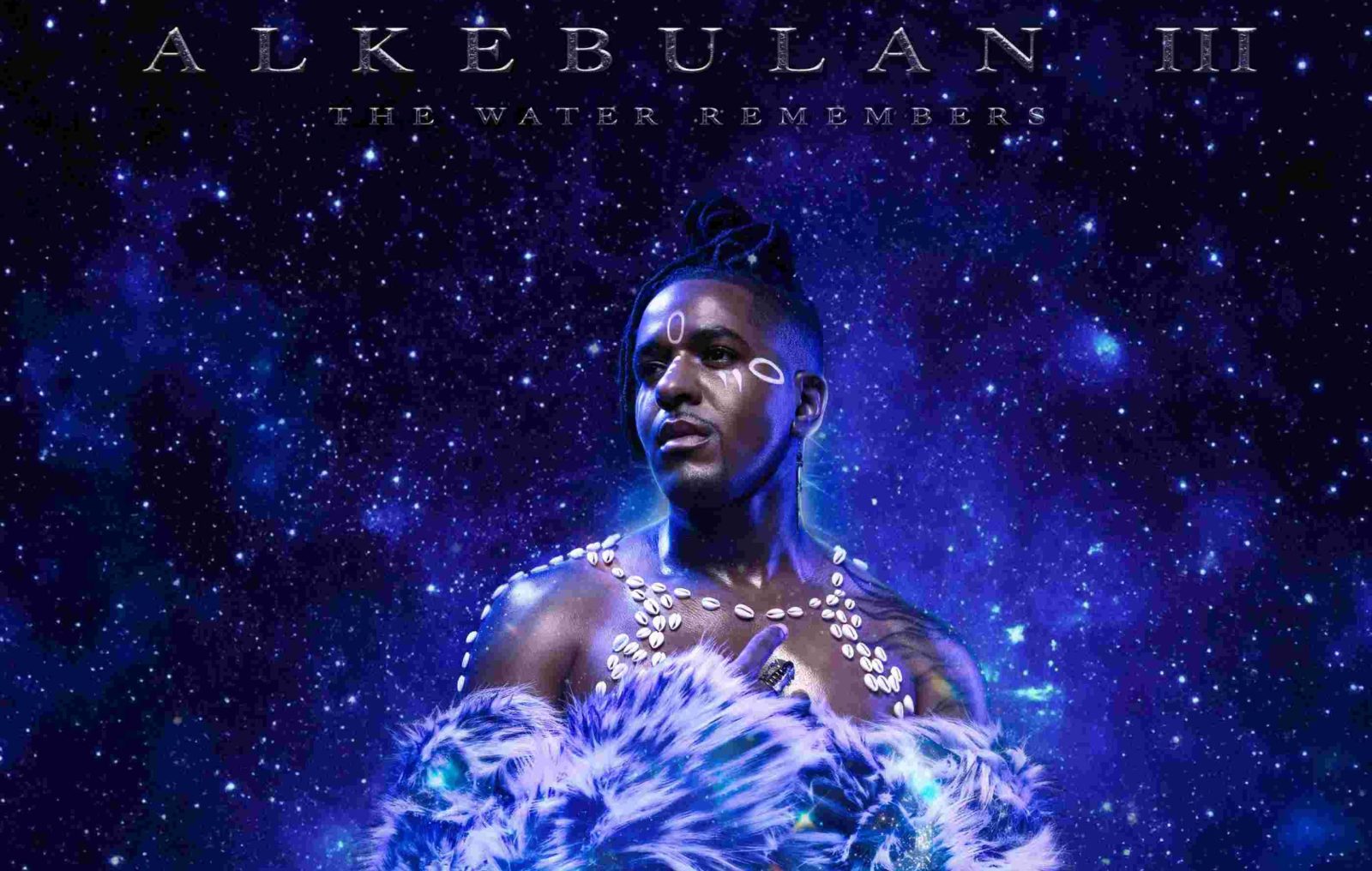

ALKEBULAN III: The Water Remembers is an extremely colourful, vibrant and cinematic sonic experience that keeps changing shape without losing its sense of direction.
By Yinoluwa Olowofoyeku
For more than a decade, Matt B has built a career at the intersection of R&B, Hip-Hop and African popular music, gradually turning a distinctly global musical identity into one of the most accomplished stories in contemporary African diasporic music. The Chicago-born singer, songwriter and producer initially found significant success in Asia, where his music developed an international audience, before his growing engagement with Afrobeats brought him into closer creative conversation with African artists and audiences.
His 2022 collaboration with Ugandan star, Eddy Kenzo, “Gimme Love”, earned a GRAMMY nomination for Best Global Music Performance, establishing the beginnings of a journey that would soon become much more deeply connected to the continent. In 2025, that journey reached a remarkable milestone when Matt B and the Royal Philharmonic Orchestra won the GRAMMY for Best Global Music Album for ALKEBULAN II, cementing the project as a significant statement of his increasingly Africa-focused artistic direction.
ALKEBULAN III: The Water Remembers arrives as the final chapter of that trilogy, but its story is considerably more personal than a straightforward continuation of its predecessors. Following his GRAMMY win, Matt B embarked on an effort to understand the lineage behind the African identity that had increasingly become central to his music. Genealogical research and an AncestryDNA test traced his ancestry to the Igbo people of Owerri in Imo State, Nigeria, leading him to travel to the country in June 2026 to encounter that heritage more directly.
The homecoming became both cultural and spiritual, with Matt receiving the Igbo name Ikechukwu and the chieftaincy titles Ahamefula, meaning “May my name not be forgotten”, and Nwanne Di na Mba, meaning “A brother in a foreign land”. That experience now sits at the heart of ALKEBULAN III, a project conceived not merely as an album but as part of a wider audiovisual exploration of ancestry, remembrance and the enduring connections between Africa and its global Black diaspora.
The scope of ALKEBULAN III: The Water Remembers reflects the scale of that ambition. Matt B brings together West African voices including Fatoumata Diawara, Skales, Goya Menor, Boy Spyce, Camidoh, The Cavemen, and the Kabusa Oriental Choir, while once again working with the Royal Philharmonic Orchestra, with orchestral recordings made at Abbey Road Studios.
Across the project, traditional West African rhythms and orchestral arrangements are positioned alongside Matt B’s R&B sensibilities, creating a musical framework for stories of heritage, spirituality, displacement and remembrance. The album is therefore the culmination of a journey that began with an artist looking towards Africa through his music and has now led him towards a more intimate question of where, exactly, his own story began.
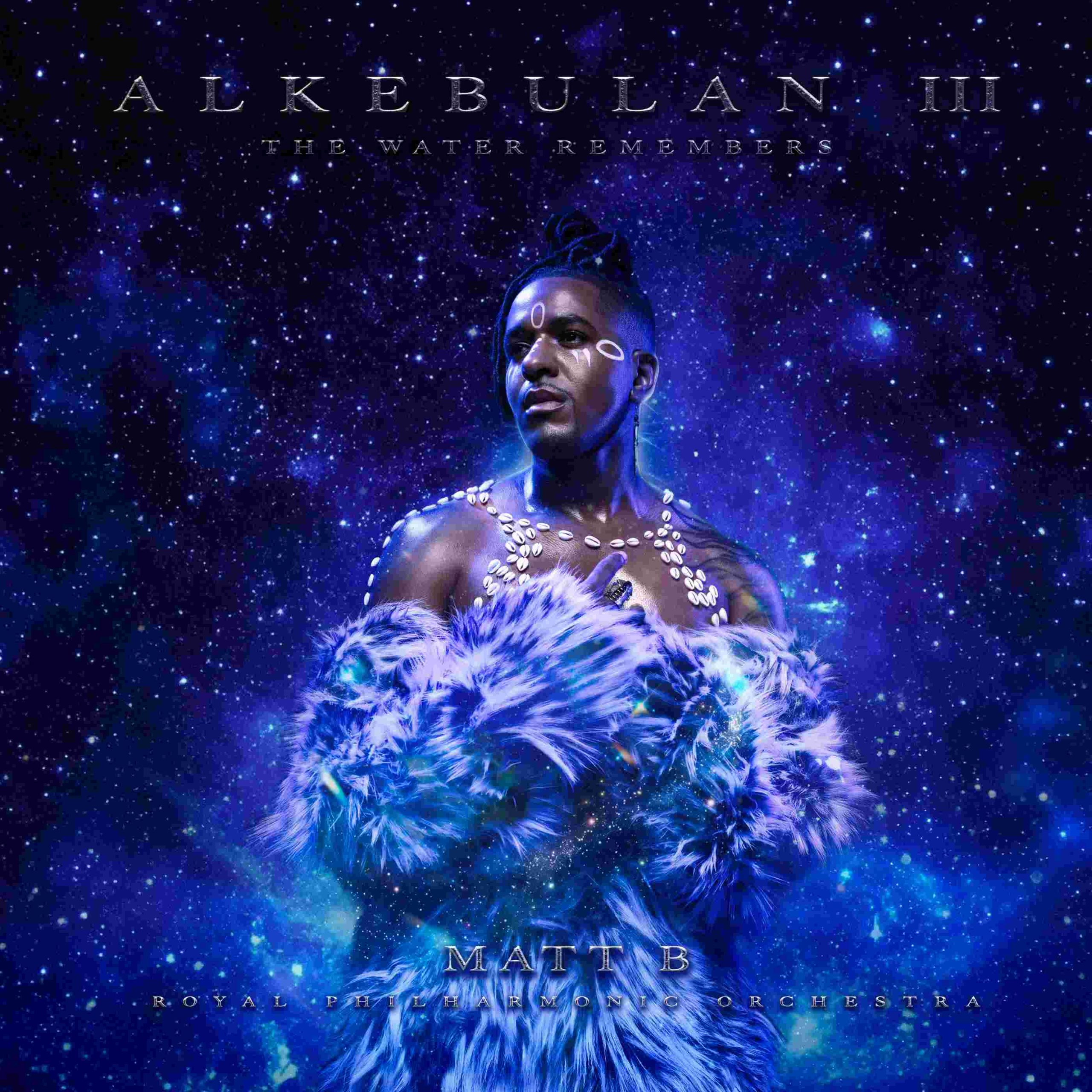
ALKEBULAN III: The Water Remembers begins with “At The End Of The Door”, a dreamlike introduction built around the delicate plucking of kalimbas before Matt B’s breathy vocals enter, delivering Igbo lyrics with an earnestness that immediately gives the song an intimate, personal quality. The writing establishes the album’s ideas of ancestry, healing and responsibility from the outset, moving from an invocation of creation and the land towards a declaration of purpose. That purpose becomes particularly clear when Matt B sings, “N’ihi na m nwere ike iburu mgbu a / N’ihi na m kwadebe ụzọ nye ụmụnna m niile / N’ihi na m bụ olile / N’ihi na m gwọọ obi mmerụ nke ndị m”.[For I have the strength to carry this pain / For I prepare a way for all my brothers and sisters / For I am their hope / For I heal the wounded hearts of my people.]
The sentiment is reinforced by the repeated invocation of the healer, the one who remembers, the one who protects and the one who gives hope, giving the song a spiritual dimension that extends beyond its personal delivery. Expressive woodwinds move gently around his voice, while the Kabusa Oriental Choir provide heartwarming additional vocals that gradually broaden the sonic picture. Rather than settling into a conventional song structure, the arrangement expands and evolves cinematically, with drums arriving to signal movement before the choral arrangement reaches a sweeping climax and then recedes. Spiritual ululations and talking drums introduce another layer of African musical texture as the piece continues to develop, eventually settling into shakers, a solemn pad and a contrabass flourish. It is an expansive opening that establishes the album’s orchestral character without rushing to explain itself, allowing its various instrumental and vocal elements to emerge and disappear like scenes unfolding one after another.
That atmosphere flows almost seamlessly into “Nothing Dey Pa”, where a bright synth and rich bass immediately add warmth to a lively rhythm-guitar foundation. Rattling shakers usher in an Afrobeat rhythm, giving the track a more recognisable rhythmic drive as Matt B responds with a bold and confident Pidgin delivery.
His words frame perseverance through faith and self-belief, beginning with the image of moving “through the valley of the shadow of my life” before arriving at the assurance that “nothing go fit quench my light” and “Oluwa dey my side”. The lyric pushes that confidence further into spiritual resilience as he declares, “I dey fast and / I dey cast and / I dey bind my demons”, before returning to the refrain that nothing can shake him. The statement is reinforced through call-and-response passages with a male backing group, while cinematic strings swell around the chorus and enlarge the track without overwhelming its rhythmic core.
Skales then joins the song, mirroring Matt B’s confidence with smooth singing, agile melodies, and sharp harmony lines before breaking into the rapid-fire Afrobeats cadence he is known for. The contrast between the two voices gives the track additional movement, with the arrangement continually adding new colours to its already lively foundation.
“Iri Ji” brightens the journey further with playful Highlife guitar, rich bass guitar and orchestral woodwind accents, while multiple layers of African percussion provide a lively rhythmic pulse underneath. Matt B embraces a celebratory mood here, moving between Igbo and English with an increasingly free-form vocal expression as the melodies evolve around him.
The song’s philosophy is captured in its repeated calls to move forward, “Niru niru ojemba / Ka anyi na ga”, [Ahead, ahead, warrior / Let’s go], before the more immediately celebratory refrain arrives with “Celebrate yourself / Come alive / Time dey go / No dey dull”. That invitation to enjoy the present becomes even more explicit when Matt B sings, “Everyday is a celebration / Chop your life / Drink palm wine / Cos you fit no find / Guarantee for later”, giving its exuberant instrumentation an equally buoyant lyrical centre.
Boy Spyce, whose distinctive vocal timbre has become one of the more recognisable among Nigeria’s younger pop voices, contributes an upper-register performance that provides one of the track’s melodic high points, adding runs that rise neatly above the rhythmic foundation. The song’s joy is plainly stated in his line, “Everyday is a celebration / Chop your life, drink palm wine”, giving its exuberant instrumentation an equally buoyant lyrical centre. The result is an energetic meeting of Highlife colour, African percussion and orchestral accompaniment, with the arrangement refusing to sit still for long before an orchestral overture carries the song directly into the next movement.
“Overboard” returns to the album’s more cinematic side, opening with wind sound effects and a moving choral arrangement before clacking percussion gradually enters beneath spiritual ululations and broad, richly layered vocalisations. Matt B takes on a more commanding role here, leading the piece through Igbo vocals that feel closer to melodic chanting and incantation than conventional pop singing.
The writing gives that haunting quality a narrative weight, moving from appeals to God and invocations of mother and father into an account of violence and deception, before turning towards resistance. “Ha gburu eze anyị ka anyị tiri ha egwu”, [They killed our king while we sang and danced for them], is followed by pleas of “Biko hapu anyi”, [Please leave us alone], before the lyric gathers strength in “Ha adighi ike karia anyi / Anyi ga agbapu echi”, [They are not stronger than us / We will escape tomorrow].
His voice acts as the centre around which the choir gathers, with the arrangement building layers of voices around him until the track assumes a haunting, almost ritualistic quality. As the piece progresses, percussive drums gradually creep into the arrangement and increase its rhythmic thrust, shifting the song from its initially suspended atmosphere towards something more propulsive. That momentum eventually gives way to an emotional string conclusion, maintaining the sense that ALKEBULAN III: The Water Remembers is unfolding less like a conventional sequence of songs and more like a continuous musical journey.
“My Mother’s Song” introduces a livelier rhythmic character, with shakers and layers of percussive hits sitting atop lively bass guitar, strummed rhythm guitars and playful flute lines. Within this warmer, more animated setting, Matt B offers gentle prayers, adopting the perspective of a mother praying for her child and moving between Igbo, English and Bambara.
The song’s opening establishes that connection to home and memory, with “Ìhè ụzọ dị n’elu igwe / Na-echeta m gara aga / Ebe ndụ m bidoro / Nne gwara m echefula”, [Light of the way that’s in heaven / Reminds me of my past / Where my life began / Mama told me don’t forget], before the lyric turns towards the experience of distance and the need to remain strong.
Fatoumata Diawara then brings the perspective of legacy into the song, repeating the Bambara lines “Ne dun bèna cinyè kelen / A cinyè kelen cinyè kelen”, [I’m going to leave one legacy / This one, this one legacy], giving the mother’s words an additional dimension of inheritance and what is passed down from one generation to the next.
The arrangement supports that intimacy without sacrificing its rhythmic warmth, with the gentle prayer eventually returning to the plea, “Oluwa, guide abeg o / Make I no fall / No break o”, [God, guide me please / Let me not fall / Do not let me break]. Diawara’s distinctive vocal styling and layered harmonies deepen the song’s cultural texture, adding the experience and weight of a veteran African singer to an already richly arranged exploration of memory, prayer and maternal care.
“The Passage” continues the movement with an Afrobeat foundation of clacking snare hits, thumping kicks and rattling shakers, while strummed guitar chords and live drum rolls give the rhythm additional physicality. Tremolo strings are scattered across the stereo field, complementing Matt B’s strong melodic lead and the broad group vocals supporting him.
Camidoh, the Ghanaian singer whose own work has established him as one of West Africa’s prominent contemporary voices, arrives with a confident performance that moves between half-rapped quickfire delivery and assured melodic singing. His contribution fits naturally into the track’s forward motion, particularly as the two vocal approaches sit against the increasingly layered arrangement.
The song’s writing carries the same sense of determined forward motion, balancing ambition with faith and the awareness that success comes with its own weight. Matt B sings, “Put our heart pon the work / Hustle, no break the law / Lock in, finish the job / No need for round of applause”, before acknowledging that “Heavy is the head with the crown / But trust me it no go fall”.
Camidoh then turns that confidence into a more personal declaration, singing, “Every Little Thing I Dream / I Must To Achieve It / Blessing Plenty For My Life / Too Sweet Like Ewedu And Amala”, giving the track its mixture of aspiration, gratitude and self-belief. The song continues building through agile vocal passages and increasingly broad harmonies before culminating in vocal runs supported by the full group, giving the track a satisfying sense of arrival.

“Fertile Ground” strips the rhythmic emphasis back and places the voice firmly at the centre once again. The Kabusa Oriental Choir support Matt B through a beautifully arranged vocal introduction, wrapping his lead in rich layers of harmony and particularly weighty baritone performances that provide depth and pulse beneath the arrangement.
The writing reinforces that grounding in ancestry, with Matt B reflecting on inherited struggle and the necessity of continuing to work despite hardship. “Anyị niile n’ahụhụ, ma anyị kụala n’ike nna”, [We all suffer, but we dig with the strength of our fathers], captures the connection between present struggle and ancestral strength, while the subsequent insistence that “Ejela azụ, ala nkwa ga-abịa n’oge”, [Do not give up, the promised land will surely come in time], turns that inherited resilience towards hope.
Around them, strings and woodwinds evolve continuously, creating an orchestral bed that shifts with the voices rather than competing for attention. Straightforward drum hits provide just enough rhythmic definition to keep the piece grounded, while the arrangement gradually moves towards a brass-led tremolo that carries directly into the next track.
Its brevity and transitional structure make it feel like another carefully positioned movement within the larger architecture of ALKEBULAN III, with the choir and orchestra working together to create a bridge between the album’s more rhythmic passages.
“Igirigi” immediately restores that rhythmic energy, pairing gritty ululations with tremolo strings, strummed rhythm guitars and piano chords over heavily pulsing, Amapiano-esque drums. Four-to-the-floor kicks, rattling shakers, layered percussion and metallic hits populate the arrangement with constant movement, creating one of the album’s most propulsive grooves. Against this foundation, Matt B delivers sweet melodies in a catchy lower register, singing about freedom and self-determination.
His opening declaration, “Freedom / Open space / To make I live my life / I no send anybody / Give me space”, establishes the song’s insistence on personal liberty, before the repeated invocation of “Omenala”, [the African culture], shifts that freedom into an explicitly cultural space. The message becomes even more direct when Matt B calls for listeners to “Stay glue to your motherland, fatherland” and declares, “Emi, I’m African and proud”, turning the song into an energetic affirmation of African identity and cultural connection.
Goya Menor brings energetic ad-libs that increase the track’s pulse before taking over with his gravelly vocal timbre, lending additional weight to that pro-African sentiment. His rougher delivery contrasts nicely with Matt B’s smoother melodies, allowing the song to maintain its rhythmic drive while giving the arrangement another vocal texture to work with.
“Children Of The Sun” settles into a warmer, more openly celebratory sound, built around rich strummed guitar chords, bass guitar and smooth rhythm-guitar lines. A children’s choir introduces the song with an immediate sense of innocence and warmth before shakers and scattered percussion establish an Afrobeats syncopation beneath Matt B’s expressive singing.
His vocal performance carries a clear emotional weight, while the chorus expands with the children’s voices and warm strings, heightening its sense of uplift. The Cavemen add their distinctive vocal character to the arrangement, bringing bright harmonies that further deepen the song’s spiritual quality.
The writing acknowledges the struggle behind that celebration, noting that “Many don go cos many don fight” and “Many won live but many don kpai”, before arriving at the refrain, “Life is a blessing o / And if you don’t know then now you know”. The song therefore holds hardship and gratitude alongside one another, with its celebration of life feeling all the more emphatic for the acknowledgement of those who did not make it through.
The lyric then returns to images of light, water and inner spiritual presence, before the invitation “Oya j’ijo”, [come, let’s dance], turns that gratitude outward into communal celebration. At its centre is a simple but resonant reminder that gives the track its emotional direction, before another sweeping orchestral overture carries the listener onwards.
The journey culminates with the title track, “The Water Remembers”, which brings the project’s cinematic language fully into focus. Rather than opening with a conventional rhythmic pattern, the song is anchored by a deep, effected male voice reciting a poem, giving the impression of the waters themselves taking on a speaking presence.
The lyric makes that perspective expansive from the beginning, with the narrator recalling the creation of the world, the shaping of humanity and the people who “rose from me” and “returned to me”. Around that voice, strings and woodwinds sweep and shift in broad orchestral movements, creating a spacious backdrop for Matt B’s bright, expressive vocals when they eventually enter.
The water then becomes a witness to displacement and historical violence, recalling how it “saw them sail across waters / Bearing songs and names that were stripped away”, before insisting that despite chains, violence and dispersion, “Yet they endured”.
He once again takes a leading role alongside the Kabusa Oriental Choir, guiding their spiritual and tribal ululations around the enduring poetic reading, as shakers and piano figures gradually add further definition to the arrangement.
The final declarations bring the album’s central idea into particularly sharp focus: “Their bodies hold the map of their Motherland / Their traditions are not forgotten / Their origins are not erased”, before the water finally affirms, “For I remember who they are / And I remember who I made them to be”.
The music continues to move through these layers without settling into a rigid verse-and-chorus structure, instead allowing voices and orchestra to rise, recede and return as the piece progresses. Eventually, the arrangement gives way to its closing coda, bringing ALKEBULAN III: The Water Remembers to its conclusion with the same sense of cinematic movement with which it began.


ALKEBULAN III: The Water Remembers is a uniquely constructed album, constantly straddling the line between an orchestral work and a contemporary Afropop record while ultimately functioning as an all-round musical experience. It feels like a cinematic auditory journey shaped by Matt B’s desire to reconnect with Africa, its people, music, culture, traditions and spirituality. His continued partnership with the Royal Philharmonic Orchestra and his instinct for sweeping cinematic soundscapes meet a deep fascination with, and reverence for, African musical forms, allowing the two worlds to exist alongside one another rather than compete. The result is a project that presents African music through a grand orchestral lens, bringing its rhythms, textures and traditions into a form designed to be experienced and appreciated by a global audience.
That celebration is embedded directly into the production. Sweeping orchestral passages alternate with Afropop-influenced sections that draw from Amapiano, Highlife and Afrobeats, with each style bringing its own rhythmic language, percussion and textural character to the journey. Thumping drums, layered African percussion, guitars, basslines and shakers provide the movement, while strings, woodwinds, brass and choral arrangements supply the cinematic scale.
Rather than simply placing orchestral elements over African rhythms, ALKEBULAN III repeatedly marries these two distinct sonic languages to serve the project’s larger musical journey. The result is remarkably cohesive despite the variety of its individual components. The instrumental palette remains recognisable throughout, while the seamless transitions between songs reinforce the feeling that this is not simply a collection of separate tracks but one continuous experience unfolding from beginning to end.
The vocals are just as important to that experience as the orchestration. Matt B proves himself an accomplished vocalist in his own right, possessing a powerful voice, strong timbre, clear projection and convincing control over his technique. He holds the lead comfortably across the album, moving from bright, uplifting melodies to richer harmonies and more restrained performances depending on what each arrangement requires. His voice is further strengthened by the project’s extensive cast of featured singers, with each collaborator bringing an assured delivery, authentic bounce and individual flavour while fitting naturally into the thematic and musical world of the songs.

The Kabusa Oriental Choir is perhaps the most consequential addition, bringing extraordinary depth, energy and emotion to the arrangements. Their divine, almost angelic vocal passages, female harmonies, deep male voices and call-and-response sections repeatedly give the music additional power and pulse, whether surrounding Matt B’s lead or sweeping across the arrangement as a full choir under his direction. They add something substantial to the emotional force that Matt B establishes on his own.
The lyrical writing on ALKEBULAN III: The Water Remembers ultimately reinforces the sense of purpose running through the project, with Matt B repeatedly returning to ancestry, remembrance, resilience, spirituality and the preservation of African identity.
His writing moves between deeply personal reflections on family, home, healing and perseverance and broader meditations on cultural inheritance, displacement and collective survival, often blurring the boundary between the individual and the communal. Matt B positions himself not simply as someone reconnecting with a heritage that was distant from him, but as a carrier and rememberer of that heritage, someone attempting to hold its stories, struggles, traditions and values and carry them forward.
That makes his personal journey feel woven into a much larger cultural tapestry, with his own experiences of searching, returning and rediscovering himself repeatedly opening out into questions of what a people remember, what they inherit and what they refuse to let disappear.
Even the album’s celebrations of life and freedom sit within this wider framework, balancing the weight of history with gratitude for what has survived. There is a clear sincerity to the way Matt B approaches these subjects, particularly in his use of Igbo and Pidgin to ground the writing in the cultures and experiences he seeks to honour.
Some of the phrasing and pronunciation occasionally reveal the difficulty of navigating these languages, but the commitment behind the attempt is unmistakable, and the writing remains effective at communicating its larger emotional ideas.
More than simply accompanying the album’s African instrumentation, the lyrics give its orchestral scale a human centre, connecting the grand musical journey to the intimate story of one person finding his way back to a people, and then recognising his own story within theirs.
That is ultimately where ALKEBULAN III: The Water Remembers becomes most impressive. It is an extremely colourful, vibrant and cinematic sonic experience that keeps changing shape without losing its sense of direction. The seamless transitions are particularly important, selling the idea of continuation and tying the entire project together as one cohesive journey rather than a sequence of disconnected songs. It carries the listener through different moods, rhythms and emotional peaks, creating an experience that can enrapture and transport even without requiring the listener to understand every lyric.
In that sense, the album becomes a demonstration of music’s ability to communicate through sound itself, through melody, rhythm, harmony, orchestration and the emotional qualities of the human voice. The engineering occasionally struggles with the sheer density of the arrangements, particularly when layers of orchestration, percussion, choir vocals and Matt B’s own voice converge, but those technical imbalances do little to diminish the scale of the artistic vision or the satisfaction of the experience as a whole.
The ALKEBULAN trilogy may be coming to an end, but after a project this expansive, it feels less like Matt B has reached the end of his story than like he has finally opened another chapter of it.
Lyricism – 1.5
Tracklisting – 1.6
Sound Engineering – 1.6
Vocalisation – 1.6
Listening Experience – 1.6
Rating – 8/10
Yinoluwa “Yinoluu” Olowofoyeku is a multi-disciplinary artist and creative who finds expression in various media. His music can be found across all platforms and he welcomes interaction on his social media @Yinoluu.