




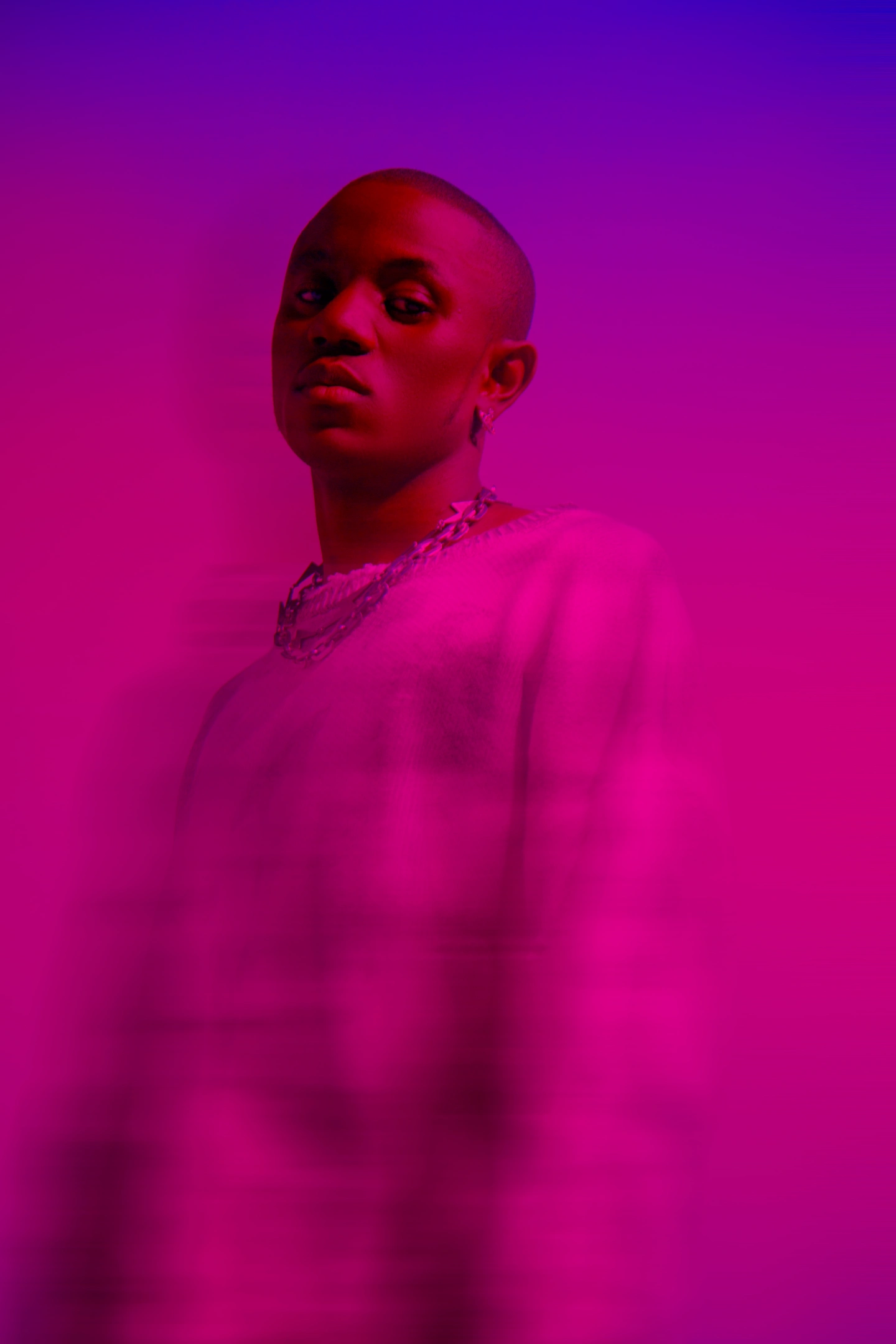
STARLIFE is a compelling demonstration of an artiste learning how to curate his own established identity rather than simply reinventing it.
By Yinoluwa Olowofoyeku
Victony has spent the better part of the last decade steadily transforming from a SoundCloud rapper with a taste for experimentation into one of Nigeria’s most distinctive young stars. Born Anthony Ebuka Victor and raised in Lagos, the Imo State native first began releasing freestyles and mixes online before introducing his spacey, genre-blurring sound with the Saturn EP in 2020.
His breakthrough arrived the following year through Mayorkun’s “Holy Father”, before the Outlaw EP and its runaway hit “Soweto” established him as a formidable melodic presence in Afrobeats. The song’s subsequent remix with Rema and Don Toliver became a global crossover moment, while collaborations with artistes including Burna Boy, Davido and Asake further accelerated his ascent.
That rapid rise was accompanied by a life-altering setback. In April 2021, Victony was involved in a fatal car accident that claimed the life of a close friend and left him seriously injured, beginning a long recovery that included multiple surgeries and months in a wheelchair.
The experience became central to the perspective he brought to his 2024 debut album, Stubborn, a project that turned inward to examine resilience, love, betrayal, childhood and the process of rebuilding oneself. If Stubborn was, in Victony’s own framing, his introduction and an account of what he had survived, its successor arrives from a markedly different emotional position.
By the time 2026 was in full swing, the singer had begun shedding some of the weight that had accompanied his rise, first through the sleek singles “FRE$H” and “SLICK”, and then through a creative partnership with Ozedikus that helped shape the looser, more playful direction of his sophomore album.
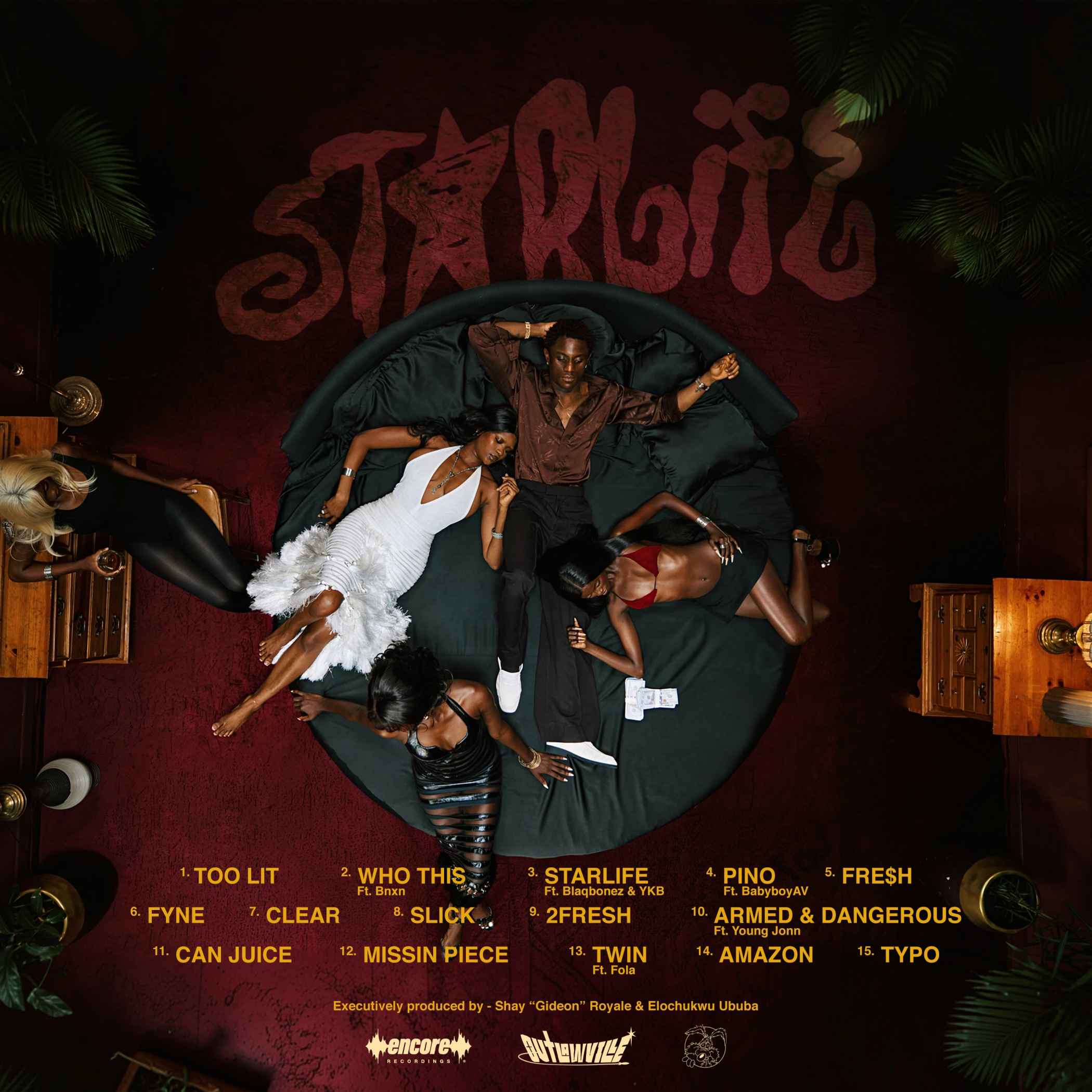
STARLIFE is a 15-track, 35-minute portrait of Victony settling into the life he has spent years growing towards. The album moves through Afrobeats, R&B, Hip-Hop and newer diasporic influences, with a notably smooth and spacious production style that leaves room for his melodies, understated ad-libs and increasingly confident rap instincts. Its subject matter is correspondingly lighter, trading much of Stubborn’s introspection for romance, pleasure, style, confidence and the pleasures of being a young pop star.
Yet the project is not simply a celebration of arrival. Victony has described the process as one of finally letting go of the pressure to get everything right and allowing himself to enjoy making music, and that freedom is central to the character of STARLIFE.
“TOO LIT” eases STARLIFE into its world with a smooth, minimal arrangement built around a warm bass synth, funky syncopated claps, subtle shakers and metallic percussion. Bright buzzing lead synths and layered group vocals give the chorus an immediate sweetness, while Victony fills the relatively sparse instrumental with carefully stacked harmonies, falsetto and different vocal textures. The lyrics are similarly economical, with the singer moving between flirtation, flexing and a carefree refusal to take things too seriously.
He opens with “Baby, I’m too lit, oh, looking for Jessica / All my boys, iberibe, all my boys, iberibe, oh”, before the chorus settles into the uncomplicated invitation, “Everything all right with me now / Hey, Swagger l’omo, come shine with me now”. The simplicity works because the melodies, bounce and vocal layering provide enough movement to sustain the song without requiring dense writing. Even the closing female vocal layers add another little flourish before strummed acoustic guitars carry the song directly into the next track.

“WHO THIS” picks up those acoustic guitar strums and quickly places them against kick-heavy Afrobeat syncopation, creating another spacious foundation for Victony’s sweet upper-register melodies. A sharp transition into a synth-bass-heavy bridge adds some contrast, while wailing strings and persistent synth notes expand the instrumental without compromising its minimalism. Victony’s high vocal register sits neatly above the bass-heavy production, and his use of backing vocals once again gives the arrangement more depth than its relatively simple components suggest.
Lyrically, the song is a playful introduction to an attractive stranger, with Victony asking, “Who this? (Sexy girl) / Ah, who this? (Sexy girl) / She say, ‘You know I do this’ (Sexy girl)”, before eventually arriving at the more intimate, “Say, she dey for Houston / Take me there”. BNXN’s verse complements this approach beautifully, bringing his own melodic flair and witty delivery to the song. His part is rhythmically and melodically compatible with Victony’s, reinforcing one of the album’s early strengths: these songs may be brief, but their ear-catching production, syncopated cadences and distinct vocal personalities make them feel remarkably full.
“STARLIFE” begins with filtered rhythm guitars and another introduction from the album’s increasingly recognisable group-vocal palette before dropping into almost half-time Afro-Fusion drums and a deep, rumbling bass synth. Victony’s upper-register vocals are densely layered across the chorus, setting up a call-and-response structure in the verses that allows his melodic lines to bounce against the group responses.
The song’s subject matter explains its loose, cheeky attitude as he repeatedly reminds his love interest not to take him too seriously: “Baby, no dey take me serious, oh / You know, I’m a jonzing guy / Baby, no dey take me serious, oh / You know, I’m a cruisin’ guy”. YKB and Blaqbonez both lean into that playful irreverence, with Blaqbonez adopting a more sung cadence than his conventional rap delivery while maintaining his sharp rhythmic flow, and YKB pushing further towards rap before introducing more melody towards the end of his verse.
The lyrics revel in the pleasures and absurdities of being young, attractive and successful rather than attempting to turn stardom into something solemn, and the production follows suit. Simple melodies and a relatively restrained instrumental leave the three artistes to generate most of the movement through cadence, delivery and personality.
“PINO” keeps the formula deceptively simple, placing straightforward Afrobeats drums over strummed guitars and electric-piano-like chords before additional synth keys and a warm pad gradually fill out the arrangement. Group vocals once again introduce the central idea, with the song’s catchy ululations adding melodic variation around Victony’s characteristically slick upper-register delivery.
The lyrics are similarly flirtatious and unserious, with Victony moving between sexual innuendo and playful boasts before Babyboy AV arrives with his own confident, high-register interpretation. Victony sings, “Oh, baby, look at your waist, it’s moving / Crazy, do me, come make we take Don Juli”, and the song’s deliberately uncluttered cadence gives each phrase room to land. Babyboy AV’s verse then brings a slightly different vocal texture without disrupting the song’s melodic centre.
Their chemistry comes less from dramatic contrast than from how naturally their voices and cadences fit together, creating the rollercoaster-like, flowing melodic energy that increasingly defines STARLIFE. It is another example of Victony understanding that a simple beat can become considerably more engaging when there is enough space for the vocalist to work inside it.
“FRESH” makes Ozedikus’ production instincts particularly apparent, combining Afrobeat drums with a subtle ’90s pop flourish and a filtered guitar arpeggio that leaves a lively bass-guitar line to carry much of the instrumental weight. Victony responds by stretching his phrasing across the available space, using a smooth melodic-rap cadence, upper-register singing and occasional vocal fry to create movement where the instrumental itself remains relatively stable.
The lyrics match the song’s easy confidence, moving through fashion, attraction and status with the same breezy attitude as the production. “My baby must fresh, oh, fresh, oh, fresh, oh, mama / I no see your set, oh, mama / Carry you for head, oh, mama”, he sings, before turning the swagger towards himself with lines about his lifestyle and sexual confidence. The repetition is intentional, allowing the song to function as much through texture and delivery as through lyrical progression. There are no dramatic instrumental switches to manufacture a climax; instead, Ozedikus and Victony let small changes in harmony, vocal layering and cadence provide the rise and fall. The result is smooth, bright and effortlessly catchy.
“FYNE” introduces a grittier energy, with Ozedikus’ production replaced by a harder, faster arrangement built around heavy four-to-the-floor kicks, Afrobeat percussion, an active bassline and a buzzing synth progression. Warm, rounded synths provide a counter-melody, while the persistent electronic buzz gives the track a tougher, almost techno-inflected edge. Victony responds by moving away from the more languid melodic singing of the preceding songs, breaking his lines into short, staccato phrases and riding the drum pulse with a faster, more rhythmically driven delivery.
The lyrics remain rooted in the project’s playful fixation on attraction and lifestyle, with the singer declaring, “Fine girl, you got it / And you know, baby, show them say, what?”, before escalating the swagger with “My baby must fresh, oh, in everywhere you go”. Spacious harmonies and ululations prevent the harder production from becoming too dense, while a quick-fire passage towards the end pushes his rhythmic delivery even further. The track is less concerned with elaborate melody than with the physicality of cadence, allowing Victony’s voice to float between the gritty synths while still remaining firmly locked into the drums.
“CLEAR” pushes that electronic aggression even further, with Rage building the song from layers of buzzing synths, a central arpeggio, deep synth bass and bright, twinkling keys over high-energy, syncopated Afrobeats drums. There is an almost underground, new-age electronic quality to the production, particularly in the way the repetitive synth figures create a trance-like momentum.
Victony deliberately keeps his vocal approach more restrained, working largely within his lower-to-mid register and adopting a casual, semi-rapped cadence that rides the rhythm rather than competing with the production melodically. The central refrain is almost hypnotic in its repetition: “Clear, clear, clear, clear / My baby bad and e clear”, a simple phrase that becomes increasingly effective as the vocals are filtered, layered and otherwise manipulated around the beat.
The verses open up more space, allowing the dense instrumental layers to do much of the work, while additional percussion and bright synth details expand the track towards its bigger moments. Where “FYNE” used Victony’s rhythmically agile delivery to generate its energy, “CLEAR” is more interested in repetition, texture and sheer sonic force.
“SLICK” is one of the clearest distillations of the album’s formula and, appropriately, one of its most immediate songs. Ozedikus builds the track around an exceptionally bouncy, spacious Afrobeat groove, with metallic percussion and clapping hits surrounding a large, warm bass synth that carries much of the melodic foundation.
Female group vocals introduce the central idea before Victony enters with a series of slickly layered melodies, altering his cadences and stacking his upper-register vocals across the sparse instrumental. The lyrical concept is almost comically simple, with the chorus repeatedly reducing itself to “Slick, slick, slick, slick”, but the restraint is precisely what makes it so infectious.
The verses fill out the flirtation with boasts about women, style and status, including the playful “Nwanne and Swagger l’omo / It’s a banger, you already know”, while the refrain’s repetition gives the song its earworm quality. Ozedikus’ subtle layering is crucial, adding rounded synths and warm keys without overwhelming the vocal performance. The result is sensual, catchy and immediately accessible, a song whose viral appeal comes from understanding exactly how little is required when the bounce, melody and delivery are all working.
“2FRESH” shifts back towards a more alternative Hip-Hop-tinged arrangement, opening with rapid-fire snares, plucked acoustic guitars and upper-register group ululations before heavy kicks and a rich, log-drum-meets-808 bass synth arrive underneath the filtered chords. The arrangement gradually accumulates guitars, bass and mallet chords, giving the track a sense of development without ever abandoning its simplicity.
Victony’s writing is deliberately cheeky, with the song leaning into sexual bravado and the pleasures of excess. He sings, “One milli’ for your footstep / Gucci shoe, too fresh”, before turning the swagger into a more mischievous joke with “Your body hot like Cameroon pepper / Huh, you verified”. The humour works because his delivery never sounds overly serious.
He breaks phrases and words apart across the beat, allowing the spaces between them to become part of the rhythm and creating a laid-back cadence even as the instrumental stays lively. It is another strong example of how STARLIFE repeatedly turns simplicity into a virtue, using phrasing, vocal character and rhythmic placement to make relatively straightforward ideas feel distinctive.
“ARMED & DANGEROUS” takes a more unusual route, beginning with subtle staccato chords before settling into a spacious, almost half-time groove filled with Foley, subdued snares, a buzzing hi-hat, thumping kicks and a warm pad that plays against the heavy 808. The track’s infectiousness comes from the interplay between those restrained drums and the triplet-like rhythmic figures that give the beat an Afrohouse flavour without fully committing to the genre.
Victony keeps his vocal performance equally economical, allowing the rhythm to do much of the work as he repeatedly circles the central phrase, “Armed and dangerous, oh, my darling, do as you like / 21 and dangerous, oh, my da-”, a line that appears to playfully echo the language of 19 & Dangerous. The chorus then reduces itself further into rhythmic syllables and repetition, reinforcing the song’s emphasis on feel rather than lyrical density.
Young Jonn’s appearance adds another familiar vocal texture, his distinctive tenor and layered backing vocals lifting the energy of his verse. The closing dance break is perhaps the track’s most unexpected turn, introducing a gated, distinctly techno/EDM synth texture that contrasts nicely with the subdued, half-time character of the main instrumental.
“CAN JUICE” pivots into another expression of Victony’s playful bravado, with the writing built around flirtation, sexual confidence and the kind of extravagant self-assurance that runs throughout the lighter side of STARLIFE. He opens with, “Orijo, no be sample / Bad for real life, no be angle / Fresh, fresh, no be canned juice”, before the song settles into a refrain of wordless vocalisation that keeps the focus on attitude and rhythm.
The second verse turns increasingly explicit, with Victony boasting about what he can offer a lover and promising, “Pull up in a foreign, make we shame them, oshey oh / Make I make the payment, oh, I’d do anything for my favourite, oshey”. It is not particularly interested in narrative or introspection, instead extending the album’s fascination with pleasure, attraction and the confidence of a young star enjoying his freedom. The sparse lyrical approach makes sense within the wider project, where repetition, melody and delivery frequently matter more than lyrical density.
“MISSIN PIECE” finds Victony at his most tender, beginning with soft acoustic guitars before Afrobeats drums enter beneath an unusually high vocal register that gives his voice an almost angelic quality. Warm pads, layered guitars, subtle backing vocals and a rich bassline gradually expand the arrangement, while later piano and sweeping strings introduce a cinematic emotional lift.
The vulnerability of the writing is immediately clear in the chorus: “Come into my world oh mama / You’re my missing piece / Baby, no do me like that / Keep on dancing, please”. The song’s romantic centre is uncomplicated but effective, especially as Victony moves between pleading and playful affection.
His post-chorus promise, “I’d like to put you in Chanel / Fly you to the moon / Whatever you want”, introduces the material luxury that frequently colours his romantic writing, but the softness of his delivery prevents it from feeling like another straightforward flex. Instead, the song feels intimate and unusually sincere, with delicate phrasing and bright harmonies revealing a more sensitive side of the singer. The orchestral flourish and voice-note-like closing passage deepen that intimacy, leaving the song feeling less like a conventional pop ballad than a private romantic confession.
“TWIN” returns to tender acoustic guitar before introducing sharp, dry snares and an Afro-Fusion rhythm anchored by a soft, rounded kick. The guitars remain the primary melodic voice, alternating between strumming and plucking over a long, rich bass synth, while Victony once again leaves generous spaces between his upper-register phrases. By this stage of the album, his melodic range and cadence are familiar enough that the interest lies increasingly in how he rearranges those familiar ingredients, and here the guitars and bass carry a subtle samba-like quality beneath the Afro-Fusion drums.
The romantic writing is straightforward but affectionate, with Victony promising, “Honey, I’ll buy you the world / Know say me, I no dey check price”, before arriving at the central image of the song: “Twin, twin, twin, twin / Uh-huh, it’s us / My baby, my twin”. The repeated single-word hook continues a motif that has appeared elsewhere on the album, using repetition as a melodic and rhythmic device rather than a limitation. Fola’s entrance introduces a more melancholic vocal colour, reinforcing the song’s softer reflection on love, closeness and compatibility as the instrumental becomes increasingly filtered around him.
“AMAZON” begins deceptively gently with acoustic guitar before exploding into rattling Afrobeat snares, tom hits and layered percussion. Bright guitar strums and grand piano provide a warm melodic counterweight to the drums, while buzzing synth leads add another electronic layer. Victony returns to his familiar call-and-response structure, surrounding his upper-register singing with group harmonies and repeated melodic motifs.
The lyrics are unabashedly flirtatious and physical, with the chorus reducing its central image to the repeated declaration, “And she keep it raining like Amazon / Sensation, sensation / She keep it raining like Amazon”. The verses maintain that same uncomplicated sensuality, relying on repetition and quotable phrases rather than elaborate storytelling. Yet the simplicity suits the song because Victony’s rhythmic phrasing gives each repeated idea a slightly different shape. His light, near-falsetto tone keeps the performance smooth even as the drums become more energetic, while the final strings and piano flourish provide a surprisingly graceful exit.
“TYPO” closes STARLIFE with one final exercise in restraint, opening around a looped Hip-Hop-leaning sample, piano and warm group vocals that have an almost child-choir quality before half-time Afrobeats drums enter. Clacking percussion, triplet-oriented snares, rich synth bass and warm pads give the track a weightier foundation, while wailing strings gradually emerge around the chorus.
The lyric plays with the idea of being unmistakably correct, with Victony repeatedly insisting, “Everything correct, this one no be typo / This one no be typo”, framing the song as another compact statement of self-assurance. He keeps his vocal lines deliberately spaced, allowing the bass and instrumental textures to breathe between phrases rather than filling every available space.
As the album winds down, the arrangement gathers piano and strings around his repeated melodic ideas before finally dissolving into a string-led coda. It is an appropriately understated ending to a project that has consistently found its momentum not through maximal production or lyrical complexity, but through space, repetition, melodic instinct and Victony’s increasingly assured command of his voice.
Taken as a whole, STARLIFE is an impressively accomplished and cohesive artistic statement, particularly in the way its cohesion extends beyond theme and subject matter into the album’s very sonic architecture. There is a remarkable consistency in its instrumental palette, production style, moods and emotional textures, suggesting that Victony and his collaborators entered the project with specific sonic ideas and motifs that they intended to explore repeatedly in different forms.

The recurring use of group vocals is perhaps the clearest example, with layered voices frequently introducing hooks, answering lead melodies or swelling around Victony’s delivery to create depth, warmth and a sense of community. Given the album’s themes of romance, pleasure, confidence and simply enjoying the life he has arrived at, these voices often feel less like an attempt to make his performances sound grandiose than an echo chamber for the ideas he is expressing, as though the songs exist within a larger communal space rather than as isolated declarations.
The same intentionality appears in the recurring single-word, chant-like choruses, the use of repetition as a rhythmic device, and even the arrangement of the songs themselves. Vocals are often introduced against filtered or softened instrumentals, allowing Victony’s lead to take centre stage before the arrangement expands through additional synths, harmonies, percussion or featured voices. Even the sequencing contributes to this sense of curation.
The run of grittier, heavier, synth-driven tracks creates its own sustained pocket of energy before giving way to the softer, acoustic-guitar-led songs, which similarly form a contrasting stretch of the album. Rather than simply placing fifteen songs beside one another, STARLIFE feels partitioned into interconnected movements, with its textures, rhythms and emotional temperatures flowing into one another to create a clear sense of progression.
That coherence is also a testament to the production, which consistently understands that Victony’s voice is itself one of the album’s most important instruments. His upper register, distinctive timbre and instinct for melody already command considerable attention, so the production rarely attempts to compete with him unnecessarily. Instead, it creates different environments in which that voice can operate.
Some of the STARLIFE’s more bass-heavy songs strip the melodic layers back to a powerful synth bassline and one or two grungy synths, leaving room for his stacked vocals to sit above them, while the softer material allows pianos, guitars, keys, strings and warm pads to weave around his melodies. Rhythm is equally important. Even when the arrangements become gentler, there is almost always a kinetic pulse underneath them, whether through carefully selected drum sounds, syncopated percussion, clashing rhythmic elements or the interplay between kicks and triplet patterns.
This becomes particularly effective because Victony himself is such a rhythm-conscious vocalist. His spacious phrasing, broken-up melodic ideas, syncopated cadences and precise blocks of repeated phrases interact with the production rather than simply sitting on top of it. The result is a body of work where the instrumental and vocal arrangements consistently feel designed around one another.
Victony’s vocal performance is stellar, although what makes it particularly interesting is that the experimentation here does not require him to abandon the characteristics that have already become synonymous with his sound. His register, vocal inflections, cadence, melodic runs and general approach remain recognisably Victony, to the point that there is rarely any question about whose song is playing.
His achievement on STARLIFE is instead in demonstrating how many different ways that established vocabulary can be arranged. He can stack dense layers of his upper register, strip himself back to a single spacious melodic line, switch between singing and semi-rapped cadences, break phrases into rhythmic fragments, employ falsetto and vocal fry, or use call-and-response structures and group harmonies to transform the same fundamental vocal identity.
STARLIFE’s frequent use of negative space is especially effective, allowing individual melodic lines to breathe while bringing the relationship between his voice and the production into sharper focus. The concise blocks of melody and the relatively short runtimes of many of the songs also keep the listener engaged, with very little opportunity for the performances to lose their momentum. There is a deliberate economy to the way he uses his voice: rather than endlessly adding information, he finds different ways to make a relatively focused set of vocal tools feel fresh.
The lyricism, meanwhile, serves a somewhat different function. Victony retains his familiar wit, raunchiness and carefree attitude, whether through a naughty aside, a clever line, a double entendre or the general energy of someone determined not to take himself or life too seriously. There is an almost hedonistic looseness to some of the writing, a playful refusal to concern himself too much with propriety, but lyrical density is not really the album’s principal source of momentum.
In fact, some of STARLIFE’s most effective vocal moments contain very few words at all. Ululations, vocal textures and melodic play occupy significant space, while the recurring single-word and mantra-like choruses gradually shift the listener’s attention away from the literal meaning of the lyric and towards rhythm, cadence and delivery.
The lyrics remain an important tool, but here they are often the vessel through which Victony’s vocal choices operate rather than the primary source of the songs’ impact. His greatest strength is how he delivers those words, repeats them, fragments them and fits them into the rhythmic and melodic architecture of each track.
All of this is held together by equally accomplished engineering. There is a remarkable amount happening beneath the surface, particularly in the dense vocal stacks, subtle effects, backing vocals and layered percussion, yet the mix rarely feels cluttered. Small touches and flourishes reveal themselves without disrupting the overall restraint of the production, allowing even the project’s more gung-ho rhythms and heavy percussion to retain a sense of space.
Ultimately, STARLIFE is a compelling demonstration of an artiste learning how to curate his own established identity rather than simply reinventing it. Victony already has a sonic signature that is immediately recognisable, but this album shows how expansive that signature can become when placed in different contexts.
He takes the same fundamental toolbox of high-register melodies, distinctive cadences, rhythmic phrasing and vocal textures and finds numerous ways to rearrange it, whether against gritty synths, warm acoustic guitars, sparse bass-heavy production or densely layered harmonies. The result is a confident, enjoyable and remarkably intentional album that not only captures where Victony is creatively now, but also makes a persuasive case for his versatility going forward.
We already know what a Victony song sounds like; STARLIFE makes the more exciting proposition that we may never know exactly what he is going to do with that sound next.
Lyricism – 1.4
Tracklisting – 1.7
Sound Engineering – 1.7
Vocalisation – 1.7
Listening Experience – 1.7
Rating – 8.2/10
Yinoluwa “Yinoluu” Olowofoyeku is a multi-disciplinary artist and creative who finds expression in various media. His music can be found across all platforms and he welcomes interaction on his social media @Yinoluu.