


For many African artistes, merchandise begins and ends with a T-shirt bearing their name. In other music markets, the T-shirt is only the beginning.
By Deborah Oyedijo
A name in cursive font. An album cover printed across the chest. Maybe a slogan fans already know. Put it on a shirt, announce it on Instagram and, if the drop goes well, sell out. But merchandise has become a much bigger business in markets that have spent years figuring out what fans actually want to own. In K-Pop, an album can come with different versions, photobooks and photocards that fans collect and trade. A tour can generate its own line of products. An artiste’s visual identity can become a fashion collection, a physical object or a limited-edition release.
BTS is one of the clearest examples of this model. The group’s commercial success does not rest only on people streaming its songs or buying tickets to see it perform. Physical albums and merchandise are built into the wider business around the group. For two recent quarters, merchandise and licensing revenue accounted for 37% of the combined revenue from recorded music and concerts.
That is the part of the K-pop model worth paying attention to. The product is not an afterthought attached to the music. The physical thing is part of the experience. A photocard works because a fan wants to hold something connected to an artiste they love. Multiple album versions work because one copy can become five, six or ten when collecting becomes part of fandom. Limited drops create urgency. Packaging becomes part of the appeal. The product gives fans something physical to keep, display, trade or use to signal that they belong to a particular community.
That emotional pull is what merchandise is really monetising, and it is why the question for African music should not simply be, “Why don’t our artistes sell more shirts?” The better question is: Why hasn’t African music built the infrastructure to turn identity and fandom into products at the scale other music markets have?
There are two particularly useful models to look at. The first is Taylor Swift’s ownership model. Swift’s merchandise operation is a reminder that the biggest opportunity in merch is not necessarily the royalty an artiste receives from allowing someone else to put their name on a product. It is owning the commercial system around that name in the first place.
Most musicians who enter merchandise arrangements with third parties are effectively licensing part of their brand. The artiste may receive a percentage of sales, often somewhere in the 5 to 15% range, while another company handles production, distribution and retail. Swift’s approach has been much closer to owning the machine herself, allowing her to retain significantly more of the value created after production costs.
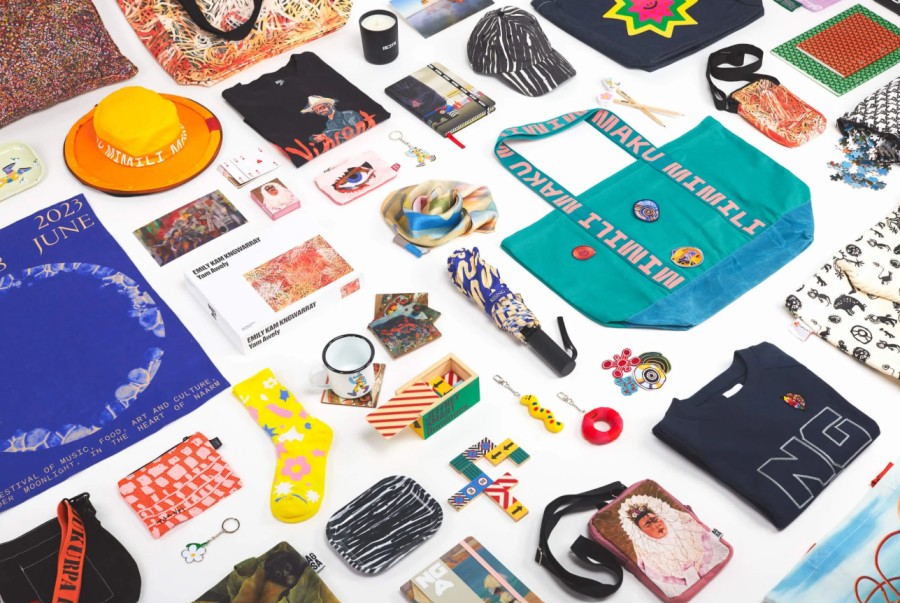
The scale tells its own story. The Eras Tour generated roughly $200 million in merchandise sales from its 2023 dates alone, separate from ticket revenue. Her official store has also generated substantial sales outside the tour. But the important lesson is not that African artistes should expect Taylor Swift numbers. They should not. The lesson is structural: merch can be treated as owned infrastructure rather than a licensing afterthought.
The second model is K-Pop’s collectable culture, and it operates differently. Instead of simply asking a fan to buy one T-shirt, labels build products around scarcity and completism. There might be several versions of an album, different photocards, special editions and seasonal releases. The fan is not necessarily making a one-time purchase. They are building a collection. That changes the economics completely.
If an artiste sells one T-shirt to a fan, the transaction may end there. If an artiste creates a world around an album and gives fans several desirable physical objects connected to that world, the same fan has multiple reasons to spend.
Africa has not yet built either model at anything close to scale.
South Africa provides one of the clearest examples of what could happen when music culture, fashion and commerce are allowed to overlap. GALXBOY grew out of South African youth culture and sits close to the Amapiano ecosystem, functioning as an artist-adjacent fashion brand rather than simply an artiste’s merch table. Its work with figures and movements from South African music culture shows what happens when the cultural energy around music is connected to an existing fashion and retail operation.
The distinction matters. GALXBOY is not successful because someone decided to print an Amapiano artiste’s name on a hoodie. It has its own creative direction, production and retail identity. Music culture feeds into the brand, while the brand has enough infrastructure to turn that cultural connection into an actual product business.
Nigeria has a different problem. It has several of the ingredients already, but they rarely come together consistently. Consider the relationship between some of the country’s biggest artistes and fashion brands. Burna Boy’s association with Ashluxe and Wizkid’s relationship with Vivendii show just how strongly African artistes can embody fashion brands and cultural movements. Their influence can make a brand feel culturally relevant simply through association. But there is a distinction between cultural embodiment and ownership.
When an artiste wears a brand, collaborates with it or becomes closely associated with its image, the commercial infrastructure still belongs to the fashion company. The artiste’s cultural value may help move the product, but the artiste has not necessarily built a merchandise business of their own. That pattern is worth naming because it is easy to mistake visibility for ownership.
Nigeria also has a counter-example that makes the problem harder to blame entirely on demand. Mavin Records has an official store with products across music and merchandise, including vinyl, CDs, T-shirts and accessories. Its wider corporate structure has included Mavin Clothing Line Ltd, while its ecosystem has also extended into ventures such as Culture Hayvn.
The point is not that Mavin has suddenly built Nigeria’s equivalent of HYBE’s merchandise operation. The point is that a Nigerian music company has demonstrated that there is nothing inherently impossible about putting music products into a functioning retail system. And the products are not limited to generic T-shirts.
Rema’s The Three EPs received an official vinyl pressing in 2021, combining his early Rema, Freestyle and Bad Commando projects into a physical collector’s format. It was sold internationally through retailers including HMV and Rough Trade. His Rave & Roses also received an official vinyl release in 2022.
That is important because it moves the argument away from theory. African music can be pressed onto vinyl. African albums can be sold as physical collector’s products. International consumers can buy them. Rema’s catalogue proves the technical possibility. Ayra Starr’s current official store pushes the same idea further. Her Starrgirl products include CDs, T-shirts, a vintage hat and a signed vinyl. Johnny Drille has also turned his Johnny’s Room Live concert brand into merchandise, with official T-shirts, hoodies and tote bags sold through Mavin’s store. These are not hypothetical products an African music industry could create one day. They already exist, which makes the more interesting question: Why are they still exceptions?
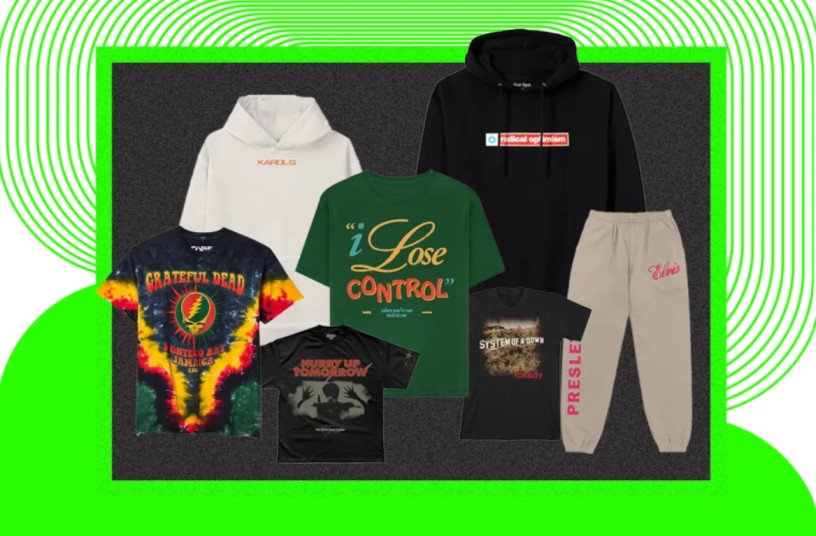
Ghana offers another useful comparison. Free the Youth is not an artiste merchandise company, but it demonstrates that a Ghanaian creative business can build a recognisable product identity, manufacture locally and sell internationally. Its catalogue goes well beyond basic T-shirts, with jackets, jerseys, trousers, shorts, hats and other products, including collaborations with Jordan. Again, the lesson is not that Free the Youth should be treated as music merch. The lesson is that the creative and commercial infrastructure can exist in an African market. What is less developed is the deliberate connection between that infrastructure and the continent’s biggest music fanbases.
And that is where the real problems begin. The first is production and fulfilment. It is easy to say an artiste should have merchandise. It is much harder to make 3,000 high-quality hoodies, store them somewhere, process orders, package them properly and get them to customers in Lagos, Accra, Johannesburg, London and New York without the operation falling apart.
Merchandise is a physical business. Someone has to design it, source the materials, manufacture it, control quality, decide how much stock to make, warehouse it, handle payments, shipping, returns and customer complaints. The artiste’s Instagram page cannot do all of that.
In markets where merchandise has become a serious revenue stream, there is an entire commercial ecosystem supporting those transactions. African music has brilliant designers, printers, manufacturers, fashion brands and logistics companies, but they are not always connected to music businesses in a way that creates a repeatable merchandise system.
Then there is intellectual property. An artiste cannot build a serious merchandise business if the commercial rights surrounding their identity are unclear. Who owns the logo? Who owns the artwork? Can the record label use the album cover on clothing? Can a fashion partner manufacture products using the artiste’s name? Does a producer have any rights in the artwork? Has the artiste protected the relevant name or brand?
These questions sound boring until money enters the picture. If an investor is putting serious money into manufacturing a merchandise collection, they need to know that the product can legally be sold and that someone else cannot simply reproduce it the next day. Weak protection makes investment less attractive because the person spending money to build the official product may be competing with someone who copied it without paying for the underlying rights.
That leads directly to another problem: counterfeiting. African music already has a thriving unofficial merchandise economy. A song blows up, an artiste becomes the name everyone is talking about, and suddenly there are T-shirts, posters, phone cases and other products carrying that artiste’s image.


The unofficial seller has one advantage: they do not have to build the brand properly. They can copy the artwork, produce a small batch, sell it through social media and move on. The official merchandise operation has to think about quality, permissions, customer service, inventory and logistics. The counterfeit seller only has to get the design onto a shirt quickly enough. That is not simply a piracy problem. It is evidence of demand being captured outside the official music business.
There is also the uncomfortable question of who African merchandise is actually being designed for. The diaspora is an obvious market. An African fan living in London or New York may be particularly willing to spend money on a product that connects them to an artiste or culture from home. International shipping can make the product feel even more meaningful because it is something they cannot casually pick up around the corner.
But if the diaspora becomes the primary imagined customer, African merchandise can begin to reflect the distance of the consumer rather than the culture of the artiste. That should not be dismissed. Diaspora consumers are an important market. But African-made merchandise should not have to depend entirely on distance from Africa to become desirable. It should be possible for a fan in Ibadan, in Accra, to buy an African-made product because it is genuinely well designed, well manufactured and worth owning. A fan in London should want the same product for the same reason.
That is where the idea of going beyond the T-shirt becomes important. African physical-format culture is still remarkably underdeveloped relative to the scale of African music’s global audience. Vinyl exists. CDs exist. Collector’s editions exist. But they are usually attached to particular artistes or projects rather than functioning as a normal part of an album campaign.
Imagine an African album campaign where the streaming release is only one part of the product. The standard digital album could sit alongside a limited vinyl pressing. There could be a numbered edition for collectors. The packaging could carry artwork specific to that era. A deluxe version could include photographs, handwritten notes or other physical elements that make the object feel connected to the music rather than simply putting the album cover on cardboard.
The product does not even have to be clothing. That is the part African music has barely begun to explore. If a fan loves an artiste’s world, what else would they want to own? The answer will be different for every artiste. For one, it could be a vinyl record. For another, jewellery, artwork, a book, a special-edition fragrance, a poster, a bag or something entirely unexpected. The strongest merchandise will not feel like an obligation to buy something. It will feel like another part of the artiste’s world.
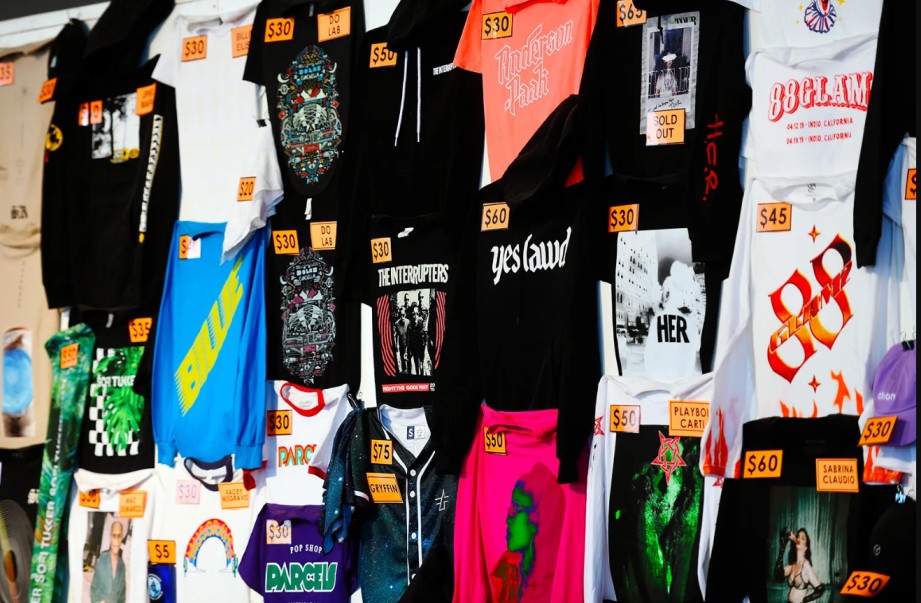
K-Pop has spent years turning this instinct into a business. Taylor Swift has demonstrated what happens when an artiste treats merchandise as an owned commercial operation. The US and UK markets have also developed a culture where buying something at a concert can become part of the memory of the concert itself. At Swift’s Wembley shows, fans queued for hours and spent money on hoodies, T-shirts, bracelets, posters, and tote bags because the merchandise was not simply clothing. It was a physical souvenir of being there.
African fans understand that feeling too. They just do not always have enough official products to act on it. That is perhaps the biggest missed opportunity in the current African music economy. The continent has spent years building enormous audiences, but the commercial infrastructure around those audiences remains heavily concentrated in streaming, live shows, brand partnerships and recorded music. Merchandise sits somewhere in the background, usually activated when someone has a tour, an album or a particularly enthusiastic fanbase. It could be much more deliberate than that.
African music does not need to reproduce Taylor Swift’s merchandise machine or copy K-Pop’s photocards. It needs to build a model that makes sense for African artistes, African manufacturers, African designers and African fans. That means investing in production and fulfilment. It means treating intellectual property as part of the merchandise business rather than something to think about after a product has already been copied. It means building official retail channels that fans trust. It means creating products with enough quality and originality to compete with global fashion brands, rather than relying on the fact that the buyer already loves the artiste.
And it means thinking globally from the beginning. African-made merchandise should be able to reach the fan in Lagos, Accra or Johannesburg and the fan in London, New York or Paris without feeling like a different class of product. The diaspora should be an important market, not the only market capable of sustaining the business. Because the hunger already exists.
African fans already want something physical that connects them to their favourite artistes. They already buy unofficial products. They already collect albums, attend concerts, wear fashion associated with their favourite stars and spend money to feel closer to the culture they love. What the industry has not built at the same scale is enough legitimate, desirable and well-made things for them to buy.
Merch is not just a T-shirt. It is another way for an artiste to turn fandom into something tangible, for an album to live beyond its streaming numbers and for African music’s cultural influence to become a physical economy of its own. The music has travelled. The question now is whether the things built around it can travel too.
Deborah Oyedijo is a music business writer and entertainment lawyer-in-training with a focus on the African music industry. When she is not writing about music rights and culture, she is watching K-dramas or absorbing yet another documentary. Connect with her on IG and X: ayooyedijo