


If one puts aside the naira’s loss of value, prospective house owners also have to contend with the high cost of cement, with a 50kg bag now costing as much as 15,000 naira.
By Chimezie Chika
Rent as Rend
In January this year, my partner and I made a decision to move cities to better optimise our careers and life goals. We made elaborate savings and logistics plans, and concluded that we should be moving by the first of June this year. It is September 2026, and that plan has not come to fruition. Among the many issues that came up in the interim are the shocking and exclusionary rent rates in Enugu, our city of choice. Nothing we found matched our budget.
For two people in a lower-income bracket in the hyper-inflated economy of Nigeria in 2026, our house-hunting failures became a perennial source of frustration, disillusionment, and disbelief. It was hard to understand how full-grown, employed adults could not comfortably afford rent for a decent-looking one or two-bedroom house in a city like Enugu.
But we were soon to find that our case was not unique. Throughout Nigeria today, rent has incrementally risen beyond the reach of the vast poor class and what could be perhaps called the floating class (for it could be argued that Nigeria has no tangible middle class). Not a day went by without us finding multiple videos of people railing against the unaffordable rent in the country.
Most of these people describe how hard they work, with many holding down multiple jobs or side hustles, or logging in extra time, and yet for many, none of these efforts has made the affordability of rent any easier. If anything, the hardest effort one makes in the present economy has progressively yielded smaller and smaller results. As they say, you cannot hustle your way out of a bad economy. The fix is always from top down, not vice versa.
Housing and the Nigerian Economy
It does not take much to realise that the housing problem in Nigeria exists because of the gross mismanagement of the economy; it explains why it is true that one cannot do better than the quality of the economy they live in. Over the last 7 years, the Nigerian economy has spiralled into one of the worst times in the country’s history. According to a number of reports, the Nigerian naira has lost over 200 percent of its value since 2023, and no one feels this loss more than the common Nigerian.
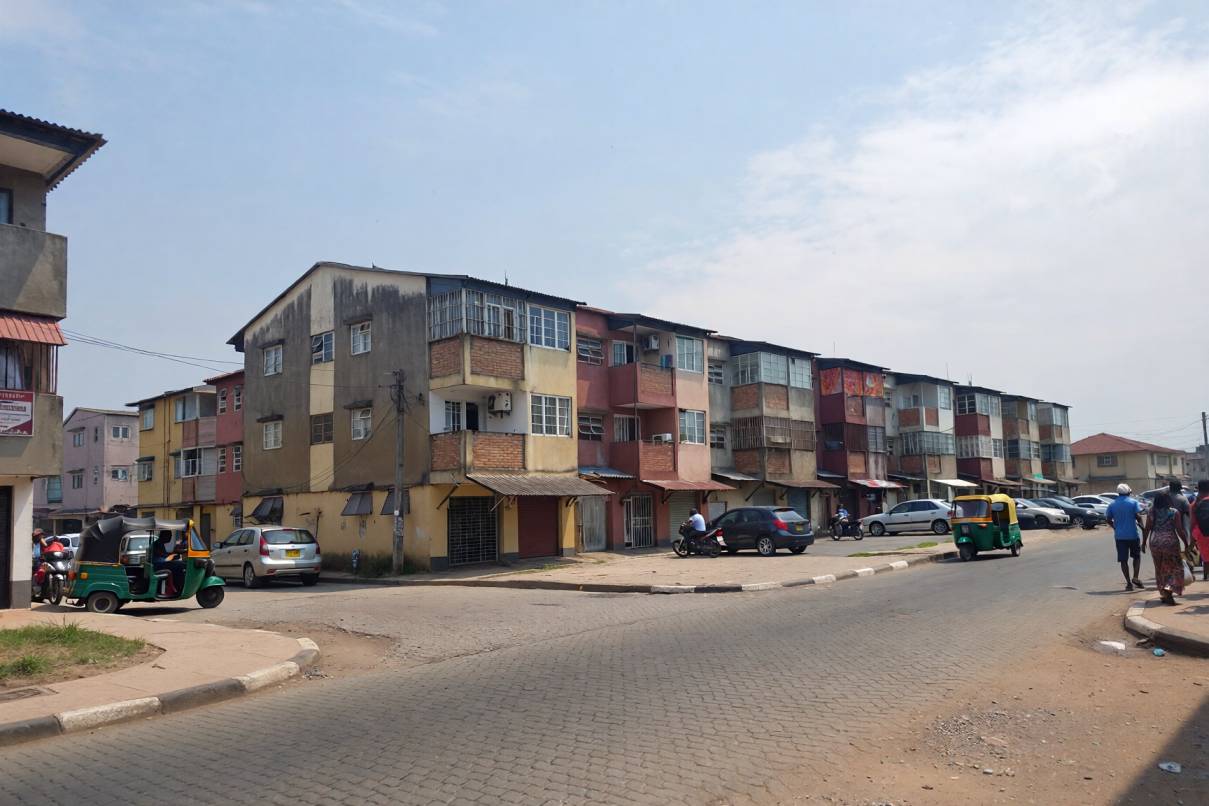
The naira’s severe loss of value over so short a time frame means that the Nigerian economy is in a depressive state, if even official government gazettes frame the issue as a mere “devaluation of currency”. The problem with the corresponding inflation from the depression is that the general incomes of Nigerians have not risen with the cost of living. In many cases, when adjusted to inflation, people are now earning far less than they were 10 years ago.
An oft-cited example of this, at scale, is Nigeria’s minimum wage. In 2016, Nigeria’s minimum wage was 18000 naira (about $90 dollars at the time), but today the supposedly increased national minimum wage, 70000, is only about $50 dollars. This means that the vast majority of Nigerians are poorer; incomes, despite marginal increases, do not stretch as far as they used to.
The effects of this on the housing crisis are immense. Aside from having a huge housing deficit of over 15 million units, according to the Federal Ministry of Housing and Urban Development’s cautious estimates, Nigeria has one of the most inflated housing rents in the world. The rents are so unsustainable that one begins to wonder whether the landlords have any idea what people actually earn.
During our house-hunting in Enugu, my partner and I routinely saw self-contained apartments going for as much as 1 million naira and one-bedroom flats going for as much as 1.5 million per annum (and these were even considered moderate). The endpoint of all this seems to be a situation where people are slaving all year only to pay rent and then subsequently go hungry.
The United Nations’ requirement that a sustainable income-to-rent ratio should be 30 percent is near-unsustainable in Nigeria; few ever earn enough to get to that level. Part of the problem of rent costs in Nigeria has something to do with the cost of building new houses in today’s Nigeria and the slow, bureaucratic and corrupt process that stunts property development in the country.
Even then, one identifies a complete disconnect between the kind of houses Nigerian estate developers are building and the actual housing needs of the vast majority of Nigerians. While many developers complain about the poor business environment, they also seem to be in complete disconnect with the reality of poverty in Nigeria. You cannot only focus on developing exclusive estates filled with overpriced duplexes and mansions in a country where over a dozen million people need basic housing.
From both public and private testimony, we can establish that there is a serious demand for housing in the country. What we do not know is if the high rent cost is driven by actual demand or other variables. What my experience has taught me is that we can have a clearer vision of the factors by asking a fundamental question.
Who Does the Housing Crisis Benefit?
The straightforward answer to this question is that the biggest gainers of the housing rent crisis are the landlords. Most landlords, even those who own very old properties, are quick to increase rents at the slightest economic instigation (I have experienced this several times), sometimes by as much as 70% of the original. Two reasons I have seen are: the inflated economy and the high cost of construction. It is never clear what effects these reasons have on existing buildings.
I once listened to an old retired civil servant discussing how housing was a long-term investment in his day, and it struck me that, judging by rents today, landlords now see housing as a quick-return investment where they can recoup their construction expenses in a few years. And in the current state of affairs in Nigeria, it should be nothing short of criminal to burden tenants with unrealistic ROI expectations around housing. It is criminal because it seems to me that these landlords do not expect their clients to be honest income earners, for most honest earners in Nigeria make up a vast majority of the poor.
The second reason that landlords cite, construction costs, is a valid one. That cost of construction has risen so much in ten years that the idea of building houses is no longer something an average Emeka or Tolu can dream of. One commentator, comparing the ability to build houses with income and purchasing power in Nigeria over the last 16 years, showed that one million naira could purchase an average of 588 bags of cement between 2010 and 2015, 285 bags between 2015 and 2023, but only 66 bags from 2023 to date.
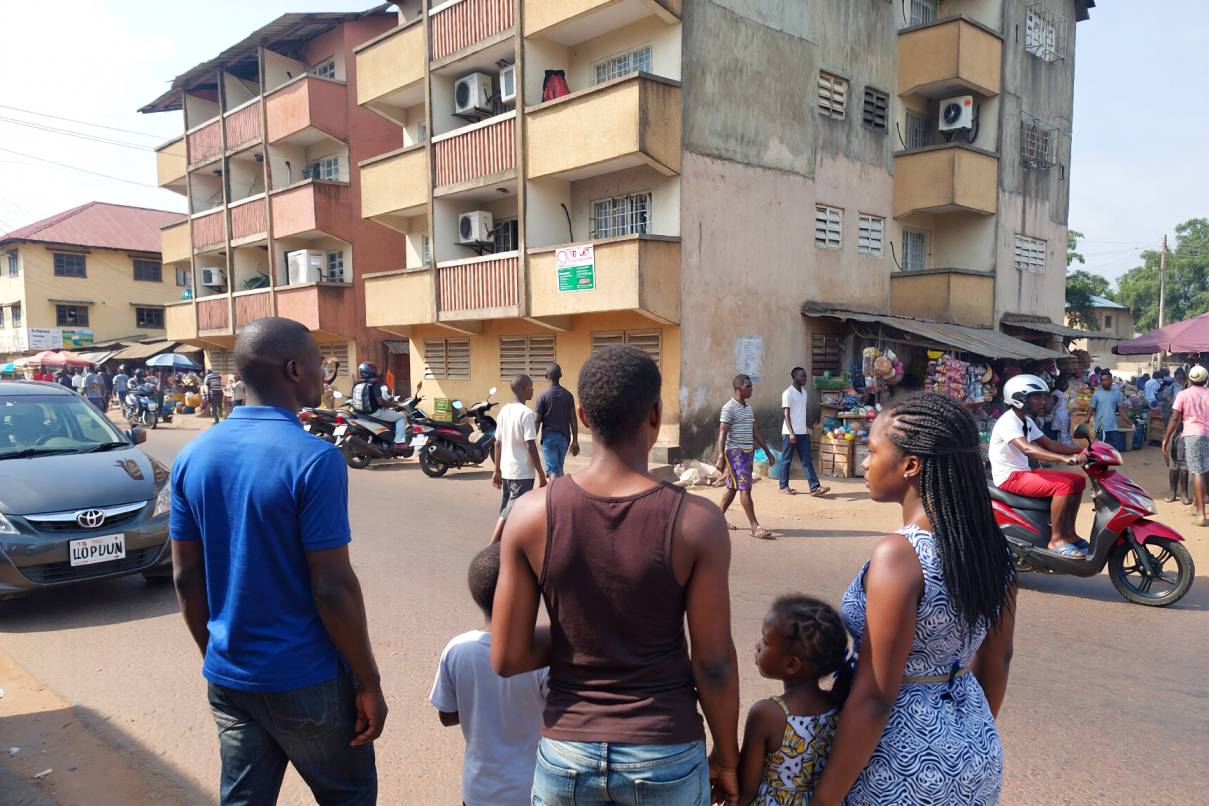
If one puts aside the naira’s loss of value, prospective house owners also have to contend with the high cost of cement, with a 50kg bag now costing as much as 15,000 naira.
There are two things to ponder here. The first is that Nigeria has an abundance of limestone, the core raw material for the production of cement, which makes it possible to produce cement cheaply in the country.
According to a Premium Times report, Nigeria’s installed cement production capacity is between 60 and 65 million metric tonnes, while the local demand is between 25 and 30 million metric tonnes. In short, the production is higher than the demand. Simple economics tells us that when supply exceeds demand, the prices of the commodity become cheaper. Yet, this is not what we see here. As a matter of fact, the same Premium Times piece reveals that cement costs far less in other African countries with far less cement production capacity, citing two instances of a 50kg bag of cement costing 2-2.5 times less in Kenya and Tanzania.
The second thing to ponder is a question: could the problem in Nigeria be what is more or less the monopoly of cement production by Dangote Cement, which controls over 50 percent of the market, or the extreme profit-oriented greed of Nigerian cement companies? The answer is yes, but not entirely. There are currently three major cement companies in Nigeria—BUA, LaFarge, and Dangote — which make 50% profit on sales, higher than the global average on cement sales; but we know that the presence of more cement companies in the country would quickly bring down the prices of the product. Herein then lies the caveat: the Nigerian government. Nigeria has a 52 percent tax on cement. That is, for every N1 of cement sold, 52 kobo is the government’s. Thus, 7,800 naira goes to the government out of a 50kg cement bag that costs 15000 naira. There is nothing to be said for this except to wonder how this improves the life of the common man.
The Agent Problem
But the initial question is still running: Who stands to gain from the rent crisis in the country? At some point this year, I came to the conclusion that, as with everything in Nigeria, there is a certain kind or class of people maliciously profiting and racketeering from the housing and corresponding rent crises in Nigeria: the house agents. The question of agents and their criminal exploitation is a talking point for most people who have been house-hunting recently in Nigeria. In short, I would argue, from my experience, that a big part of the rent issue has something to do with inflated agent fees and other funny fees, variously labelled: caution fee, maintenance fee, lawyer fee, miscellaneous fee, etc., each inflated beyond the point of reason. Some agents and landlords go as far as demanding rents and various other fees for two years in advance.
Here are a few facts from my house-hunt this year.
One-bedroom flat (TE)
- Rent – 900k
- Agent fee – 250k
- Lawyer fee – 200k
- Caution fee – 150k
- Total = 1.5m
One-bedroom flat (IL)
- Rent – 750k
- Agent fee – 300k
- Lawyer fee – 200k
- Caution fee – 200k
- Landlord’s fee/Maintenance – 100k
- Total = 1.55m
Just two examples out of many. In many cases, other fees were to be paid when packing in exceeded rent. It was mind-boggling. In many cases, fees were charged with almost admirable impunity. The way landlords treat tenants in this country is daring in a way that defies understanding. Evictions and rent increases are given on short notice, with very little consideration for the tenant.


Not on one occasion did I not ask my partner (who has been a lawyer in another life) if there are any tenancy laws at all in Nigeria—of course there are, she said, which I knew—but our lived experience was such that one may be forgiven for thinking that nothing of the sort exists. It also explains why agents in many places are having a field day charging beyond the standard 10% and manoeuvring around other tenancy requirements.
What Tenancy Laws Say
Regulation of tenancy in Nigeria is part of the residual legislative list. This means that it falls within the ambit of state governments, with each enacting the laws as they see fit. Thus, many tenancy-related laws exist under sundry names: Recovery of Premises Act (Abuja), Tenancy Law (Lagos), Landlord and Tenant Law (Anambra, Enugu, Ebonyi), Rent Control and Recovery of (Residential) Premises Law (Edo, Kwara), Recovery of Premises Law (Rivers, Ogun, Nasarawa), etc.
Notwithstanding the variation in names, there are basic elements common to most, if not all. These laws regulate landlord-tenant relationships and cover issues like rent regulation, terms of tenancy agreements, recovery of premises by landlords from tenants, etc. While many are not adequate or up to date, the extant laws make certain provisions that would, if properly enforced, ensure at least foundational equity in the relationship between landlords and tenants.
Certain elemental rights and duties are reserved for each party. In general, the landlord has the right to receive rent in a timely manner, to recover their premises in certain conditions, to have their property maintained by the tenant, etc. The tenant equally has the right to use the premises in peace and quiet, to be evicted only following proper procedure (no short notices or padlocking of doors or removal of roofs or cutting off of electricity/water supply or ceasing of property here), to have the premises be maintained, to receive payment receipts and, in the case of security deposits and service charges (caution fees), at least biannual reports of how said fees were disbursed as well as refund of the remnant at end of tenancy.
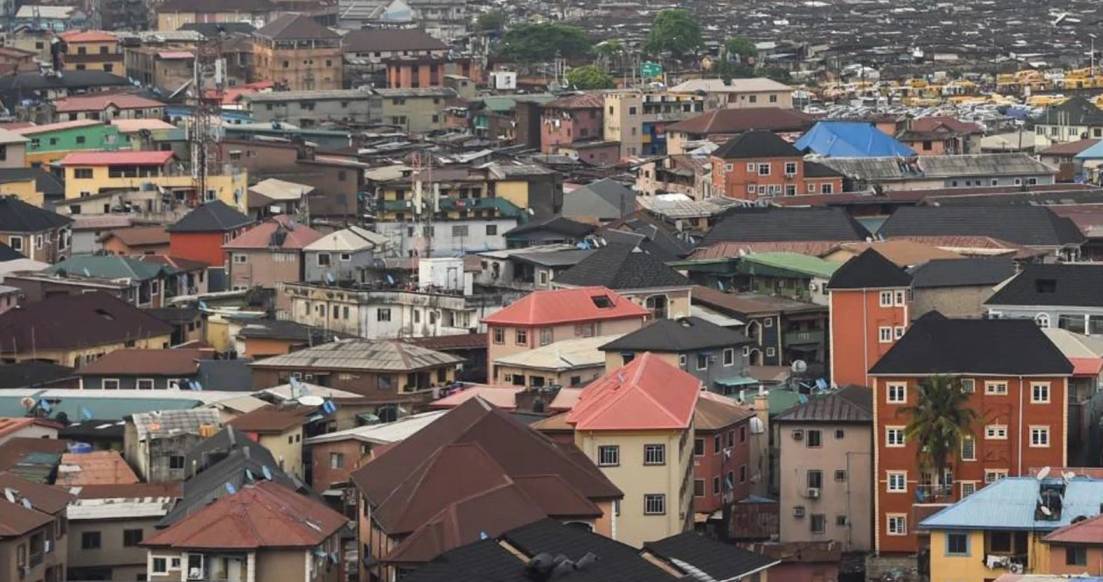
Section 4 of the Lagos State Tenancy Law 2011 (arguably the most advanced of these laws), for example, makes it unlawful for a landlord to demand or a tenant to offer rent in advance of one year in respect of any premises. Where such tenant is a sitting monthly tenant, the period is reduced to six months. Section 6 gives an evicted tenant the right to compensation for any improvements on the premises made with the landlord’s written consent. Section 37 gives the tenant the right to apply to court where they deem a rent increase by a landlord to be unreasonable.
The many Rent Control Laws crucially make provisions for standard rents for different types of buildings, which the landlord is prohibited from exceeding when setting rents. A Rent Tribunal is also established under the repealed Lagos version of this Law even provided for said standard rent to be subject to review only every three years, at which time an increment cannot exceed 20% of the previous rate. It also provided for a disputing tenant to be given up to six months to find alternative accommodation. It went further to cap agent and agreement (lawyer) fees each at 5% of the yearly rent.
The 2011 Lagos State Tenancy Law is the most comprehensive and modern legislation available on tenancy regulation, with a 2025 Bill to improve upon it currently being deliberated. Beyond its more encompassing reach (the 2011 version exempted highbrow areas like Ikoyi, Victoria Island, Ikeja GRA, etc.), this new Bill seeks to reintroduce elements from the repealed 1997 Rent Control Law, such as the 5% agent fee cap. It also makes professional (lawyer) fees the responsibility of whoever is contracting the professional (usually the landlord), and also increases fines from the previous N100,000 to N1,000,000.
As we can see, the provisions of these laws—extant, repealed, and anticipated—paint a picture of basic, if not adequate, protection of the parties to a tenancy relationship. The tenant is particularly sought to be protected, as the law in its equitable form often seeks to protect whoever is the weaker/more disadvantaged party to a contract. In this case, the tenant is.
The problem with these laws is not technical inadequacy, but a total lack of enforcement.
Rent tribunals exist on paper but not in reality. Some provisions are outdated or vague. There is, for instance, the N100,000 fine in the Lagos State 2011 Law, or the section of the law that provides for a tenant to dispute unreasonable rent increases but leaves it at the discretion of the court to determine what is unreasonable. The repealed Lagos Rent Control Law was the most comprehensive regarding regulation of rent increments, yet no comparable law was enacted in its place until this current ongoing Bill.
On the judicial side of things, courts are overburdened and understaffed. Cause lists are always sagging with cases that are adjourned ad infinitum. Not in the least helped by said vague and outdated provisions, which the courts grapple to interpret to reflect modern situations. The result is that tenancy cases that should be concluded as quickly as possible drag on for years. The cost of litigation mostly bars most tenants (and even landlords) from seeking proper redress for breach of rights. Aside from these, the real issue is that a great proportion of people do not even know their rights and the provisions of the law regarding tenancy.
Where does all this leave us then? Nowhere, I should say. Nowhere because most of the failures of the rent crisis reside in regressive government policies and regulatory neglect. We are where we are today because the fault for the rent crisis in the country rests squarely on the shoulders of the government. It is a sad conclusion for my partner and me, who are still doggedly house-hunting, but not a surprising one.
Chimezie Chika is a staff writer at Afrocritik. His short stories and essays have appeared in or forthcoming from, amongst other places, The Iowa Review, Dappled Things, Channel Magazine, Terrain.org, Lolwe, Isele Magazine, Efiko Magazine. He is the fiction editor of Ngiga Review. His interests range from culture, history, to art, literature, and the environment. You can find him on X @chimeziechika1