
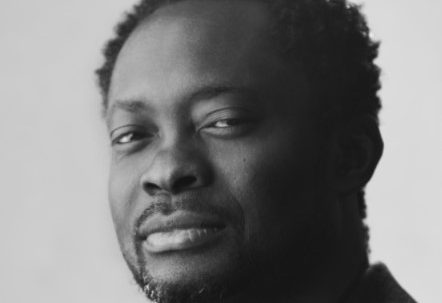

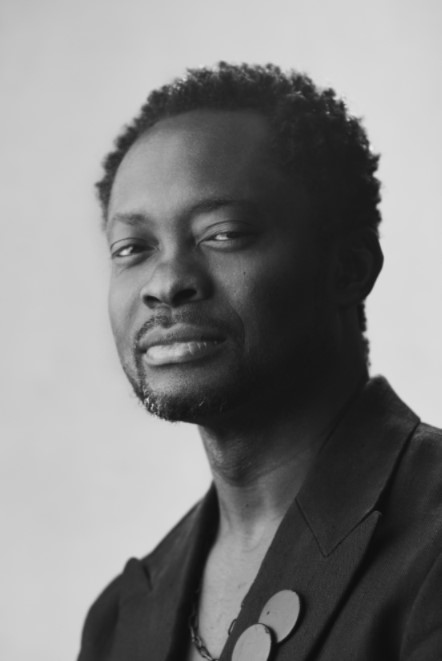
“The themes we portrayed in the film are things that happen in Ghanaian life, and I dare say in most African countries. There is crime, there is moral ambiguity, there is the church, and Christianity is a significant part of our lives. Religious themes are deeply embedded in our cultural settings, and these are things I think we should explore.”— Nana Kofi Asihene
By Adedamola Jones Adedayo
In 1945, Austrian film director Edgar G. Ulmer released Detour, which follows a struggling nightclub pianist who, in his attempt to reunite with his girlfriend, runs into trouble that escalates beyond control. One of the earliest examples of film noir, the film reflects a style that emerged in the aftermath of World War II, characterised by dark, shadowy atmospheres, low-key lighting, and themes of crime, mystery, fatalism, betrayal, and a cynical view of human nature.
Another notable example, Jacques Tourneur’s Out of The Past (1947), tells the story of a former private detective attempting to forsake his criminal past as he is drawn into a dangerous relationship involving deception and betrayal.
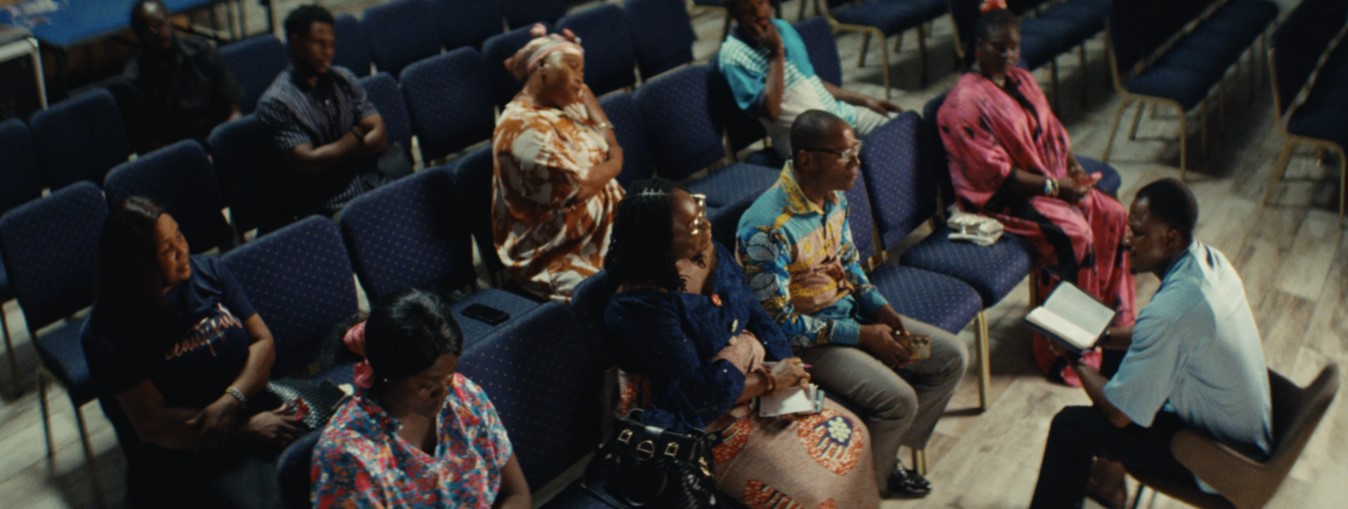
Borrowing from existing traditions of this film style and situating it within contemporary Ghanaian society, producer-director Nana Kofi Asihene’s Two is a neo-noir feature about a former hitman trying to leave behind his past and embrace a reformed life rooted in faith. Having deliberately sabotaged a criminal assignment, Marcus (Gideon Boakye) retires from his former life and finds a new beginning in a conservative church, where he meets and marries Elara (Dela Seade).
But his stability comes under threat when Vic (Senanu Gbedawo), his former mentor and boss, resurfaces, drawing him back into unfinished business. Set against the bustling city of Accra with close reflections on dynamics of the Ghanaian Pentecostal church, the film explores moral ambiguity, religion, crime, and the duplicity of human nature.
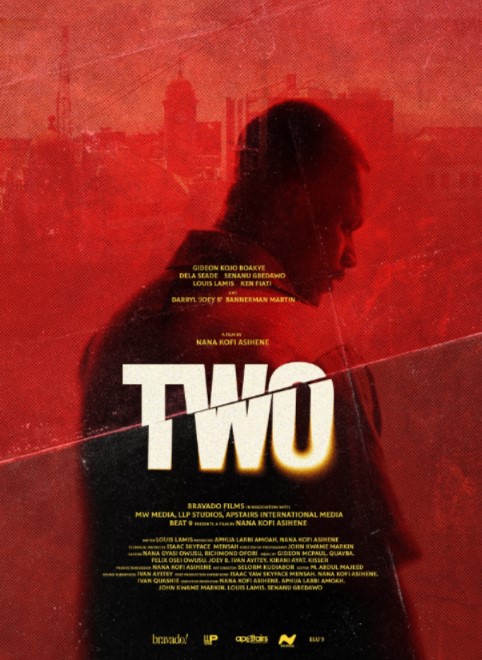
Two is Asihene’s feature debut, following Aahi (Taboo) (2025), which won Best Short Film at the Ghana Movie Awards, and Wrong Way (2025), which earned him the Africa’s Best Independent Film Director award at the 2025 All African Independent Film Festival (AAIFF Africa). Across the three films, Asihene explores moral dilemmas and consequences: Aahi examines a cheating woman’s double life, Wrong Way follows a young man’s involvement in a gang robbery where the unintended victim turns out to be his own mother, while Two centres on a young man struggling to escape his troubled past as he seeks to turn his life around.
Written by Louis Lamis (who also portrays Detective Obeng, a law enforcement agent at the centre of unravelling crimes in the story), Two screened out of competition at the 15th edition of the Africa International Film Festival (AFRIFF). Afrocritik had a conversation with Nana Kofi Asihene who shared insights into the film’s thematic and production trajectories.
The title, Two, immediately suggests duality or the existence of opposing identities. What inspired this title?
We wanted to produce a film. It was more like a litmus test of our abilities as a new wave of film producers in Ghana. One of my friends whom I reached out to contributed a script. Initially, when the script came, the title was When Angels Sin. We thought of several titles, but we realised that the theme that kept coming up was duality.
We kept seeing a man with two lives, and we realised that the number two was a recurring element in the story. So, we decided to just go with “Two”, which is essentially what the film is about, captures the themes, and resonates with people. Whenever the title is mentioned, it gives an idea of what the film is about. Something simple and straightforward.
The film follows Marcus, a former criminal attempting to leave his past behind. What interested you about exploring the possibility of redemption, particularly regarding this individual?
Being someone who is from the church, I feel there are certain questions that should be asked, not just within the church, particularly regarding morality. I also believe there are a lot of moral issues that we are not questioning. For me, it felt like if there’s a chance to say something loud enough, then why don’t I embody that and say something that asks those questions? But even in asking those questions and probing into issues of duality, the film was also meant to be a trial piece to test the crew’s ability and technicality. Sometimes, after watching a film, the questions that stay with you along the way are where the impact is felt most.
Neo-noir is a genre characterised by dark visual aesthetics, crime and mystery, morally ambiguous characters, and psychological complexities. How did you bring these defining elements together to create a narrative that resonates with contemporary Ghanaian realities?
It was a very intentional process because my thought process as a director and producer was how do we keep everything running through the film while also making it sit within a believable Ghanaian context? So, it was more or less about breaking down every single aspect of the film and figuring out how we could portray this moral ambiguity while making it culturally relevant.
That’s something we explored in terms of the writing and even the dialogue. There were things we changed in the dialogue to make it fit the context. We also thought about what kind of costumes would make the story believable while still portraying the duality of the character and giving it a certain universal appeal. In terms of locations, we considered which ones would first of all be believable and how we could use their duality to reflect the different sides of the characters.
The ending of the film leaves aspects of the couple’s journey and the circumstances surrounding them open to interpretation. What underlying perspectives or sentiments informed this narrative conclusion, particularly the unexpected ways in which actions are resolved?
The idea behind the ending is for you to leave with questions because we believe that questions bring you to a deeper place of enquiry. When you look at the story, there are different perspectives to consider. There is Marcus’s perspective, his wife’s perspective, the pastor’s perspective, and even those of the investigators and other characters.
The idea was to let people leave with questions. We believe that resolving everything sort of answers those questions for you. But if we leave you with questions, you leave the film with a loop of questions that you continue to ask yourself. And really, that is where the essence of the film lies. How do we answer these questions? Do we ignore the questions we should ask ourselves? Do we ignore the topics we should really talk about? That is what we want the audience to leave with. I mean, somebody might say that perhaps a part two would resolve these questions, but we feel that the way we’ve left it is apt enough to make people ponder these resolutions.
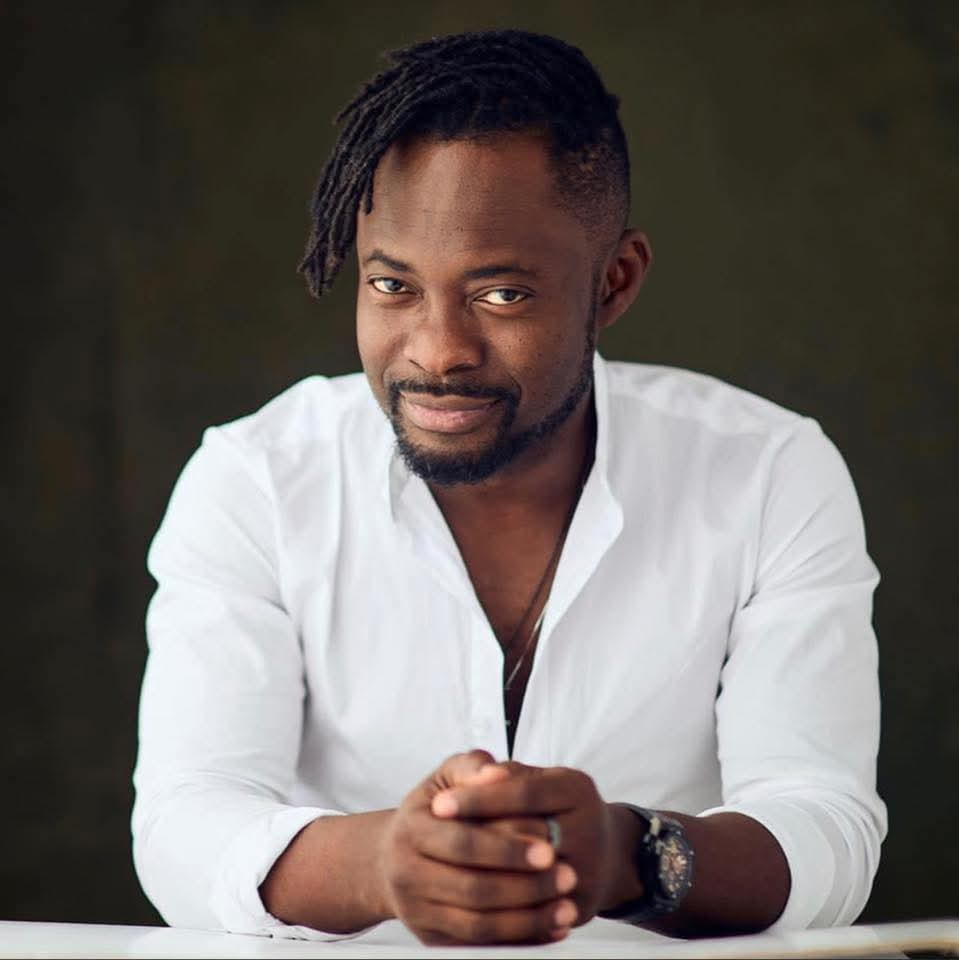
Could you walk us briefly through your collaboration with writer and co-producer Louis Lamis and DOP John “Kwame-Black” Markin in bringing this project to life?
When my partner and I received the script from the writer, we read it and realised it was something we could do. It was also a story and theme we wanted to explore. Obviously, some work was done in-house to align certain things and make it a viable production. But it was really a collaborative process because we had conversations involving almost everybody on the team, including the DOP and others who came on board as producers.
These conversations also informed the direction we gave the actors and their understanding of the characters. I had long meetings with the cinematographer about the camera language. How do we portray this? How do we let somebody watch this without dialogue or even hearing the dialogue and still feel what we want them to feel? We shot for over 20 days, but we had over six months of pre-production. The beginning was tiring because I’m sure a few of my collaborators thought I was doing too much. But I knew that zoning in and fine-tuning these details would make filming easier and ensure that the film felt more intentional and stayed true to the story we were trying to tell.
How did you approach the casting process for Two, particularly in selecting actors like Gideon Boakye, Dela Seade, Louis Lamis, and Senanu Gbedawo for their respective roles?
One of the key things we discussed was that we wanted a lead actor for Marcus who was believable. And believability meant so many different things to different people. For the character he was supposed to portray, it meant that whatever we envisioned visually had to be believable. We also wanted somebody who could embody the character and draw from an emotional place, so that the lines between acting and reality would blur.
During our auditions, Gideon’s performance really stood out to me, especially because of the emotional journey he went through while portraying the character. His personal connection to the character also came in very handy because it helped him explore places that, as a director, I didn’t even expect him to go. And that was something amazing about his performance. For Elara, we were looking for someone who could embody the character well. The friendship between Gideon and Dela made their chemistry in the film shine.

Now, the inspector’s role was actually played by the writer of the film. For that character, we wanted somebody who was plain-looking, stark and unassuming but had a certain sense of authority, an understated authority. Hence, he’s playing that character.
Then, the Vic role, played by Senanu, was one of the most interesting characters because we actually auditioned just one person, and that was him. From the reading and everything we did, we realised that he had the understated authority needed to portray the character. These are some of the things we considered. For the key characters, I guess a lot of things fell into place, and we leaned into their personal experiences and nuances to craft these characters to fit the story.
Having explored the complexities of crime, religious institutions and moral responsibility in Two, what aspects of contemporary Ghanaian society do you think filmmakers should be paying greater attention to in their storytelling?
I think everybody has their purpose as a filmmaker. Everybody has the subjects they like to portray. I just think that the most important thing for Ghanaian films is to portray these themes in a way that is believable. The themes we portrayed in the film are things that happen in Ghanaian life, and I dare say in most African countries.
There is crime, there is moral ambiguity, there is the church, and Christianity is a significant part of our lives. Religious themes are deeply embedded in our cultural settings, and these are things I think we should explore. But the most important thing is to make sure they are contemporary enough for our audiences to relate to.
I think the problem is that sometimes audiences cannot relate to what they are watching, so it becomes just a piece of entertainment. It’s vital that, visually, in terms of language, dialogue and how the film is put together, you want your audience to relate to it because art has its place in changing or advancing society.
That’s the most important thing: making it relatable. America has its own culture, so we cannot pick things from America, take them as they are and then superimpose them on African culture. We need to tell these stories from a place of cultural authenticity. And I think that’s the most important thing, not just for Ghana, but for the whole of Africa.
Following its participation at AFRIFF, what are your other expectations for the film’s screening trajectory? Beyond its distribution prospects, what conversations do you hope Two will inspire among audiences and industry stakeholders?
That’s a two-part question. I think the first thing is to talk about what we’re doing. We’re currently taking the film festival route, with AFRIFF and REFFA Awards in Ghana where we had 13 nominations including Best Picture and Best Director. There’s also quite a lot we’re hoping to explore, including FESPACO and other film festivals. The idea is to move into theatrical distribution afterwards and get the film into cinemas. We’re looking at Ghana, Nigeria, Kenya, South Africa, and probably the UK before eventually moving onto streaming platforms. So that’s the trajectory in terms of screenings for the film.
But the most important thing about this film is that we’ve had conversations with a number of people from different African countries, and even countries outside Africa, about co-productions and how African countries can collaborate with countries in the West to produce stories. There are several reasons for this, including financial considerations. But one thing I want this film to do is serve as a litmus test or a testament to what is possible in film production. In a sense, this was a co-production involving five production companies from the same country. It also demonstrates that, by coming together, we can overcome challenges such as funding.
I feel like this is a good case study for African film production. We speak about collaboration, but we hardly put it into practice. If African companies could come together and co-produce, the money that would otherwise come in as external funding could become our own investment in the film. For us, that’s the second biggest thing. We want this project to become a testament to the possibilities of co-production, both within individual countries and across borders. We’ve done this, and we have the contracts and everything to back it up. So we’re hoping it becomes a case study that film practitioners across Africa can learn from, and a model for increasing production value and filmmaking across the continent.
Adedamola Jones Adedayo is a film journalist and critic with special interest in African cinema. Through writing and audiovisual mediums, he creates conversations around cinema in Africa and the Diaspora. You can find him on Instagram @jonesthegoodboy and X on AdedamolaAdeda4.