



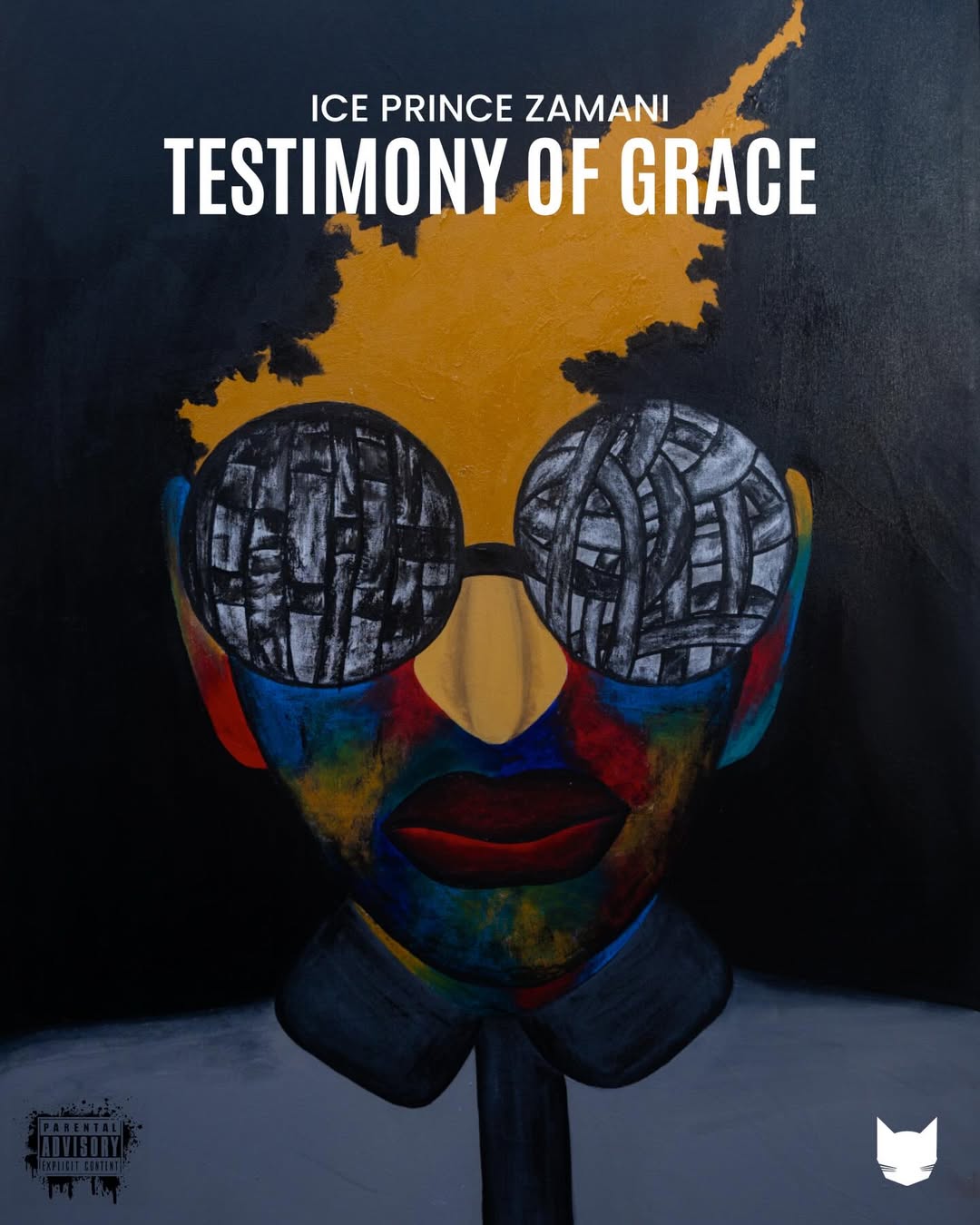
Testimony of Grace is compelling because it reveals Ice Prince planting his flag firmly in the present, a present defined by sobriety, faith, gratitude, and a quieter but no less formidable sense of self.
By Emmanuel “Waziri” Okoro
In the years since Everybody Loves Ice Prince (2011) and Fire of Zamani (2013) cemented his status as one of Nigeria’s finest rap exports, Panshak Henry Zamani, popularly known as Ice Prince, has operated with the quiet but assured confidence of a man who knows where he stands in the annals of the game. There have been no desperate reinventions, no scramble for relevance, no pivot to a sound that doesn’t belong to him.
What is instantly noticeable about him is the gradual, almost meditative shift – one that has been playing out in real time on his social media pages, where the rapper has documented the shedding of old habits, the deepening of his faith, and the emergence of a man who appears to have made peace with himself. It is within this context that his new album, Testimony of Grace, arrives.
Released barely a year after Starters, the well-intentioned but undercooked joint project he put out with producer Chopstix, Testimony of Grace feels like a deliberate statement of intent. Where Starters served as a reminder of Ice Prince’s capabilities, this new project seems to ask a different question altogether: not what Ice Prince can do, but who he now is. It is the work of an artiste who has chosen introspection over performance, sincerity over spectacle, and if nothing else, that alone makes it worthy of attention.
The album opens with “Intro (Can’t get enough)”, a piano-led, slow-tempo bop stacked with staccato drums, and sees Ice Prince collapsing autobiography, industry commentary, and quiet spiritual reflection into a single, unhurried opening statement. He leans into memory, exploring a specific moment in Nigerian music history: “Came into the game when all the albums were pirated/ Had to drop a CD, and Alaba was how I made it/ My first shit slapped and the people them gyrated”. One of rap’s tenets is showboating, but these lines tell a deeper story about his come-up. It wasn’t a career built on accident, but on immediate cultural impact.
There is also a careful sense of lineage at play as he invokes the “Choc City Musketeers” – a nod to the Choc Boyz, a rap trio consisting of M.I. Abaga, Jesse Jagz and himself—and describes himself as “the last born”. Ice Prince subtly repositions himself within that era: not as a relic, but as a product of a defining movement in Nigerian rap.
Vintage Ice Prince appears on the Reinhard Tega-produced “Hustle”, a record that smoothly leans into nostalgia. He delivers a laidback commentary on the discipline and persistence that have shaped his journey, his flows measured and unforced, as though he has nothing left to prove. Yet, beyond its personal reflections, “Hustle” resonates because it mirrors a broader, deeply familiar reality: the everyday grind of Nigerians navigating an economy that rarely offers guarantees.
On the title track, “Testimony of Grace”, Ice Prince leans fully into the meditative core hinted at in the album’s opening moments, offering a heartfelt expression of gratitude that feels both personal and observational. The track is more about the quiet recognition of life’s unpredictability, captured in lines like “Today na person pikin, tomorrow get belle” and “I don see person wey get before but today na plenty pele”. Here, he sketches fleeting snapshots of rise and decline, framing success and struggle as transient states rather than fixed outcomes.

The album makes a noticeable pivot with “High Class”, a collaboration with Afro-House luminary Niniola. Driven by Yung Willis’ slick production, the track is clearly engineered for the dancefloor, creating a vibrant backdrop for Ice Prince to momentarily step away from introspection and indulge in themes of wealth, pleasure, and soft living. His verses carry a looseness that suits the record’s energy, complemented by Niniola’s hooks, which are both infectious and self-assured.
On “Baby Boy”, Ice Prince taps the assistance of lifestyle influencer Nikos, exploring romantic desire through the lens of material anxiety and emotional vulnerability. Beneath the flirtatious framing of the song lies a subtle tension of the kind of transactional expectations in modern relationships, captured in lines like “I’m only thinking if I can afford you” and “Girl, I need your love, but I know you need a G-Wag”. Nikos’ presence softens the edges of the record and makes it more grounded. “Good Time” and “Nice One” see Ice Prince at his flyest, delivering easy-going bars and gliding effortlessly across the compositions with the relaxed charisma that first made him a star.
On the Dancehall-infused “Radio”, however, the album regains emotional depth. Alongside Ria Sean, Ice Prince crafts a tender ballad centred on longing and intimate desire, with both artistes approaching the subject from complementary emotional standpoints. Their chemistry gives the record a lived-in sincerity, making it one of the standout collaborations on Testimony of Grace. The high-octane “Basu Kidi” feels somewhat dated, but Ice Prince compensates with sheer energy and enthusiasm “I came to party/ I came to cause some damage”, he croons with the kind of carefree swagger that defined many of his earlier hits like “VIP” and “Superstar”.
Ice Prince turns inward once again on the stirring “Dear Mama”, a deeply emotional tribute to his late mother featuring Llona and UAX. Framed as a letter to a loved one no longer present, the song finds the rapper reminiscing on shared memories while updating her on the life he has lived since her passing. It stands as one of the album’s most sombre moments. On “Person Like You”, Ice Prince delivers one of the album’s most direct and accessible meditations on aspiration, grounding ambition within the everyday realities of ordinary Nigerians. When he sings “Dangote na person like you / Otedola na person like you”, it functions less as motivational cliché and more as a reaffirmation of possibility in a society where economic hardship often makes upward mobility feel remote. Veteran rappers Sinzu and Medikal appear on “Head Comot (Remix)”, a hard-hitting cut that finds Ice Prince in full chest-thumping mode, reflecting on his influence and long-standing impact on the rap scene. The production carries a rugged energy that complements the competitive spirit of the record, allowing each rapper ample room to assert their presence.
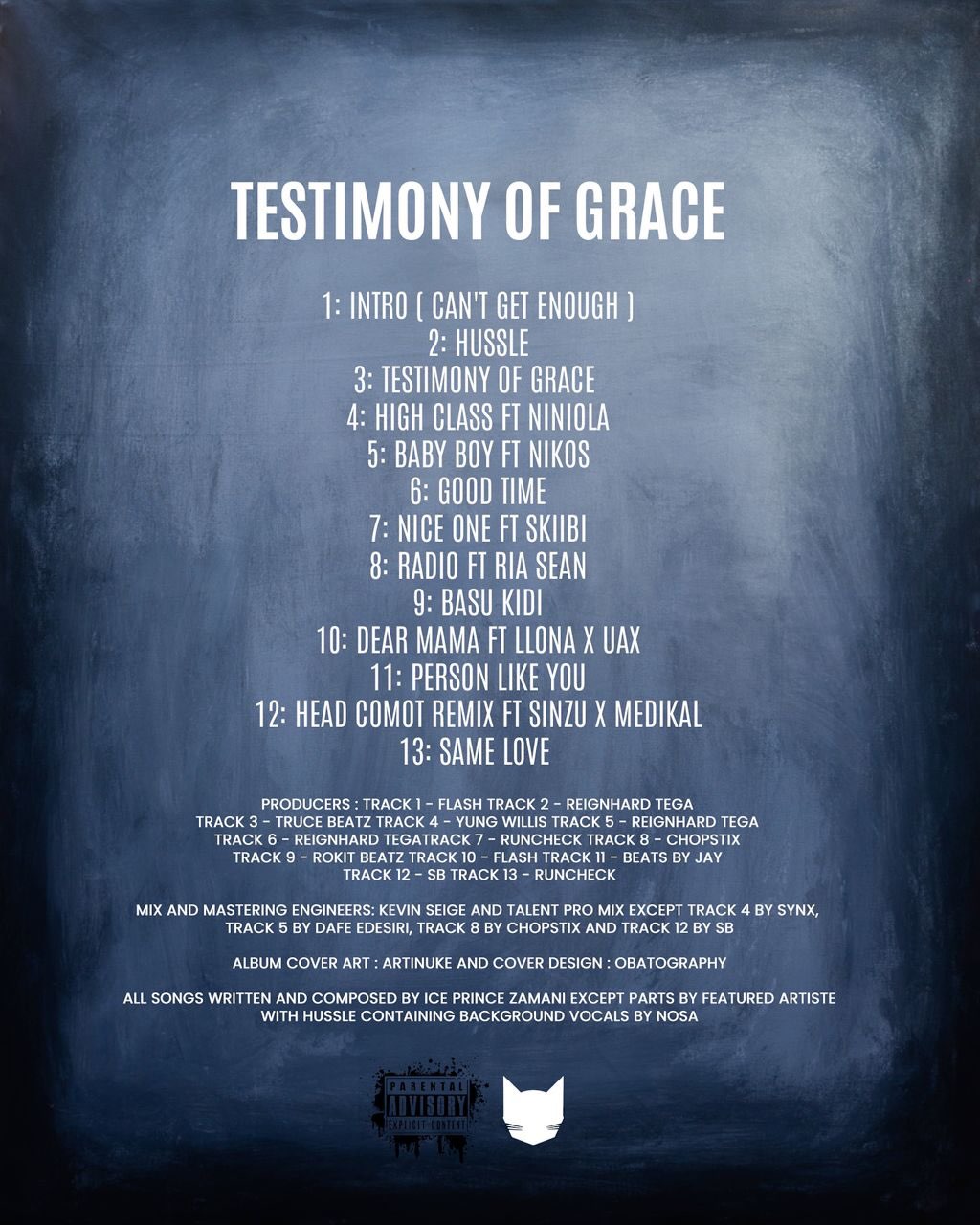
Testimony of Grace closes with “Same Love Same Love Same Love”, a reflective mid-tempo tune that finds the “Oleku” crooner looking back on the life his music has afforded him. He revisits the unwavering support he continues to receive from fans across the world. There is a calmness to the record that makes it feel less like a victory lap and more like a moment of quiet acknowledgement from an artiste who has survived multiple eras of the industry without losing his sense of self.
Across its fourteen tracks, Testimony of Grace accomplishes something that perhaps Starters could only gesture at: it gives Ice Prince a fully realised canvas on which to reckon with the weight of his own legacy.
Part of what makes the project work so well is how thoughtfully the guest features are deployed. Niniola brings her trademark Afro-House energy to “High Class” without swallowing the record whole; Ria Sean’s tenderness on “Radio” complements rather than competes; and Sinzu and Medikal arrive on “Head Comot (Remix)” with enough hunger to match Ice Prince’s energy without reducing him to a supporting act on his own album.


Testimony of Grace is compelling because it reveals Ice Prince planting his flag firmly in the present — a present defined by sobriety, faith, gratitude, and a quieter but no less formidable sense of self.
Lyricism – 1.4
Tracklisting – 1.3
Sound Engineering – 1.3
Vocalisation – 1.6
Listening Experience – 1.4
Rating – 7/10
Emmanuel “Waziri” Okoro is a content writer and journo with an insatiable knack for music and pop culture, with bylines on Afrocritik, PM News, Tribune, The Sun, ThisDay, Vanguard, and The Guardian. When he’s not writing, you will find him arguing why Arsenal FC is the best football club in the multiverse. Connect with him on Twitter, Instagram, and Threads: @BughiLorde.