

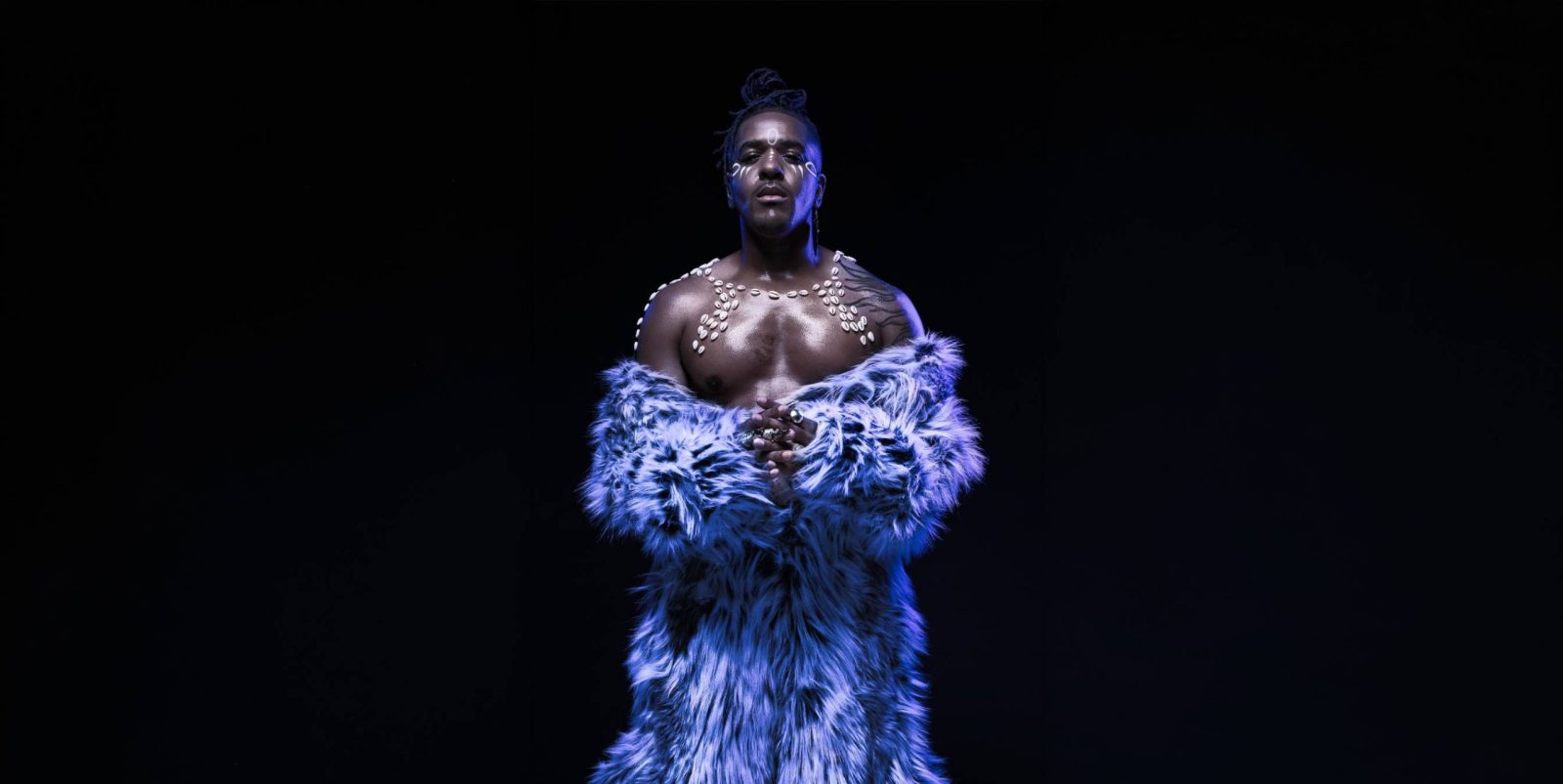

“When they found my living ancestral line, I said that it’s not enough for me to just know that information. I physically have to go there, and I have to meet them” – Matt B.
By Emmanuel “Waziri” Okoro
There is a peculiar kind of vertigo that comes with discovering you have been homesick for a place you have never been. I think of this often when I consider the millions of descendants of displacement scattered across the Americas, each carrying a blank space where a country’s name should be. For Matt B, that blank space had a shape long before it had a name. It just took a DNA kit, a Grammy, and a plane ticket to Owerri, Imo State, Nigeria, to fill it in.
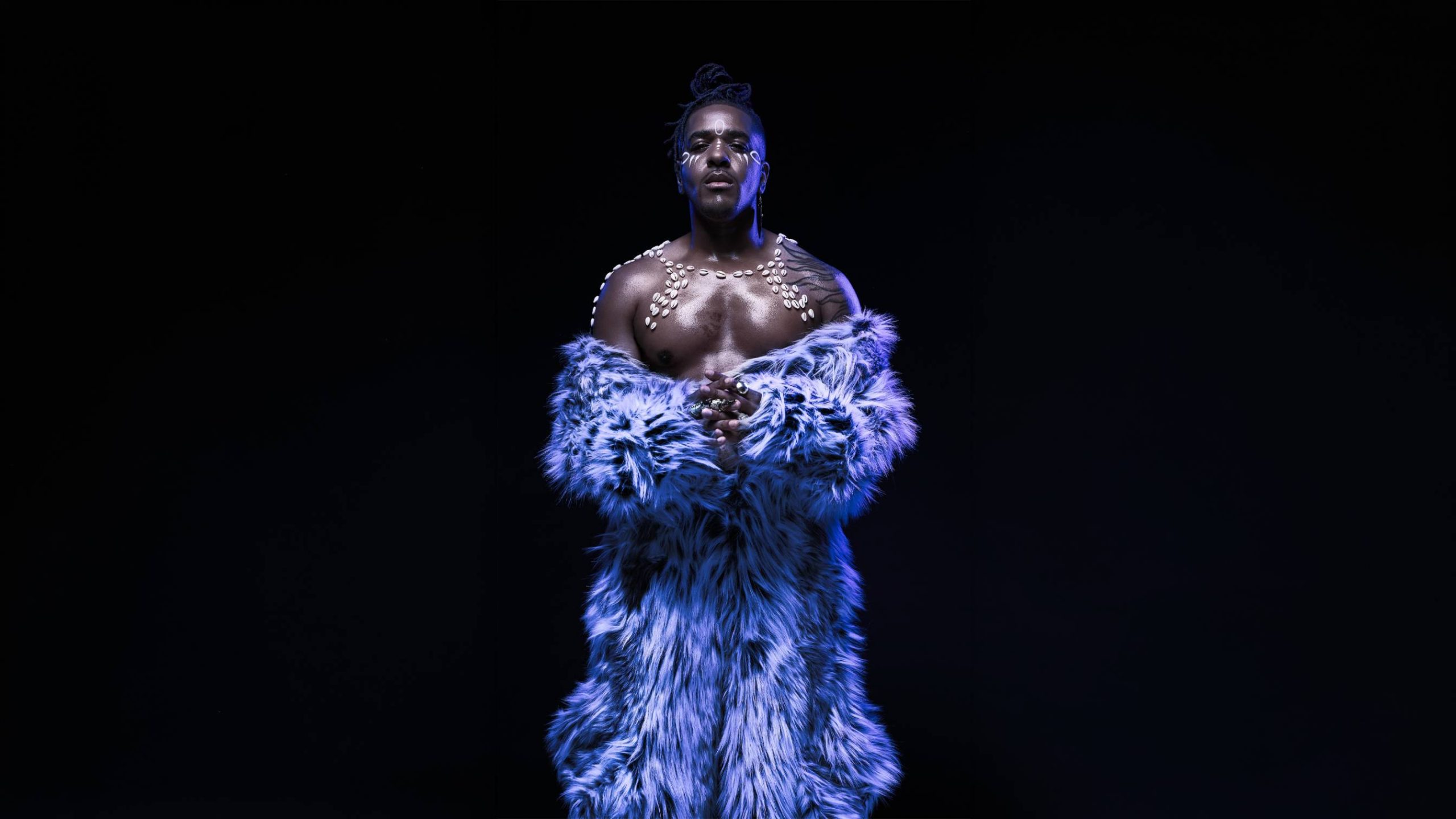
I met Matt B – virtually, a few days before the release of his most personal work yet. But it didn’t feel like meeting a stranger. It felt like joining a man mid-sentence, in a story that started six years earlier and, as far as he’s concerned, has not ended. There’s an easy excitement in his voice when he says, “I’m excited for it to drop. I’m excited to see what people think about it. It’s all just so surreal”.
We are there to talk about ALKEBULAN III: The Water Remembers, the closing chapter of a trilogy that began as curiosity and has become, over three albums, a pilgrimage. Over the course of the interview, we explore, among other things, the circumstances that led to his new project, how he makes music, what he looks for when selecting collaborators, and much more.
I: Where Do We Come From?
Matt B, born Matthew David Benson in Chicago, grew up singing alongside his two older brothers in church. The three of them later formed a family group called TriEnd in his teenage years. Over the past two decades, he has built a career that’s hard to categorise. He built an early audience in Asia with his 2014 album, Love & War, watched “Colour Blind” go viral in China, and found his way onto Billboard’s charts with the Trap-Soul-inflected 2021 project, Eden. But underneath the catalogue sat a question he had carried for longer than he’d been making music.
“I always wondered who I am and where I’ve come from”, he tells me, describing himself in the language he uses deliberately: not just African-American, but a man aware that his identity had been interrupted somewhere along a coastline centuries ago.
In 2019, he took an AncestryDNA test to try to answer it. The test told him he was majority Nigerian. It was, he says plainly, “not enough for me”. So he went looking for the answer the way he does best: inside a song. The search became his 2023 project, ALKEBULAN, then ALKEBULAN II released a year later. That second record won him a Grammy for Best Global Music Album in 2025, and handed the Royal Philharmonic Orchestra, founded 79 years ago, its first-ever Grammy in the process.
He is still, a year later, visibly stunned by that win. “To be recognised by my peers, and to be recognised as having the best album for that year, I’m lost for words every time I think about it. When they called my name, I was like, did they make a mistake? I had to pinch myself”.
It was in the wake of that win that AncestryDNA came back to him with something concrete: a living bloodline, traced through records and genetic markers to the Igbo people of Owerri, Imo State. A certificate wasn’t going to cut it this time either. It wasn’t enough for him to just have that information. He knew he had to physically go there and reconnect with his people.
Thus, ALKEBULAN III: The Water Remembers did not begin as an album. It began as a documentary crew following Matt B and his wife, producer and manager, Angela V. Benson, through Ghana before they ever set foot in Nigeria. At Elmina Castle (a trading fortress built by the Portuguese in 1482, before evolving into a major hub for the Transatlantic slave trade), he stood before the Door of No Return. This was the passage through which captive Africans were marched onto ships bound for the Americas. At the Assin Manso Slave River — where, historical accounts hold, the enslaved were force-marched over fifty miles to the coast and bathed for the final time before that crossing — he took part in a traditional blessing ceremony.

“Something very powerful was said to me”, he recalls, “that my walking through the Door of No Return was not my door of no return. It actually was my door of return. And that my going to the Assin Manso River, that was not my last bath, that was my first bath”. This was his re-introduction, as he puts it, to the continent, an act of honour paid to ancestral ties that had never technically been severed, only obscured.
II: Ikechukwu, Ahamefula, Nwanne Di na Mba
By the time Matt B landed in Owerri, Nigeria, the emotional register had already shifted from research to reunion. Looking out into the distance, he turned to his wife and told her it felt like he’d been there before, a feeling he still struggles to put into words, except to say that it felt like home. What followed were two elaborate homecoming ceremonies, staged by two separate kingdoms, each treating him as a son who has returned.
He was received with a 12-gun salute he hadn’t anticipated, tribal drums, dancing and fanfare. “To be received in that way as a family member, as a brother, and welcomed back into the tribe, it just was heartwarming for me, because it felt like a sense of belonging that I just longed for, for such a long period of time”.
Then came a name. His Royal Majesty Eze Engr Chidume Okoro of Amano, Obohia, Ahiazu Mbaise, conferred on him the Igbo name Ikechukwu (God’s Power) along with the chieftaincy title Ahamefula (May my name not be forgotten). A second monarch, His Royal Highness Eze Leo Nwokocha, Chairman of Mbaise Council of Traditional Rulers, later bestowed the title Nwanne Di na Mba (A brother in a foreign land). He admits none of it was expected. “I was like, what is going on right now? This is crazy”.
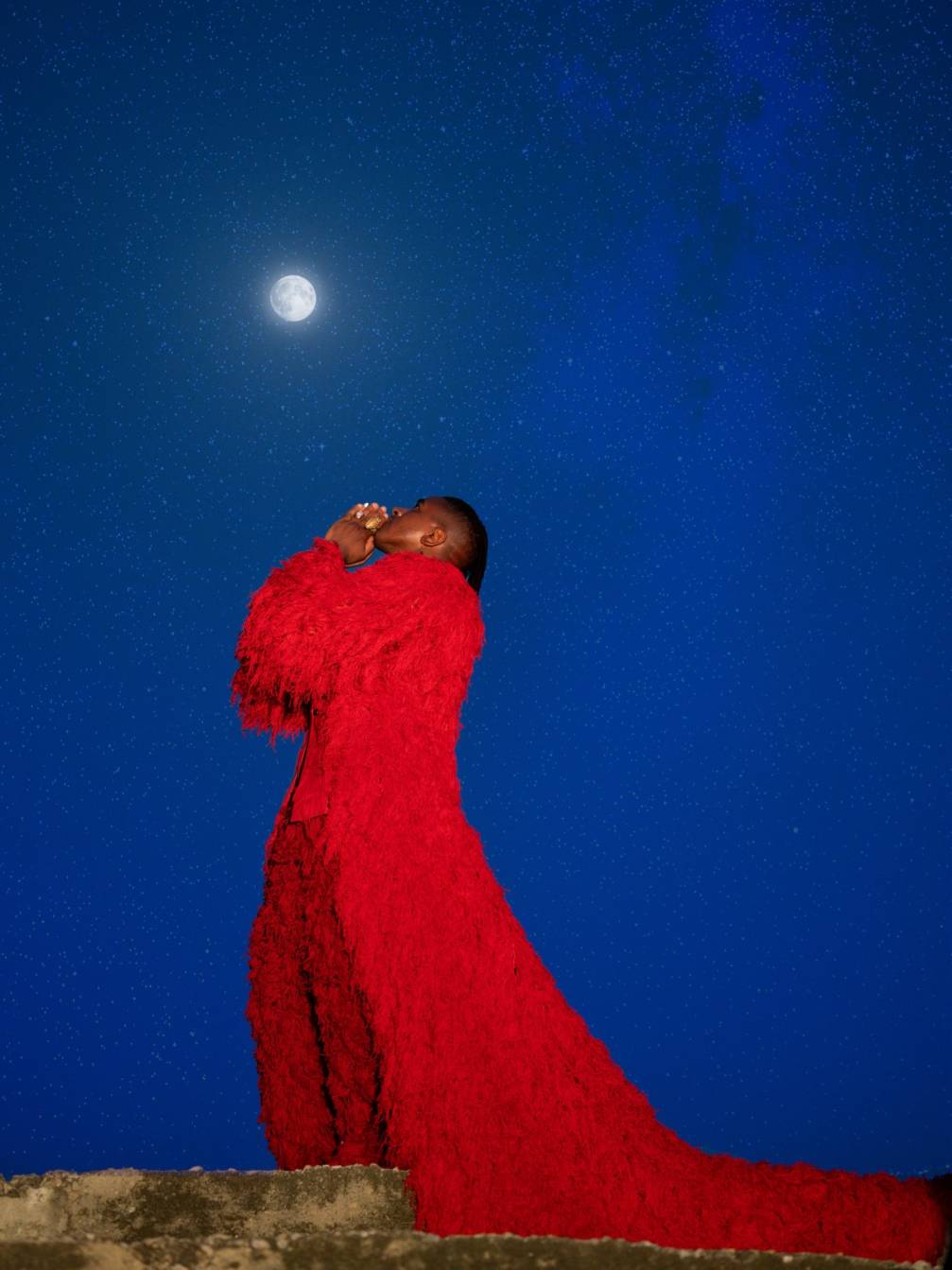
Matt B named his entire trilogy after Alkebulan, which, according to some historical records, translates to “Mother of Mankind”. Being handed his own name back, in the region his ancestors were taken from, carries an obvious symmetry, and he draws the line himself. “There’s so much history, and there’s so much value in a name. It gives you your identity back”. He was taught, too, the etiquette of the kola nut, how it must be addressed in Igbo, because, as he was told, it does not speak English. A portion is carried home afterwards, proof to one’s own people that one was received and respected.
III: Telling the Stories No One Else Will
Ask Matt B how he writes, and the answer changes depending on the assignment. Melody, he insists, usually comes first; a necessity, he says, when you’re singing in languages much of your audience won’t understand, because the emotion has to survive the translation gap through sound alone. But for this record, he reversed his own process. “I went into more of a historical dive before I started writing”, he explains, treating research as the foundation.
Two songs anchor the record’s emotional core, and both began as history before they became melody. “My Mother’s Song”, featuring the Malian vocalist, Fatoumata Diawara, is built around the true story of a nine-or-ten-year-old girl kidnapped from Sierra Leone in the 1700s who carried a song her mother had taught her across the Middle Passage. More than three centuries later, her descendants used the surviving lyrics and melody to trace their way back to their tribe. “When they made it back to their tribe, the lyrics and the melodies were almost the same”, he said, still visibly moved by it. “That is so powerful; it just goes to show the importance of why those traditions matter”.
“Overboard”, an interlude built with the Kabusa Oriental Choir, draws from an account of a slave-ship rebellion in which captives who seized the vessel chose to jump overboard with their captors rather than live in bondage. “That was such a powerful story for me, so I put that into my lyrics, and that’s what I wrote around”. The choice to route this history through music rather than plain narration is deliberate. “If we aren’t telling the stories, then who will tell those stories? When you share it musically, then it could be digested a little easier” than it might in prose, where the same history risks landing as pure discomfort.
Across the album’s ten tracks, the Kabusa Oriental Choir functions as a structural device as much as a musical one, bookending the record and threading through its middle on songs like “At the End of the Door”, “Fertile Ground”, “Overboard”, and the title track. He confirms the placement was fully intentional. “They were a physical representation of the ancestors, the ancestral voice guiding me through that journey”. He walks me through the arc song by song. “At the End of the Door” doubles as both the record’s beginning and its end, an audible rendering of the Door of No Return itself. “Fertile Ground” is scored to footage of a plantation, where, despite the circumstances, there is a visible unity in people working the field together. “Overboard” carries the rebellion. And “The Water Remembers”, the closing track, is what he calls one of the most powerful interludes on the entire project.

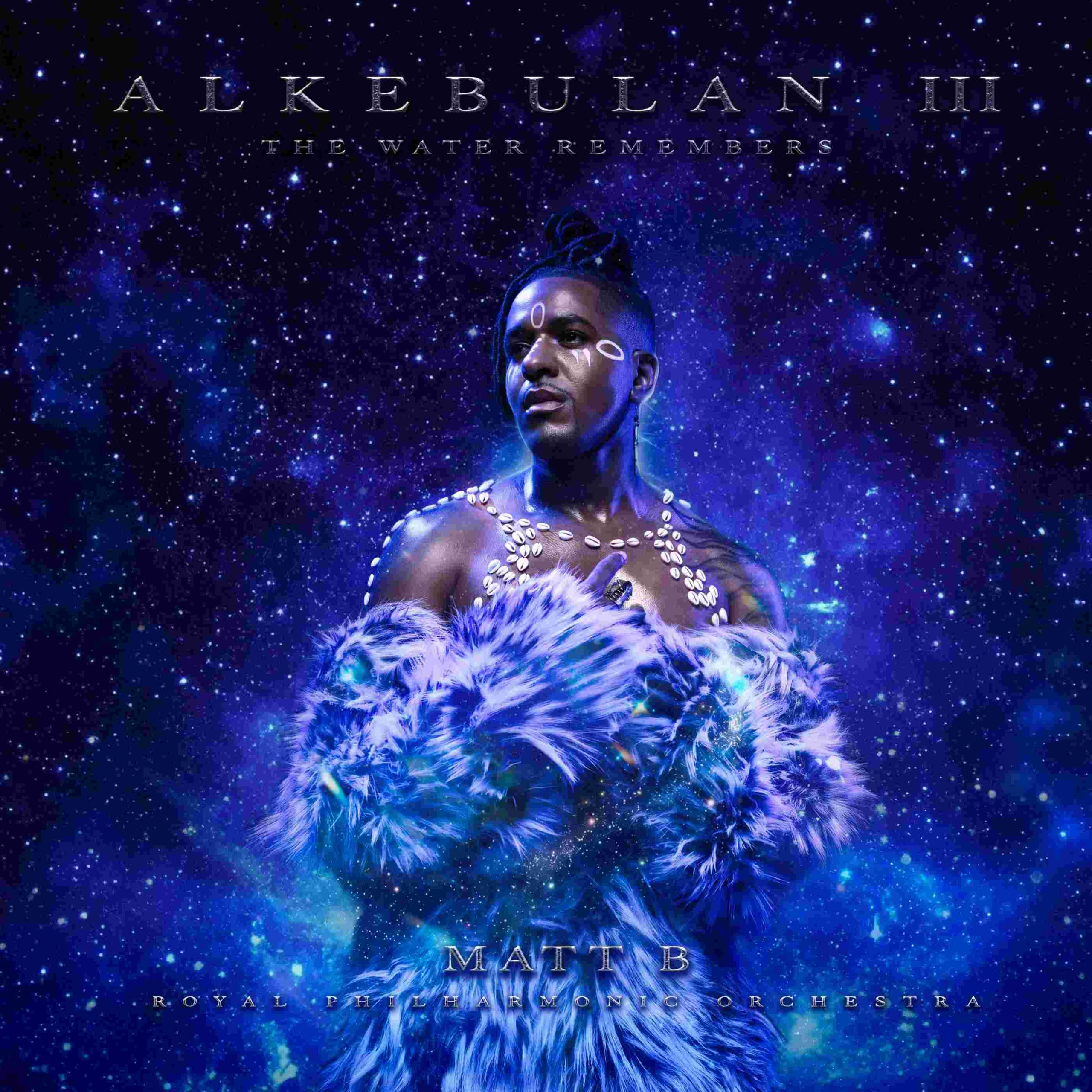
The featured artistes on The Water Remembers: Diawara, Skales, Goya Menor, Boy Spyce, Camidoh, alongside the Kabusa Oriental Choir and an orchestral recording with the Royal Philharmonic at Abbey Road, were like archetypes assembled to complete a portrait. “It was important for me to work with West Africans for this project, because that’s where I descend from”. He notes that all of them “speak to the culture”, people who understand the music is not just about what is hot right now, but about creating longevity and something meaningful.
Assembling those voices around one project, largely without label infrastructure, came with its own friction, though perhaps not the kind one would expect. “As far as creative differences, I didn’t really experience that with anyone, honestly, from this project”, he said. “People were actually just very warm, very open-minded”. The real difficulty was technical: there was no blueprint to work from. “Even though this is my third time making a project like this, I have no blueprint”, he says, describing the search for a sound that could hold Afrobeats, Afrobeat, orchestral arrangement, and R&B together without flattening any of them.
He worried, too, about singing convincingly in languages he doesn’t speak natively: Igbo, Yoruba, Swahili, and, on earlier records, Luganda and Zulu. And thus, he leaned on co-writers for diction and pronunciation, treating linguistic accuracy as inseparable from the respect the project was trying to pay.
That the whole thing was self-funded, without a major label, was, in his telling, not a limitation but a condition of the story surviving intact. “Some stories that are meant to be told, and they have to be told a certain way”, he says. “When you bring in too many powers that be, they want to control that narrative, which can water it down. It was really important, not only for me but my team, to ensure that we had the creative control of that narrative”. No expense, he was careful to note, was spared regardless; Abbey Road, The Royal Philharmonic Orchestra, Red cameras (some owned outright, others loaned in partnership) for the documentary and short film. Independence, for Matt B, was a creative firewall, not a budget cut.
IV: Homeward, Now for Others
Six albums and one Grammy win into a career that started in a college dorm room, Matt B’s hardest-won lesson isn’t about sound but trust. “Trusting yourself, trusting your process, knowing that you are unique, that you are creative, and that there’s no one else on this earth like you”, he says, before pivoting, characteristically, to the unglamorous mechanics behind the art. “Business is also really important. 90% of this industry is business, the other 10% is music”. He also notes that the people who eventually join an artiste’s momentum will rarely be the ones who built it. “They won’t necessarily do that journey for you. If you don’t put in that work yourself, why should anyone else trust what you’re doing?”
That philosophy extends, unsurprisingly, to who he still wants to work with. Careful not to pigeonhole himself, he rattles off a list that spans generations and geographies: Angélique Kidjo, whose voice he calls simply amazing; Nomcebo Zikode, a friend he has yet to collaborate with formally; and the Tanzanian star, Harmonise. Then come the Burna Boys, Davidos, and Temses of the industry. “I just love to create, and I love to make music. Anyone, big or small. If I love their sound and love what they represent, that’s a collaboration I want to do”.
As our conversation winds toward its close, I ask what advice he’d offer other African Americans chasing the same unanswered question he’d carried for years. He doesn’t hesitate. “I hope that I’m the blueprint for that”, he says, “That it isn’t as scary as what you think it’s going to be, that you will be well received when coming back to the continent, that you guys love us and that you want us to come home, and that the diaspora is stronger for it”.
There’s a particular irony in a man who once sang in languages he didn’t speak now being the one teaching others how to find their way home. But that, in the end, is what Matt B seems most at peace with; the fact that the question he carried for most of his life no longer belongs only to him.
Somewhere in a lineage he didn’t know existed six years ago, there are cousins who now know his face. And somewhere, listening to The Water Remembers for the first time, there will be another Matt B — someone who has never set foot on the continent but has always, somehow, been homesick for it — hearing, in the choir’s opening notes, an invitation they didn’t know they’d been waiting for.
Emmanuel “Waziri” Okoro is a Nigerian writer and journo with an insatiable knack for music and pop culture, with bylines on Afrocritik, PM News, Tribune, The Sun, ThisDay, Vanguard, and The Guardian. When he’s not writing, you will find him arguing why Arsenal FC is the best football club in the multiverse. Connect with him on Twitter, Instagram, and Threads: @BughiLorde.