

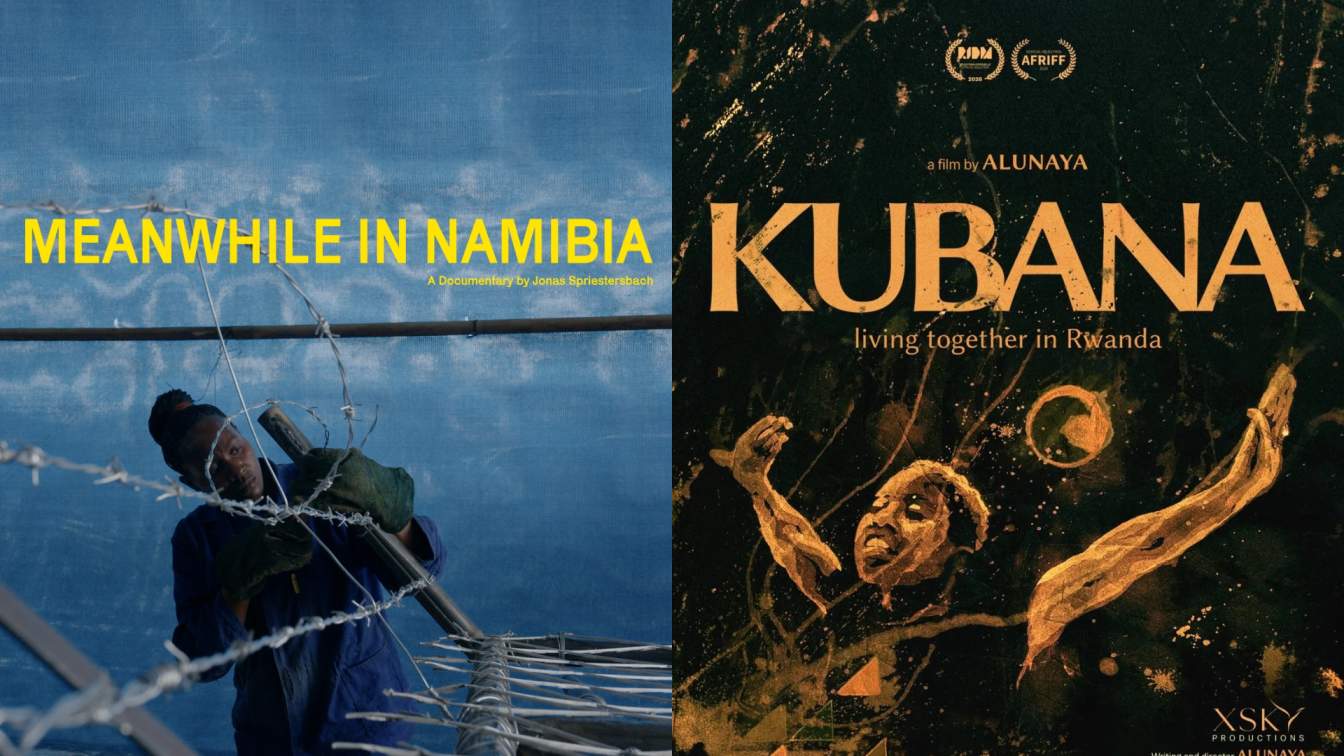

With Meanwhile in Namibia and Kubana, AFRIFF has programmed a pair of documentaries that make for difficult viewing experiences but provide important insights into the consequences of colonialism and neocolonialism on African life and identity.
By Vivian Nneka Nwajiaku
All year long, throughout the 2026 international film festival circuit, African cinema has confronted colonial legacies, cultural loss, and the enduring effects of Western influence and control over African existence. It was most glaring to me from the African contingent at Sundance Film Festival in January, where all of the screened feature films explored that theme to some extent.
Lady, which premiered at Sundance and also opened this year’s Africa International Film Festival (AFRIFF), considered colonialism as a sub-theme, while Kikuyu Land and Troublemaker, both documentaries marking their world premieres at Sundance, were more invested in it as a primary theme. Since then, I have observed with keen interest as successive international festivals programmed multiple African films with the same preoccupations, from Variations on a Theme at the International Film Festival Rotterdam to Lady, Paradise and Dao at the Berlinale, and Clarissa at Cannes.
These films offer different perspectives on what the legacy of the Western world—Europe, in particular—is in Africa. Kikuyu Land is probably the most instructive, with its chilling exposé on the harrowing British colonial history of Kenya’s tea industry and the transition to neo-colonialism in the country’s agrobusiness. It would have been in good company had it been programmed at AFRIFF, and by good, I mean intense and horrifying.
With Meanwhile in Namibia and Kubana, AFRIFF has programmed a pair of documentaries that make for difficult viewing experiences but provide important insights into the consequences of colonialism and neocolonialism on African life and identity, from the continued influence of apartheid in Namibia and the unconscionable exploitation that tends to accompany modern foreign aid and tourism on the continent, to the lingering effects of the Rwandan Genocide.
Meanwhile in Namibia
About two scenes into Meanwhile in Namibia, the young lady seated beside me asked if there was another film she could watch because she didn’t think tourism in Namibia was of any relevance to her. Before she could get up to leave, however, a random scene stopped her in her tracks. Why was a white woman locking up a Black female cleaner in a museum in an African country, preventing the Black woman from leaving until whenever the white woman deemed it fit to return?
Midway into the film, the young lady beside me would declare the film to be “ragebait”, and she could not be more right. Meanwhile in Namibia is intensely provocative, and the effect is felt even more strongly due to the casualness and pristineness with which the entire documentary plays out. It did take a while to be sure that I was not watching a staged drama about what an apartheid state might look like circa 2025, 2026.
That I was indeed watching a documentary capturing a Southern African country still operating a system characterised by considerable racial disparity thirty-six years after its independence from South Africa’s white minority apartheid regime and more than a century since it stopped being the German South West Africa Protectorate.
With Namibia having little to no cultural power internationally, compared to South Africa, for instance, the country’s colonial and apartheid history has largely gone undiscussed in contemporary media. Some people might have heard of Shark Island, but not many people know that it was one of the earliest concentration camps of the 20th century—considered the first by experts—used by the German Empire in colonial-era Namibia during the Herero and Nama Genocide between 1904 and 1908.
Many would know that Namibia’s current president is a Black woman, but not enough would realise that the country’s white population of about five percent owns about seventy percent of the country’s arable land. And though many would be aware of the country’s reputation as a major tourist destination in Africa, most would be in the dark about the extent of the exploitative cost to the indigenous people of Namibia, the people at the disadvantaged end of the wealth distribution in the world’s second most unequal country.
These lesser-known facts are brought to the fore in Meanwhile in Namibia, a feature documentary that unabashedly records the sheer exploitation, casual racism, and incredible dehumanisation that currently exists in Namibia, while drawing a straight line from German colonisation to the current state of the so-called “third-world” country.
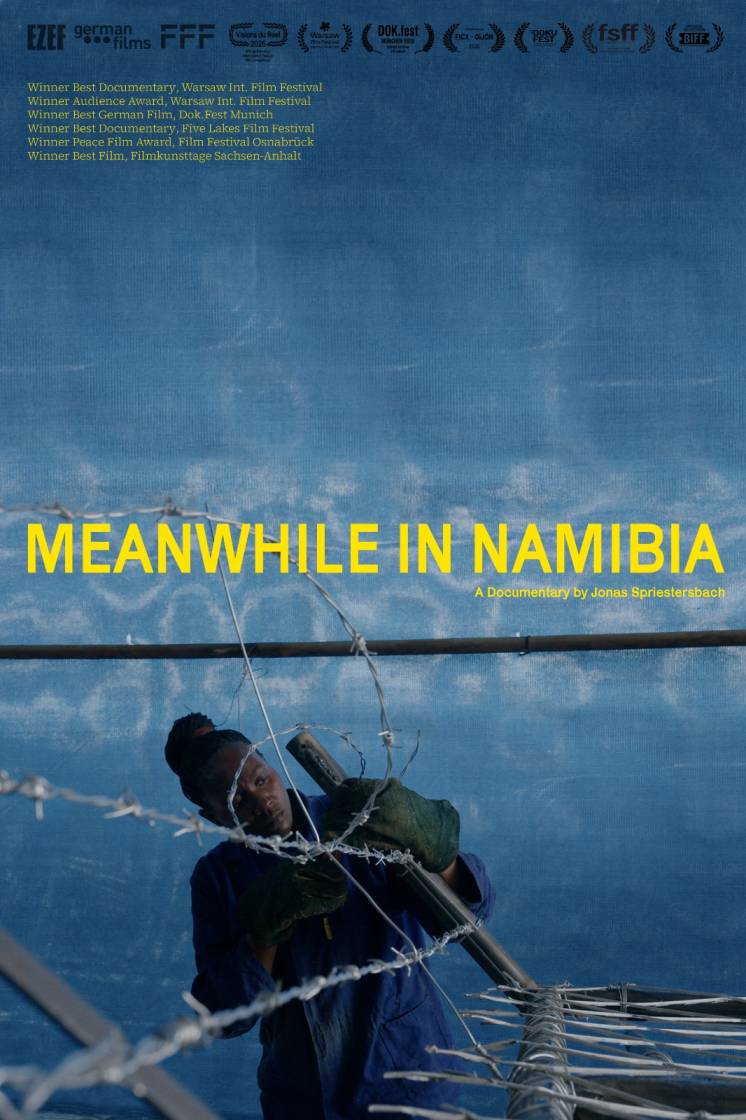
Occasionally resorting to intertitles, the documentary chronicles the role that the German colonialists and their descendants played and continue to play in the state of the nation today, framing the story around the refusal to pay reparations and the exploitative nature of work, aid and tourism in Namibia.
Meanwhile in Namibia opens on a tour bus in Lüderitz, a port town developed around Shark Island, with a white tour guide educating a majority-white tourist group on Germany’s “purchase” of Lüderitz Land. The guide’s description of historical events is such that it is bound to register as deceptive to those who are not in denial about the nature of the purchases made by European empires as they organised their colonial powers.
Moving on from there, the documentary settles on a Black tour guide who shares the more horrifying parts, from the sordid story of Shark Island to the history of racial segregation, land dispossession, and racial curfews. This juxtaposition sets the tone for the rest of the documentary and the contrast in how Namibia and Germany, as well as Namibia’s white minority and Black majority, approach historical justice.
The documentary’s interest is twofold. On one hand, Namibia is making attempts to address its inequality. Without talking heads or expert interviews, the documentary captures the Namibian condition as the tour guides and locals share their thoughts and the country’s stories with tourists and other locals, but also through close observations of present-day Black Namibians whose jobs are no more than modernised forms of slavery to state and neocolonial interests, juxtaposed with the lavish and comfortable lives and businesses of white citizens and visitors who continue to reap the benefits that come with the exploitation of the indigenous Namibian people and their land.
Meanwhile in Namibia punctuates this recording of the racial and social inequality with scenes from some of the meetings where decisions are being made with little to no progress, as the white minority remains non-committal.
On the other hand, and perhaps receiving more focus, is Germany’s approach to reconciliation. Meanwhile in Namibia notes that while the German government has conceded that the colonial-era massacres of indigenous people constituted a genocide, it has denied any duty to pay reparations even though it did pay reparations for the Holocaust, and also despite its history of collecting reparations from the Ovaherero and Nama people when they fought back against German colonisers before the genocide. Instead of formal reparations, the German government opted for financial aid packages and biodiversity initiatives.
Meanwhile in Namibia monitors some of those initiatives, placing them side-by-side with the dispositions of the Namibians who are supposed to enjoy the benefits. The result reveals an obvious disconnect, but also the comical ridiculousness of the self-serving white-saviour narrative that is typically spun when former colonialists brandish their aid packages and economic plans.
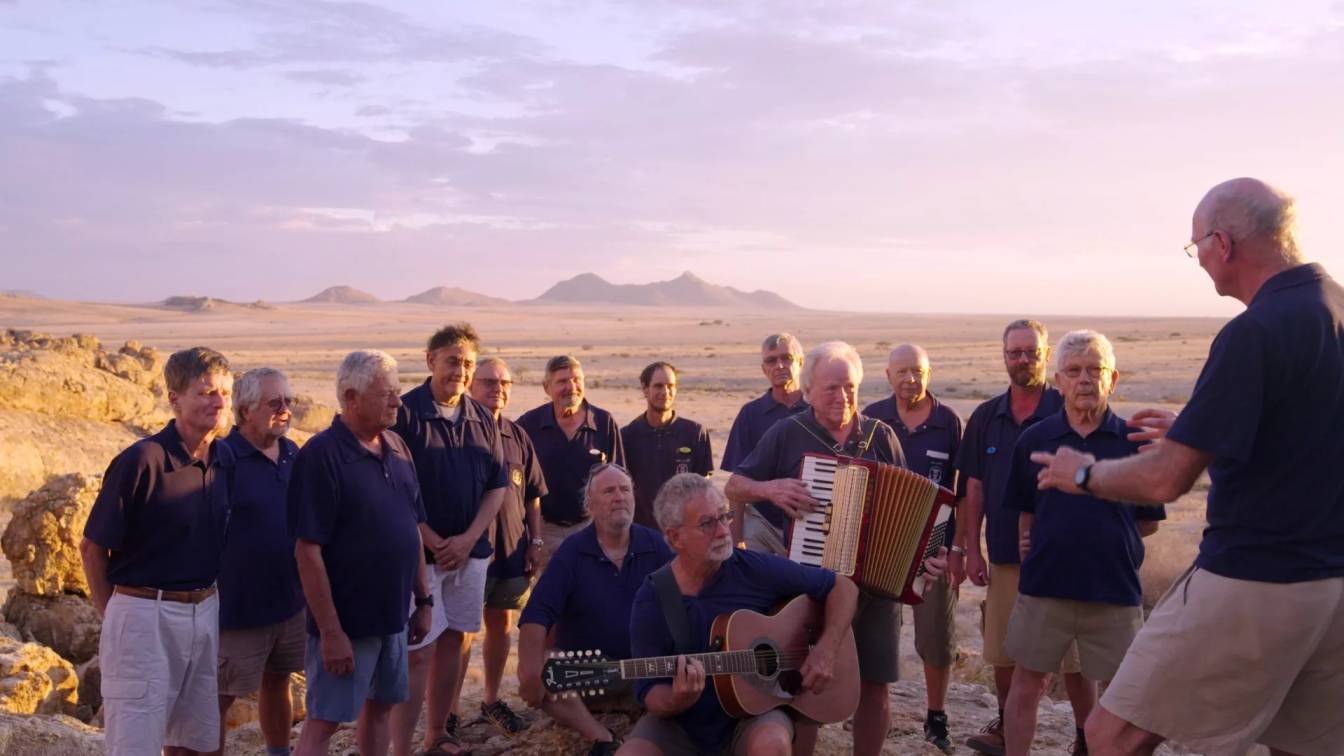
In one interesting scene that would be quite funny if it weren’t so sad, a group of Namibians in a shop calculate the perceived value of each citizen based on the financial aid offered by Germany towards development and reconciliation projects. They arrive at eighteen Namibian dollars. The camera settles on toilet paper at ten dollars apiece.
The initiative that the documentary spends the most time with is the establishment of museums of living memory, which a German team oversees while recruiting poor and neglected locals (including the Herero) to return to a pre-European influence “bushmen” state in the name of tourism, for the benefit of predominantly white (mostly German) visitors and with more cost than benefit to the locals.
Through this museum and its organisers, Meanwhile in Namibia captures the treatment of African lives as exotic and African bodies as props, all without regard for age and vulnerability, by “helpers” who are very much aware of their dishonesty. “It’s been said that on their way here, tourists shouldn’t see where we live,” says one of the builders of the museum, referring to the German development aid workers who want to use tourism to help heal the wounds that Germany inflicted on Namibia.
At its most jarring—which, I must say, is practically every scene—Meanwhile in Namibia catches white, German-speaking Namibians in outright and undeniable acts of racism. In fact, “catches” is doing serious heavy-lifting. What we watch in Meanwhile in Namibia is a white minority in an African country being sometimes merely patronising but more often than not so casually and relentlessly racist in the presence and absence of the Black indigenes who are rarely socially capable of reacting.
That Meanwhile in Namibia is a German-Namibian co-production, directed by Jonas Spriestersbach, a white, German filmmaker, says something about the state of the country. One may debate the ethics of this film being made by this director, considering the subject. But Meanwhile in Namibia is filmed through a mostly dispassionate lens, sharply critiquing the state of affairs without pretending to be an insider’s view of the said state of affairs.
Kubana
Another anatomy of a genocide, Kubana (2026) revisits the 1994 Rwandan genocide in a contemporary, non-investigative feature documentary that goes beyond the more familiar recounting of the tragic events. This year alone, a couple of films have taken distinct approaches to exploring that chapter of Rwandan history, in different formats.


Most compelling is this year’s Cannes Film Festival Caméra d’Or winner, Ben’Imana, a fictional feature about a woman who works in community justice and reconciliation after the genocide but finds her beliefs tested by a family crisis. Also notable is Echoes Beneath the Hill, a short film which screened at Film Africa in October and observed the outbreak of the genocide through the perception of a young girl.
Apart from the documentary form, Kubana differs for its more extensive view of the subject, tracing the painful episode from its historical antecedents to the subsequent reconciliation process and the enduring pains and losses. Enriched with a variety of visual aids, including archival images, maps, illustrations, comics, paintings, and landscapes, Kubana deconstructs identity, labels, and hate. And with interviews, talking heads, and two-person conversations, the film explores the ways in which the people of Rwanda have attempted to rebuild their humanity, and how they continue to deal with their trauma.
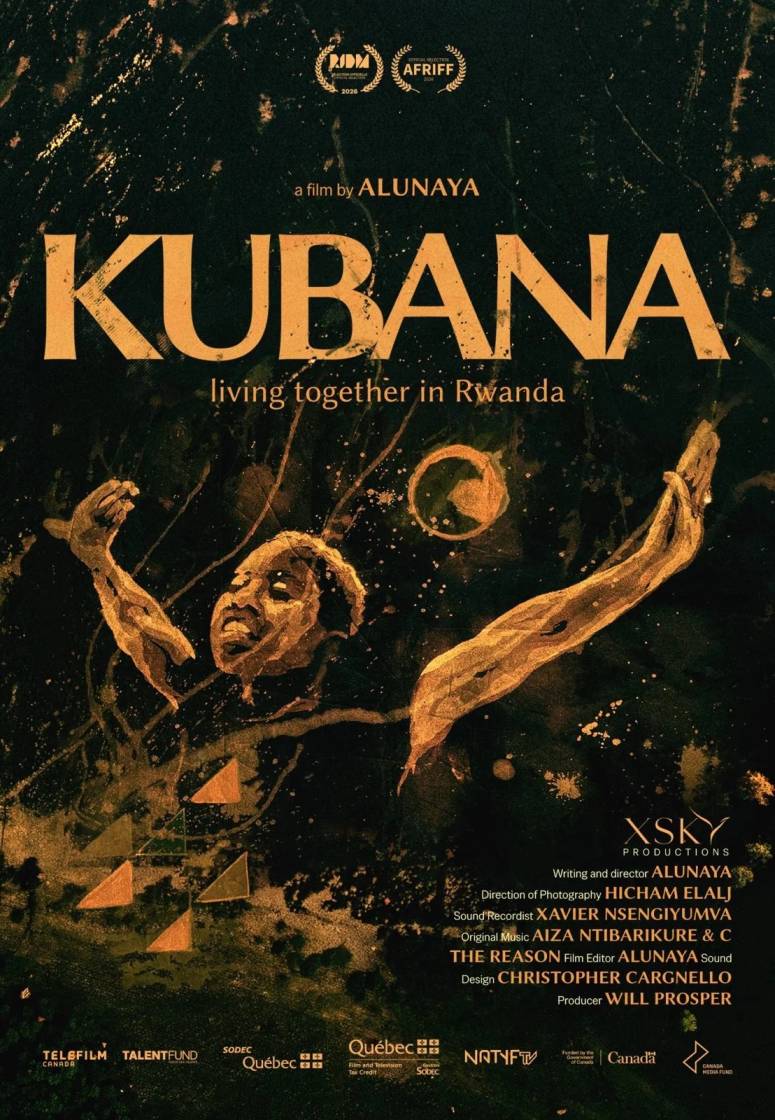
A Canadian production directed by Montreal-based Afro-Caribbean and French filmmaker Jessica Alunaya, Kubana begins with a dancer immersed in the traditional Rwandan dance by the river, while onscreen texts run through the colonial history of Rwanda’s ethnic groups.
In contemporary discourse around the Rwandan genocide, not enough is said about the foundational role played by the Belgian government—inheriting Rwanda from Germany post-World War I, just as South Africa’s apartheid regime took over Namibia—in converting fluid social groups into fixed ethnic groups and institutionalising the hierarchy and system of oppression that made the 1994 genocide possible in the first place. Kubana makes sure to put this information back in the conversation.
Over 800,000 people were killed in about 100 days, including men, women and children, predominantly Tutsi but also moderate Hutu. Kubana platforms multiple witnesses and survivors, from a woman who was the sole survivor in her family and an older man who grew up under both colonisation and Christianisation, to survivors who have become archivists, academics, historians, artists, and even therapists.
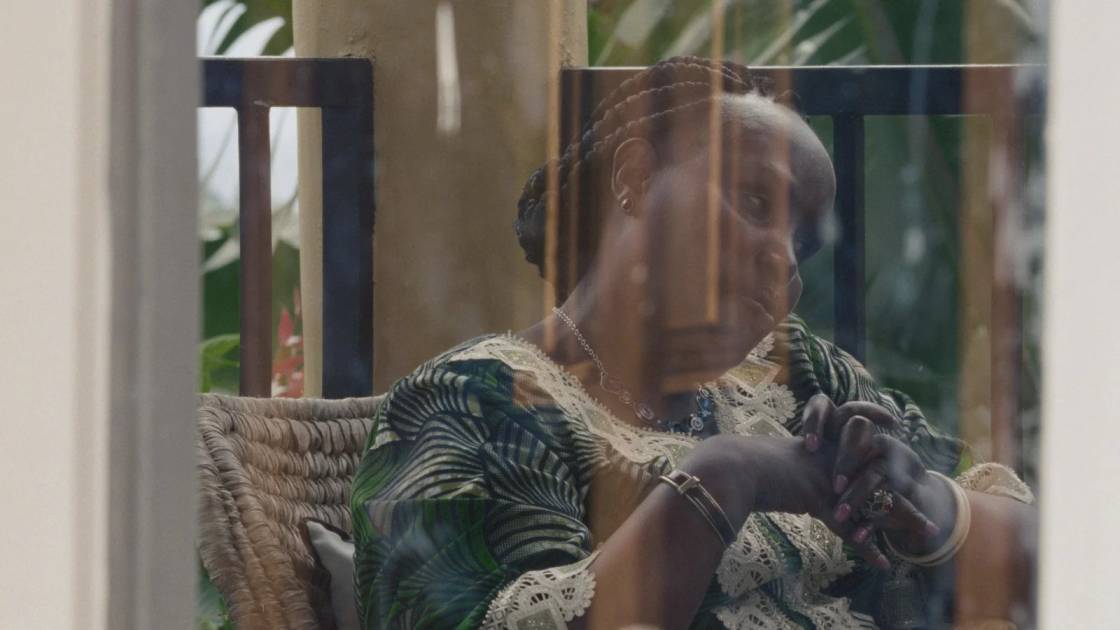
In one scene that I find especially affecting, an elderly Hutu woman narrates her experiences hiding Tutsi refugees with her husband and the horrible fate that befell her family and some of those whom she sought to protect. And in another scene, a young man sits with his father, who participated in the genocide and subsequently took responsibility for his involvement.
Kubana loosely translates to “living together”, which is ultimately the central thesis of the documentary. How do a people reconcile and live together after such barbaric acts have been committed by one group against another? How do a people who have experienced and suffered violent conflict, especially a genocide, navigate the permanent change to their sense of identity and communal relationships? Can they truly overcome the deep-seated trauma? How do they handle their children who inherit the trauma? It is particularly haunting when two mothers sit in silence as they wonder how to bare the full truth with the required details, and one mother asks, “How can you tell your children that their teacher is a killer, that their classmates’ parents are killers?”
Beyond the direct impact on individual Rwandans and their communities, Kubana also considers the Rwandan-DR Congo conflict, exploring how the history of the Rwandan genocide plays into the conflict in Goma, and how that conflict, in turn, plays into the resurgence of genocidal ideologies. Relevant as this aspect of the documentary is, it does come off almost as a side-note, especially considering that Alunaya never seems sure of where the documentary should end or how much information should make the cut. The result is a documentary with multiple false endings and somewhat incoherent progression, but a necessary documentary nonetheless.
The irony of both Kubana and Meanwhile in Namibia having been directed by foreigners and primarily produced by Western countries is certainly not lost on me. In an ideal world, stories that turn on the agency of a people and the exploitation of their stories should be told by those people themselves, as is the case with Kikuyu Land, for example. But the African continent certainly does not exist in an ideal world, as the films reiterate.
By the end of the AFRIFF screening of Meanwhile in Namibia, the young lady beside me certainly did not feel unaffected. “British colonialism now looks like it was not that bad”, she said, with a hint of hyperbole. She might have had similar thoughts had she watched Kubana, given Belgium’s colonial legacy in Rwanda. But her perspective might change if she ever gets to watch Kikuyu Land. There are certainly more stories to be told about all the colonial empires, including Britain, and how African countries continue to suffer the repercussions of colonisation.
Whatever the case, Meanwhile in Namibia and Kubana join Kikuyu Land as reminders that the world must reckon with the consequences of its history, the reality of its present, and how they both shape Africa and its relationship with the world.
Vivian Nneka Nwajiaku is a writer and film critic writing from Lagos. She has a master’s degree in law but spends most of her time consuming, studying and discussing film and TV. She’s particularly concerned about what art has to say about society’s relationship with women. Connect with her on X @Nneka_Viv