

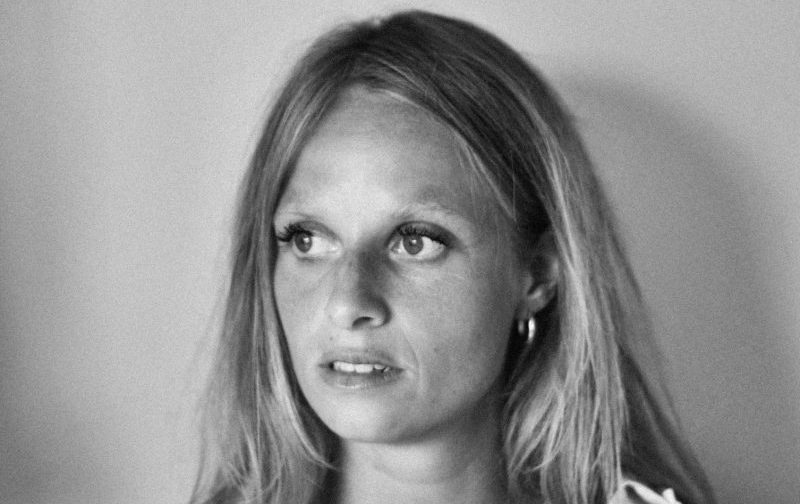

“We’ve lost the capacity, I think, to just spend time together without doing anything, and I feel like when you’re constantly around your family members, you still have that richness of just being together.” – Ashgan El-Hamus
By Vivian Nneka Nwajiaku
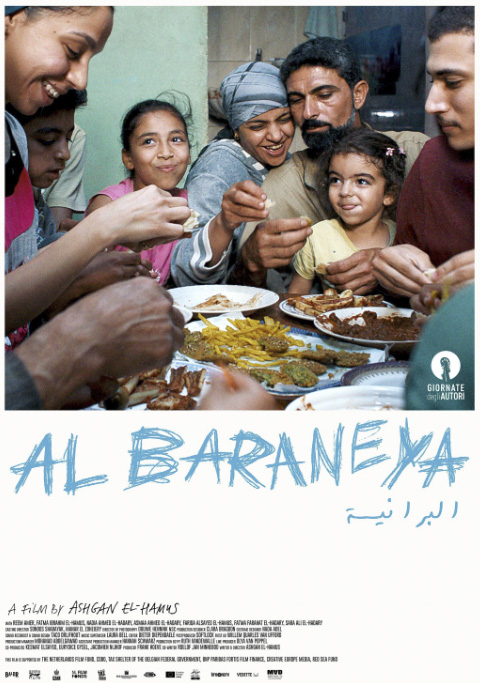
The temptations of the big city and the economic challenges that disproportionately disrupt life in a small town come to bear on a young pregnant Egyptian wife in Al Baraneya (2026), the feature debut of Amsterdam-based Dutch-Egyptian writer-director, Ashgan El-Hamus, co-produced between the Netherlands, Egypt, Belgium and Saudi Arabia.
Described in an Afrocritik review as “a film about the pleasures and pressures of simple, communal living,” the drama is set mainly in the village of Al Baraneya, where Amal (played by Reem Amer) lives a communal life with her parents and extended family while her husband works to build a house for them and their unborn child. However, when a relative visits from Cairo and a stranger offers the family an opportunity to sell their land and move to the city, it triggers conflicts for the family, but especially for Amal, for whom city life has become attractive.
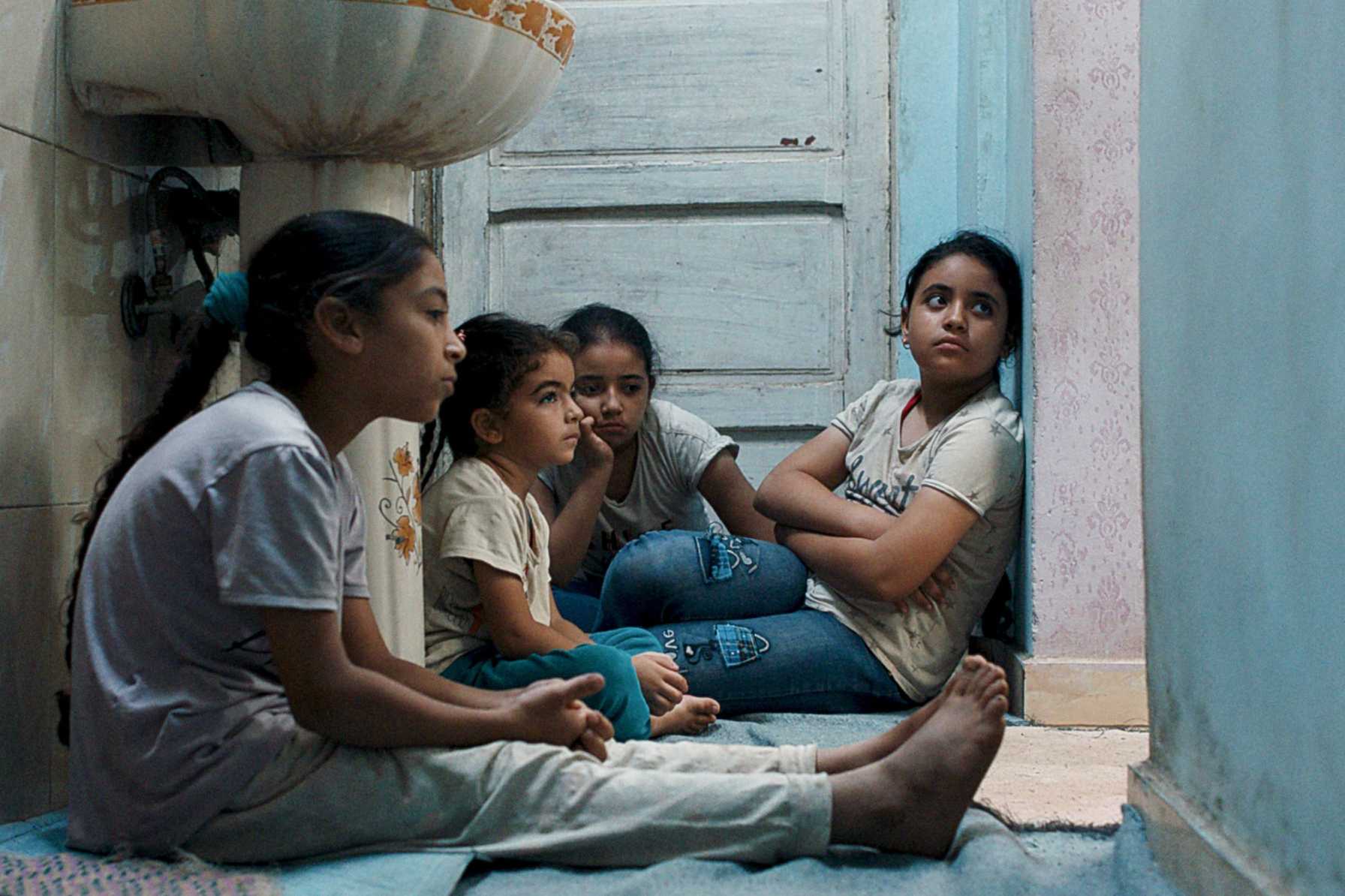
El-Hamus observes Amal and her family closely, creating an intimate and earnest atmosphere, with a cast that combines a few professional actors and several non-actors who are themselves close relatives of the director “playing their own roles, their own names, and their own characters,” as El-Hamus notes.
In this interview with Afrocritik in the course of the 2026 Venice International Film Festival, where the film premiered in the Giornate degli Autori sidebar, Ashgan El-Hamus talks about casting non-actors and relatives, as well as the thematic conflicts in Al Baraneya.
Al Baraneya feels very personal and intimate, particularly in the way it observes family life and in your decision to cast members of your own family alongside professional actors. What inspired the film?
I think it started about four or five years ago, when I first visited Al Baraneya. It’s the village where my grandma was born, so it’s the village where my family started and is originally from. But my direct family lives in Cairo now and has been living there for years, because that’s where my dad was born. So, we always visited just Cairo, basically, and never visited Baraneya, because it was just extended family that we didn’t know that well.
And then around four years ago, we started visiting, because my dad wanted to take us there. Because he always talks about [how] that’s where the family El-Hamus originated from, so we were curious. And I feel like the moment I set foot in the village, we just spent this whole day together with the family, and we basically did nothing. We just spent the day together; we drank tea, we ate food together, we shared moments, but we didn’t actually do anything. I felt like I was very struck by the collectiveness of spending time together, all together in one living room. And for them, that felt so natural.
For me, of course, we are in a very rushed and Western and busy society all day long, week in, week out. And I feel like when we set foot in Baraneya, we felt, at first, a bit uncomfortable with letting go of a schedule. There was a lot of resistance there for me, and at the end of the day, I felt so at ease with doing less and spending more time together, instead of just rushing off to your next appointment or your next whatever.
And I felt like that way of collectiveness and just spending time together was something that struck me, and people taking care of each other’s kids. We never knew whose kid was whose, because grandma takes care of the kids, the uncle takes care of the kids, so you never know. And I felt like that was something that I really was more and more missing in our Amsterdam-based life.
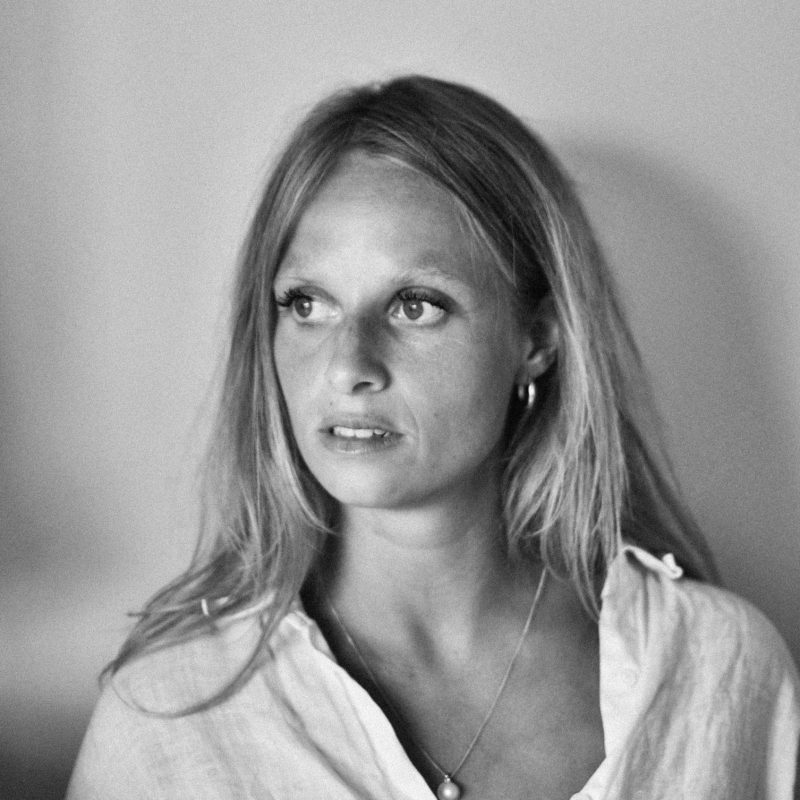
It makes sense, then, that even within the film, it’s a bit difficult to tell who is whose child, who exactly is Amal’s sister and who is her cousin. Those lines are blurred.
Yeah, yeah. That was also very important to me, that it’s really about these very genuine dynamics that the family actually has. We wanted, really, to capture the chaos of a whole family living together in one house, and that it really didn’t matter that much to know who belonged to who, and who was whose dad or mum. Of course, of the core family, you have to know a little bit. Amal’s struggles with her mum — that’s important for the story. But apart from that, we wanted to feel like there’s always someone extra, basically, in the shot. There’s always a leg of another kid laying down on the couch, or there’s always a family member around, even if you don’t want it.
But then also, in that collectiveness, you can find your peace, you know? If we, in our Amsterdam life, meet up with friends or family, we talk the whole time. We’ve lost the capacity, I think, to just spend time together without doing anything, and I feel like when you’re constantly around your family members, you still have that richness of just being together. You don’t have to ask people what they did, how they feel, because you’re constantly together, in a way, and I feel like there’s also very much a richness in that, that we kind of lost track of.
In your director’s statement, you described the film as a plea for small living and an indictment of capitalism. How do you reconcile that with the portrayal of Amal’s genuine hunger for city life and her apparent desire to choose a different path for herself?
I really wanted the film to give a stage to the grey area of this life, so I didn’t want it to be black or white. I think the first time I got there, I still had this kind of exotic view, in a way, of the way they were living. Egypt was not exotic for me anymore at all, but Egypt for me was Cairo. So, that was city life, that was also a busy life, and of course also [had] collective ways of living, but not in the sense of the family in Baraneya.
I feel like, at first, I romanticised it in a way as well, from my Western perspective, from my Amsterdam perspective, where I thought, “Oh, that’s so amazing, and I want to go back to this collective way of life where I can raise my child with my mum in the same house, with my grandma in the same house, all these generations taking care of each other”. I thought there was such a romantic view in that. Then, at some point, when I started visiting more and more and just spending time there, I felt like there’s also these generational gaps happening and growing as well, especially between the younger generations and the older ones. Because phones and Instagram and TikTok and everything also made it into the village, of course.
And you could see that as a very bad thing, because it kind of puts pressure on this traditional life in a sense. Are there still going to be people remaining [in] this traditional life and taking care of the land and living from the land in a few years? Is the family house going to be gone in a few years? You never know. But then also, it’s not all bad. And that’s the grey area I mean. I could easily understand it as well, because for me, I could have this romantic view because I was leaving it as well. I had the opportunity to leave every time, and I had the opportunity to go back to my life where I was making films, and I was living in Amsterdam with all the opportunities and all the freedom.
For girls like Amal, it’s different, because there’s this path pointed out for you, and then once you get pregnant, and once you get married, you know exactly what the end is going to be like. You just have to take one look at your grandma, and you’re like, yeah, that’s going to be me in several years, you know? So, I wanted to leave the stage open for that grey area as well, because it should never be this exotic view on this life. It should always be a very authentic view on that life, and in that sense, it has to be coming from the real family.
Do you see that digital access and exposure as ultimately liberating for Amal, or as something that creates dissatisfaction with a life she might otherwise have been happy with?
I don’t think I have one answer to that, because I think that’s exactly what we’re all struggling with. The fact that it leads us to different worlds, but then also, it feels so external, in a way. There’s this sentence in the film where the mum and dad have a discussion [about] whether they should leave or not leave. There’s this neighbour that left, and he now has this apartment with [a] balcony view in Alexandria, and it’s overlooking the sea. And then, the mum says, “Are we balcony people?”
It’s a film that’s not based on dialogue at all. Often, literal words are not so important as actions or details in the film. But then, for me, this sentence really is at the very core of the film and the core of the theme for me. It’s their practical struggle at that point about whether they should actually be at an apartment with a balcony or not. But then it’s also my struggle and your struggle and everyone’s struggle. Should we be constantly overlooking other people’s lives and looking outside and looking further and further and further? Because there’s always something better. And there’s always something bigger, and there’s always something else.
Also, the literal thing of, they’re with their hands and feet in the dirt, in the ground. I feel like there’s also a symbolic thing to that, where it’s like, you could be on a balcony overlooking other people’s lives, or you could just be with your hands in the dirt and still plant a potato, for instance. I think we kind of lost track of that. I mean, I know I did, and I think it’s, in that sense, really a core sentence in the film.
That sentence, “Are we balcony people?” really stays with the audience. Like you said, it is a thesis statement.
Yeah. Also, we put the shot of the girls lying in bed kind of immediately after that. So, you have the mum saying, “Are we balcony people?” And then, you see the kids. I always feel at that point, like, “No, they’re not.”


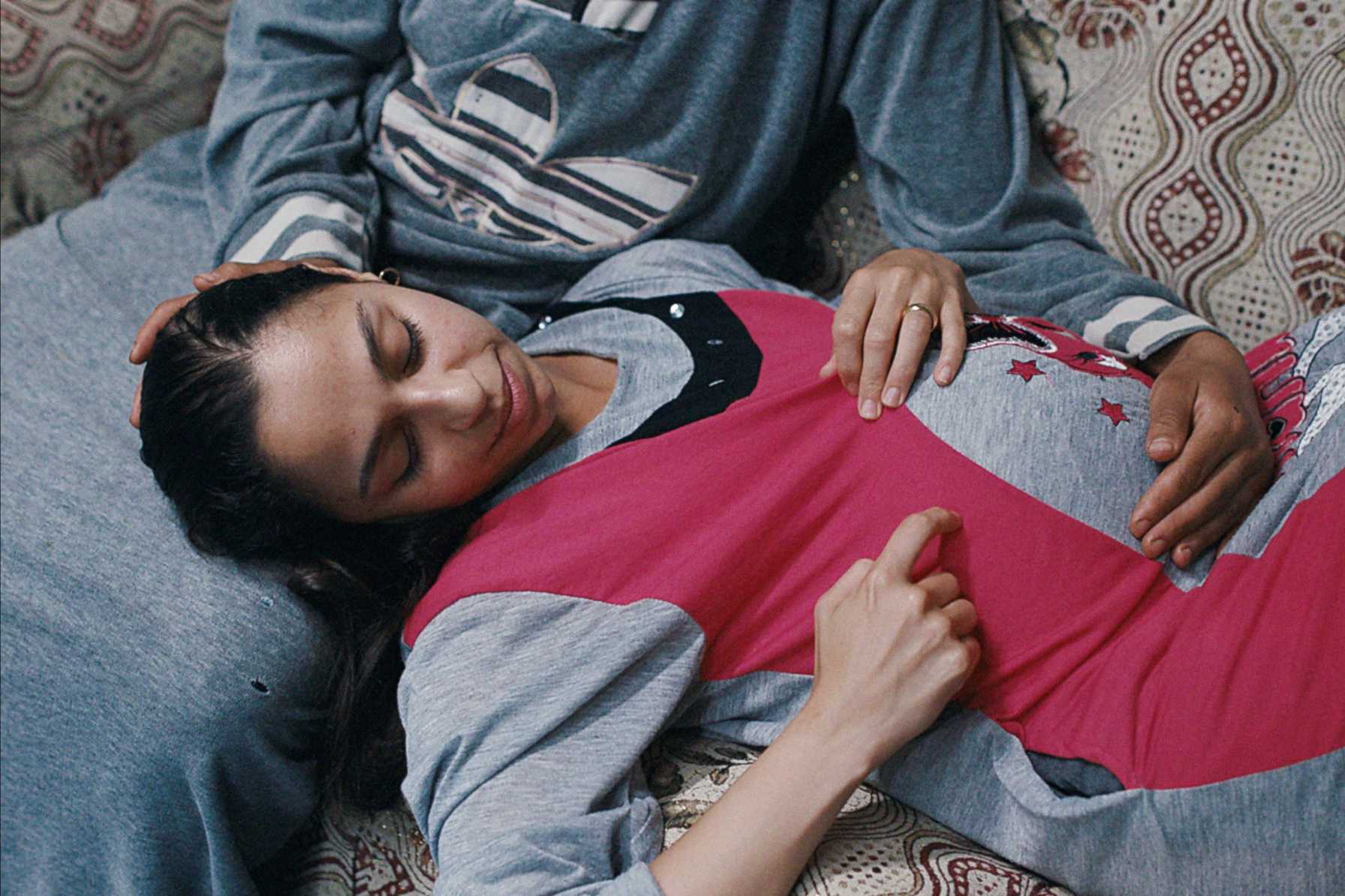
Earlier, you talked about Amal being pregnant and knowing she could be like her grandmother in a number of years. Amal is approaching motherhood, but she’s surrounded by carefree children. Was that transition from childhood into adulthood and motherhood central to how you conceived Amal’s story?
Yeah. Also very much because I think at that point, it’s kind of a definite moment in your life where a part of your freedom is gone. It’s a moment where it ties you down in a certain way. And I think I wanted to have one central character in the film [where] she has the age where you could still think and dream of a different life, and she has the example of someone very close to her living a very different life. I wanted to point that out. She’s twenty in the film.
Of course, for her mum or her grandma, it’s not even a question anymore, and then for the kids, it’s only a dream. But for her, it’s an age where things are still possible, but then also, she has this ticking time bomb inside of her, where it’s like, “Are there still possibilities, or am I tied down already?” That’s basically why I chose her as the main character, because she’s in the middle of that.
There is the interesting dynamic where Amal’s rebellion begins to rub off on her younger ones. Was that idea of influence across generations of women something you were consciously exploring?
Yeah, very much. I also talked a lot about that with the older generations of women in the family, and they just say, “I think we, like, the older generations, are much happier because we didn’t have this worldview.” They didn’t have a phone that extended the boundaries of their village. So, I think they really felt like the happy life is the smaller life. But I feel like the weird thing is that now, even in small villages like Baraneya, the kids get tied up in that decision themselves. And I think that’s something that the older generations of women look at and they just say, “They’re less happy than we are because they have all these doubts, and we didn’t have that.”
Because the smaller your worldview, basically, the happier you get. And I thought that’s very interesting, because I’m also struggling with that in a certain way. And I think we all are.
What is it about working with family that appeals to you as a filmmaker, and what does it allow you to bring to a film that you might not get from a conventional casting process?
I like to work with real people on screen. I very much like to watch real people on screen myself, if I watch a film, because it speaks to me way more than actors, and it always has. And I like the way of working because, of course, it’s professional in the sense [that] at some point, I become the director; they become the actors. But it starts out being more about: who are you as a human being? And who am I as a human being? And can we have common ground of trust and talking about fears and dreams? And what are you afraid of? What am I afraid of? And then, we get to know each other as human beings. And from that trust and love we build, we can work together instead of making it a very technical thing. So, for me, that’s a very natural way of working.
And then, I think non-actors in general, but also in this particular case, like family members, they bring something to the screen which is very authentic, because they haven’t learned how to keep their face for a camera to catch the light, or they haven’t learned how to hold their hands for the camera to see them. So, all the technical stuff falls off. And then, you get something that’s way more real than with actors.
What do you hope audiences take away from this film when they see it?
For me, it became kind of a mirror to our more chaotic and hectic Western lives. I feel like it can give you a little sneak peek into a life that’s way more traditional, maybe, than yours. But also, I hope we can see that we’re maybe more alike than we actually think we are, even if we don’t look alike. And I hope it slows you down in a way, because I think we can all use that in this time and age.
Vivian Nneka Nwajiaku is a writer and film critic writing from Lagos. She has a master’s degree in law but spends most of her time consuming, studying and discussing film and TV. She’s particularly concerned about what art has to say about society’s relationship with women. Connect with her on X @Nneka_Viv