




The AMVCAs have a long and well-documented habit of rewarding visibility over rigour. Films that arrive with noise—with big names, big budgets, big marketing—tend to accumulate nominations the way a rolling stone gathers moss, regardless of whether the individual nominations are deserved.
By Afrocritik’s Film Board
On the morning after the 12th Africa Magic Viewers’ Choice Awards (AMVCA) nominations announcement, veteran filmmaker and actress Ego Boyo made a post on X (formerly Twitter) congratulating the nominees but also raising crucial questions about the awards show’s process. “I am always a bit confused by the AMVCA nominations. Is every film that submits picked or is it a critical process of elimination? Based on some criteria? They also seem to put films and series in the same categories? So confusing,” she said.
It is not new feedback. Every year, multiple versions of the same complaints are expressed by viewers, industry practitioners, and film journalists alike. At Afrocritik alone, we have published lengthy essays on some of them, from “The Annual AMVCA’s Category Problem: Should TV Productions Be Competing with Films?” in 2023, republished in 2025, to “It’s the Eleventh Edition, and We Still Don’t Know What the AMVCA Trailblazer Award Is”, where we decried the awards show’s lack of public and clearly defined rules.
That the same issues repeat themselves annually, with no efforts by the organisers to justify or account for their choices, points to a stubborn refusal by the organisers. But until other awards shows step up to present a consistent, more credible alternative, the AMVCAs will remain the most celebrated awards show, especially in Nigeria, Africa’s most popular and populous creative hub. And so, we must continue to engage—to recognise their efforts, especially in areas where they get things right, and to call out their faults.
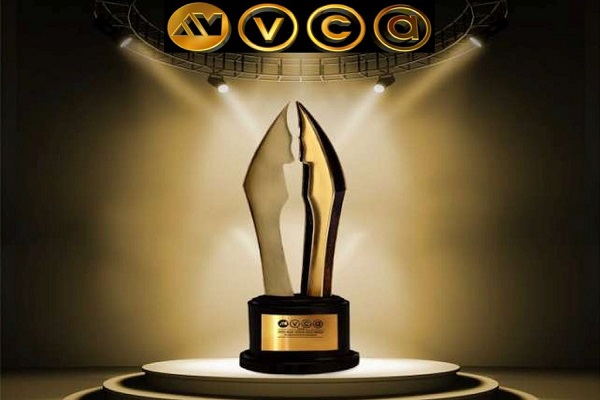
So, here we are again, Afrocritik’s film critics and journalists, sharing our thoughts on the shocking nominations, the snubbed titles and practitioners, the pleasant surprises, and the incidents of category fraud flowing from the 2026 Africa Magic Viewers’ Choice Awards (AMVCA) nominations.
The Shocking Nods
Gingerrr Shockingly Leads the Pack with Nine Nominations
Very few things truly surprise me about the AMVCAs, but in my wildest dreams, I could not have conjured up a situation where Gingerrr gets nominated in nine categories, let alone Best Movie, Best Director and Best Writing. It also scored noms for Supporting Actor (Lateef Adedimeji), Supporting Actress (Bisola Aiyeola), Cinematography, Make-up, Score/Music, and Sound Design. I consider every one of these nominations to be a sacrilege, and I say this as a person who ordinarily appreciates the two actors who received nominations.
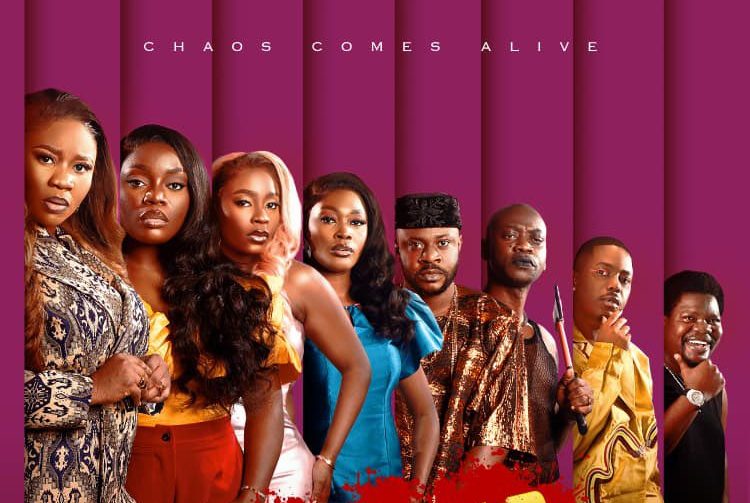
Gingerrr was one of the worst Nollywood films to show in cinemas in 2025. No, one of the worst this entire decade. That it had commercial success does not negate that obvious fact. That it would tie with the far superior (albeit flawed) The Herd for the most nominations of the night is beyond shocking. I am truly at a loss for words, but what more can I add to the 1.5/5-rated review I wrote last year, after paying hard-earned money to see this chaotic mess of a film? – VNN
3 Cold Dishes for Best Writing? Absolutely Not.
Let me be clear about something: there is a difference between a film that is bad and a film that is bad in ways that matter. 3 Cold Dishes is the latter. Asurf Oluseyi’s revenge thriller—executive produced by Burna Boy, draped in pan-African ambition, and built on a premise genuinely worth making—is a film that fails precisely where it most needed to succeed: at the level of the script.
That the AMVCA saw fit to nominate it for Best Writing is not just a shocking nod. It is an institutional confession that those who nominated it either did not watch the film carefully, do not know what good writing looks like, or simply do not care, and at this point in the AMVCAs’ existence, none of those options is particularly flattering.
The premise, to be fair, is irresistible. Three women, trafficked as teenagers in 2002, resurface sixteen years later as hardened outlaws, dispensing the justice a broken state never bothered to deliver. That is a film. That is, in the right hands, a great film. But the screenplay that surrounds this premise is so structurally disjointed, so constitutionally incapable of trusting its own emotional material, that the promise curdled long before the credits rolled.
As I noted in my 2.3/5-rated review of the film, 3 Cold Dishes wants to be a crime thriller, a spiritual fable, a pan-African action romp, a feminist lament, a human trafficking exposé, and a Kill Bill-esque spectacle—all at once, all without the connective tissue that would make any one of those ambitions land. In reaching for everything, it holds nothing. This is not ambitious writing. This is undisciplined writing wearing ambition’s clothes.

The film’s script does not trust its own scenes to carry meaning, so it uses a narrator to explain what we should be feeling. Good writing does not do that. Good writing earns its emotions. Good writing understands that silence, restraint, and negative space are as powerful as dialogue and exposition. This script treats all of those tools like liabilities, filling every available gap with noise because it fundamentally does not trust the audience or itself.
A Best Writing nomination for a script that cannot even sit with its own subject matter long enough to make it mean something is a specific kind of insult—to the women whose stories it claims to tell, and to every writer in this industry doing the painstaking work of building emotional truth from the inside out.
To be fair to the film, 3 Cold Dishes is not without merit. It should have been nominated for its quietly stunning cinematography, gliding across Lagos, the outskirts of Benin, and the sandy stillness of Ivorian border towns with a confidence the script never musters. Its score earns its nomination. Its editing earns its nomination. The writing department did not, and the AMVCA’s failure to distinguish between a film’s working parts and its broken ones is a recurring critical blind spot that this nomination puts on full, embarrassing display.
Because this is the thing about the AMVCA that this nomination crystallises so neatly: the organisation has a long and well-documented habit of rewarding visibility over rigour. Films that arrive with noise—with big names, big budgets, big marketing—tend to accumulate nominations the way a rolling stone gathers moss, regardless of whether the individual nominations are deserved.
3 Cold Dishes came with Burna Boy’s executive producer credit attached, which in the Nigerian entertainment ecosystem is essentially a floodlight. It was always going to be seen. The question was whether it was going to be seen clearly, and the Best Writing nomination confirms that it was not.
The AMVCA looked at a screenplay that is disjointed, emotionally evasive, and structurally exhausting, and decided it deserved to be celebrated while snubbing films that are objectively better-written. That is not just a bad call. It is a credibility problem. And the AMVCA, for all their cultural significance, have been accumulating credibility problems for long enough that at some point, the accounting must come due.
Nominating this screenplay for Best Writing is like giving a structural engineering award to a beautiful building that keeps flooding. The aesthetics are not the issue. The foundation is. – JJ
The Snubs
Taiwo Egunjobi’s The Fire and the Moth and Ema Edosio’s When Nigeria Happens
With the incredulous things that happen in Nigeria, I’ve become less susceptible to shocks, but imagine my horror when I learned that Taiwo Egunjobi’s The Fire and the Moth earned no nominations at the AMVCAs despite being submitted, especially in what was a rather disappointing year for Nollywood.
Not a single nomination. Not for direction. Not for cinematography. Not for writing. Nothing. Zero. In a year where films with questionable screenplays walked away with Best Writing nominations, the AMVCA looked at one of the most critically acclaimed Nigerian films of 2025 and decided it did not exist. Let that sit for a moment.
Egunjobi is one filmmaker who has maintained an upward career trajectory since his debut, and The Fire and the Moth is a testament to how far he has come. From In Ibadan (2021) to All Na Vibes (2021) to A Green Fever (2023), Egunjobi has been doing something increasingly rare in Nollywood: growing, film by film, with intention and discipline.
His fourth feature is his most assured work yet. A morally complex thriller built around the theft of a rare Ife bronze head, the film uses its artefact as both plot engine and symbol, tracing the greed, desperation, and complicity it awakens in everyone it touches. It is a film with something to say and the craft to say it.

Fadamana Okwong’s cinematography grounds the chaos in wide, breathing frames that make the town feel like a living organism. The performances, particularly from Tayo Faniran and Ini Dima-Okojie, carry the weight of characters who are neither heroes nor villains but something more uncomfortably human. And Egunjobi holds it all together with the confidence of a filmmaker who has stopped proving himself and started trusting himself.
The critical community noticed. The Fire and the Moth was rated the second-best Nigerian film of 2025 in WhatKeptMeUp’s Critics Poll, with twenty participating Nigerian critics casting their votes. Egunjobi was named Director of the Year. Twenty critics. A consensus. The kind of critical alignment that does not happen by accident or sentiment but by genuine, considered engagement with the work.
My 2.9/5-rated review noted the film’s occasional pacing stumbles and underdeveloped character arcs, but even with those reservations, it remained one of the most thoughtful, visually coherent, and thematically rich Nigerian films to come out that year. The AMVCAs, characteristically, looked at all of this and shrugged.
This is not a clerical error. This is a pattern. The AMVCA has a well-established habit of mistaking noise for merit and visibility for quality—of rewarding films that arrive loudly over films that arrive meaningfully. It tells you exactly what the AMVCA values, and rigorous engagement with filmmaking craft is somewhere near the bottom of that list.
Then there is When Nigeria Happens. Ema Edosio’s third feature is, by almost any reasonable measure, one of Nigeria’s most travelled films of 2025. It opened the Open Doors Section at the Locarno Film Festival—the first African film to do so—before screening at the Ake Arts and Book Festival and the Ibadan Indie Film Awards.
It is a film that left Nigeria, represented the continent at one of Europe’s most prestigious film festivals, and came back with its head held high. Afrocritik’s 3.8/5 review describes it as a film that shines a spotlight on the sacrifices young Nigerians make to survive, told through the kinetic, raw energy of a contemporary dance troupe navigating a Lagos that is colourful, chaotic, and merciless.
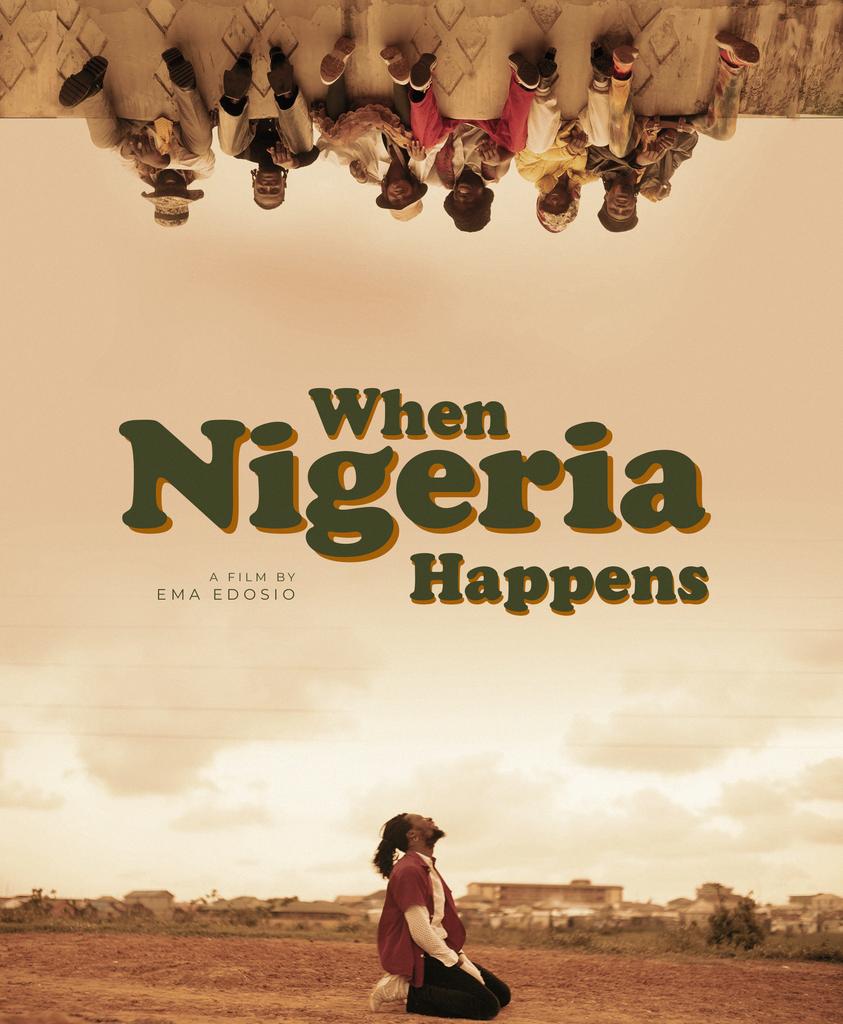
It is imperfect—the second act meanders, the ensemble is underserved—but it is thematically coherent and creatively inventive in a way that many of the films on this year’s nominees list simply are not.
Now, in the interest of fairness, as of the time of writing, we have not been able to independently confirm that When Nigeria Happens was formally submitted for consideration. If the film was not submitted, then the AMVCA cannot be blamed for its absence, and this becomes a conversation about a filmmaker’s relationship with an awards body rather than the awards body’s relationship with quality. But if it was submitted and still received nothing, then we are back to the same conversation about an institution that is either unable or unwilling to recognise craft beyond industry noise.
Either way, When Nigeria Happens deserved to be on this list. Its absence, whether by omission or oversight or indifference, is a loss.
Every year that the AMVCA fails to engage seriously with the full range of quality Nigerian and African filmmaking is another year they inch closer to irrelevance, propped up by cultural habit and industry inertia rather than critical credibility. The films are slowly getting better, especially outside the mainstream space. The nominations list, too often, does not keep pace. And at some point, the gap becomes impossible to ignore. – JJ
To Kill a Monkey Earns Eight Nominations, But Not One for Its Director
There is a particular kind of institutional absurdity that the AMVCAs have perfected over the years, and AMVCA12 has delivered a masterclass in it. To Kill a Monkey was the second most nominated title of the night—eight nominations spanning Best Series (Scripted), Best Lead Actor, Best Lead Actress, Best Supporting Actor, Best Cinematography, Best Score/Music, Best Costume Design, and Best Editing. Eight essential categories, and a nominations jury arriving at the conclusion that this production was among the best of the year in their respective categories. And yet, somehow, in the midst of all that institutional enthusiasm, not a single person thought to nominate the director.
Let us be precise about what a directing nomination means, and what its absence means. Direction is not one department among many. It is the organising intelligence behind every department. The cinematography that earned a nomination? A director shaped it. The performances that earned nominations? A director guided them. The editing rhythm, the tonal consistency, the visual grammar that makes a series feel like a cohesive artistic statement rather than a collection of well-shot scenes—all of that flows from the director’s chair.
To nominate eight elements of a production while declining to acknowledge the person who held those elements together is not just an oversight. It is a logical contradiction.
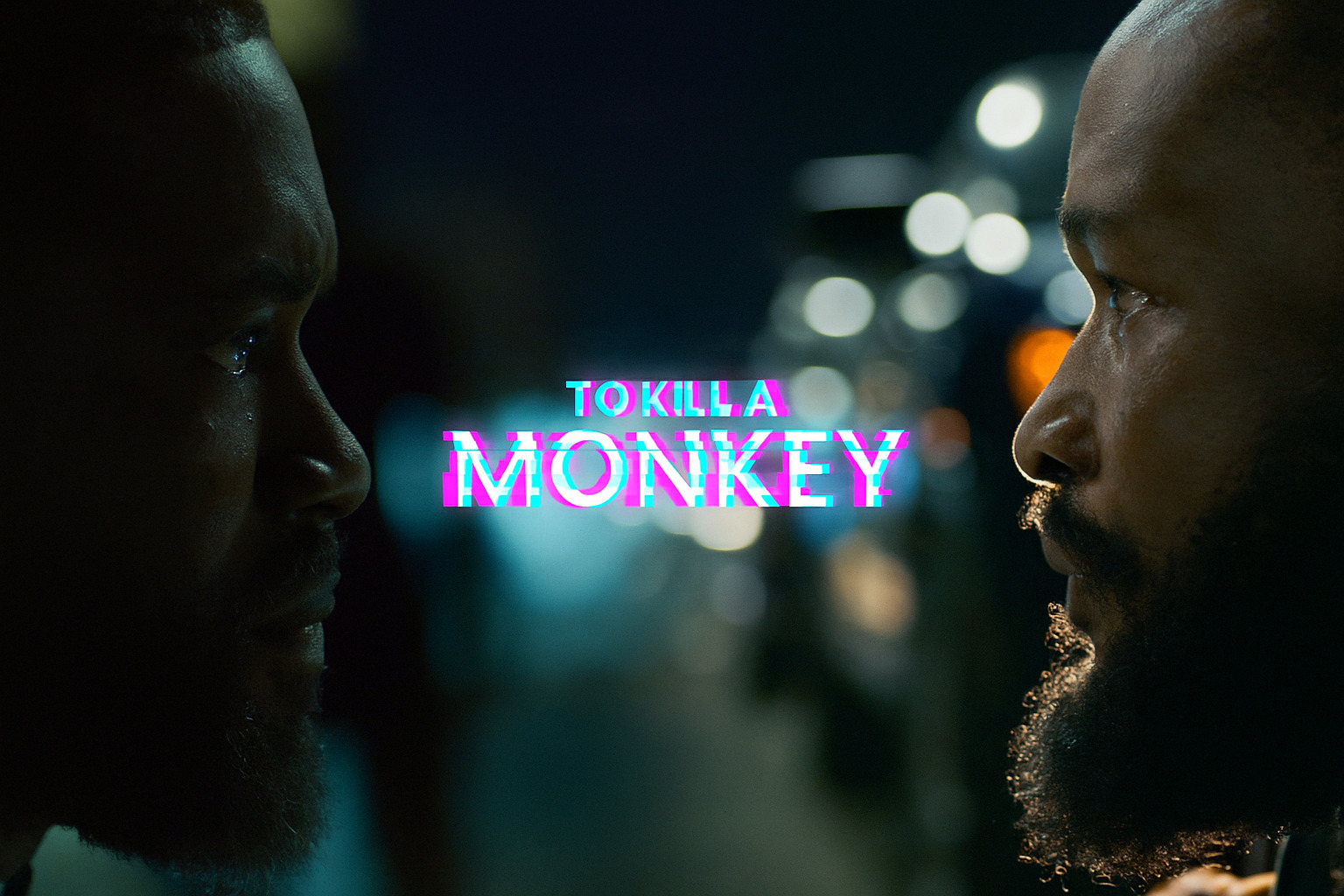
To be clear: this is not an argument that To Kill a Monkey is beyond criticism. Reasonable, well-considered reservations about the series exist and have been articulated in Afrocritik’s review. But that is entirely beside the point. The AMVCA’s own nominations jury, through the very act of nominating this production in eight categories, made an institutional declaration that To Kill a Monkey belongs in the conversation about the year’s best work.
You do not get to make that declaration and then quietly exclude the director. You do not get to celebrate the house and ignore the architect. The AMVCAs cannot have it both ways, and the fact that they keep trying suggests either a nominations process that operates in silos so disconnected from one another that no one pauses to check for internal consistency or a casual indifference to whether the final list makes sense. Neither is a good look for an awards body in its twelfth year.
There is, admittedly, a structural explanation, if not an excuse. A closer look at the Best Director nominees reveals that they are all drawn from films, with no series nominated, suggesting that the category implicitly excludes television directors from contention altogether.
If that is the case, then the snub is less about Adetiba specifically and more about a systemic failure in how the AMVCAs conceptualise direction as a craft. Lumping films and series together in acting and technical categories—treating them as equals when it serves the nominations count—while quietly cordoning off the Best Director category as film-only territory is a contradiction that punishes television directors for working in the “wrong” format.
The solution is not complicated. A Best Director for Film and a Best Director for Series would not dilute the award; it would make it honest. Until the AMVCAs are willing to make that structural distinction, television directors will continue to be disadvantaged by a framework that was never really designed with them in mind. – JJ
Paul Utomi’s Say Who Die Misses Out Entirely
Truth be told, Say Who Die isn’t perfect, and Afrocritik’s review explains why. But it’s an inspiring watch for a Nollywood dark comedy, when one considers the different stylistic devices brought together to make it different from the regular kinds of films you will find around. There is a commendable presentation of ideas and situations that resonate with ordinary people in the Nigerian society, with its filmmakers, most notably writer Lani Aisida and director Paul Utomi, opting for dialogues in informal language and ridiculous or flawed characters that are equally aware of their mischief.
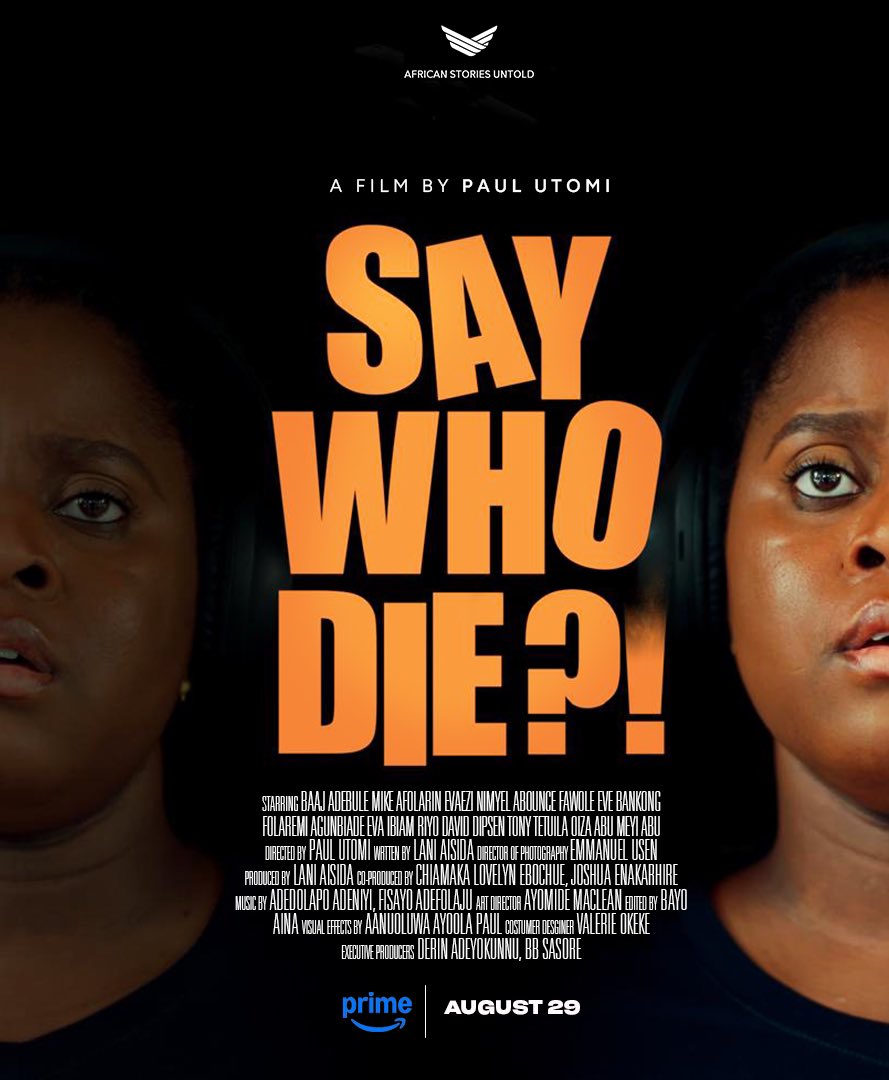
While this kind of situational awareness dismisses emotional intensity, it does point out how fickle and transient human nature is, with even a phenomenon as significant as death treated with levity in a similar way, real humans will always find reasons to move past each bout of tragedy to focus on the next engagement. And even so, the film’s technical awareness buttresses its thematic resonance, particularly with swift editing transitions creating a sense of urgency and stylised cinematography presenting multiple-angle shots, which could be interpreted as partly a play on emotions and an attempt at matching the overall bouncy energy of the production.
Afrocritik confirmed that Say Who Die was submitted for consideration. Unfortunately, none of the audacious experimentations of this film seemed to matter to AMVCA 2026. If they did, the film would have earned at least two nominations, including the Best Editing category. – AJA
Mercy Aigbe’s Exclusion from the Best Supporting Actress Category for My Mother Is A Witch
Not many Nollywood films from 2025 offered much in terms of originality and narrative strength, including Niyi Akinmolayan’s My Mother Is a Witch, with its emotional story of a lady at loggerheads with her mother. The film unfolds at what I consider an agonisingly slow pace. Its little meat is supported with unspoken tensions and suspense as fluff, with tropes partly rooted in Old Nollywood psychology: intra-family drama, mother-daughter tensions, melodrama, cultural backdrop, etc.

However, what could have entirely collapsed into yet another irredeemable mundane screen experience appeared to have benefitted immensely from actor-driven performances, as Afrocritik’s review acknowledges, with Efe Irele portraying a meditatively and traumatised Imuetiyan, and Mercy Aigbe, the protagonist’s conciliation-seeking mother. Throughout the film, Aigbe slips into the traditional Benin mother role with riveting double-consciousness—a seemingly victimised, browbeaten and sufferable presence in the present; and a tough, overbearing persona driven by maternal instincts, from flashbacks.
Given what could be described as Aigbe’s poignant embodiment of the traditional African mother, perhaps also her most significant acting performance in recent times, it is somewhat disappointing that she did not receive a nomination in the Best Supporting Actress category. —AJA
Abba Ali Zaky and Ibrahim Abubakar as Best Supporting Actors for The Herd
When The Herd arrived on Netflix towards the end of last year, following its decent run in cinemas, it immediately gained public attention, at least that of Nigerian cinephiles who saw it. Afrocritik’s official review described it as a debut that demands attention in a Nollywood year crowded with subpar efforts. And filmgoers who sang its praises seemed to have done so, at first, because of its social relevance, as the film presented a slice of the persisting banditry and kidnapping in the country.
So, it didn’t come as much of a surprise when the film received several AMVCA nominations—even though I just didn’t think it would rack up to nine or become the joint most nominated film, alongside Gingerrr.
But The Herd did not only rely on a socially conscious and timely narrative. It actually did impress with some commendable actor performances. In The Herd, a breakaway bandit faction waylays and kidnaps random road travellers, keeps them in custody, and schemes to obtain money ransoms from their families afterwards. Things go sour in the bandits’ camp, with the criminals having to deal with rebellion, betrayal and eventual capitulation.

A few actors rose to the occasion in The Herd, most notably the supporting actors who depicted the bandits. The actors that particularly stood out for me in this regard were Amal Umar, already rightly nominated in the AMVCA Best Supporting Actress category. It does not seem fair that both Abba Ali Zaky and Ibrahim Abubakar do not get Best Supporting Actor nods for the illuminating perspectives brought to their Hausa-speaking, wily roles.
Zaky is remembered as Halil, leader of the bandits, juggling a calm, charismatic and reasonable demeanour with a fierce and overambitious disposition, more like two sides of a coin. In the case of Abubakar, the delivery is that of a decently orchestrated foil to Halil, with Yakubu’s volatile, subhuman behaviour and mob-like mentality akin to the stereotypical image of the bandit in the mind of an average Nigerian. – AJA
The Pleasant Surprises
My Father’s Shadow Welcomed With Open Arms?
That an internationally celebrated Nigerian film like the Element Pictures and BBC-backed My Father’s Shadow would be one of the most nominated titles at one of Africa’s most popular film awards events, especially a Nigeria-centred one, should not be a surprise in a perfect world. But the AMVCA does not operate in a perfect world.
Africa’s best and brightest, even Nigeria’s strongest films, mostly indie films, have routinely been left out of the AMVCAs. We’ve highlighted a number of them this year. And in the past, we have noted some which were outrightly snubbed, like With Difficulty Comes Ease at the 2025 AMVCAs, and others which were never submitted, like Eyimofe at the 2022 AMVCAs.
My Father’s Shadow falls within that category of films that could easily have gone either way, and its situation is exacerbated by a couple of factors. First, there seems to be a misunderstanding of its status, with many people, both filmgoers and filmmakers, under the impression that it is not a Nigerian film, because of its wins at the British Independent Film Awards (BIFA) and British Academy Film Awards (BAFTA), and its selection as the UK’s submission to the Oscars. Secondly, there is a sense of betrayal among Nigerian cinephiles who had invested in the film’s success story but now feel that My Father’s Shadow is only Nigerian when it is convenient.

To these Nigerian cinephiles, the film’s status as a Nigerian film was milked to create a buzz around it, and its Nigerian theatrical run was used to satisfy the Academy Awards submission requirements, all towards the goal of having the film compete on Britain’s behalf. It certainly did not help that its selection by the UK was framed by the My Father’s Shadow team as “the first Nigerian story to be selected by the UK for submission to the Oscars”, a framing that was at best ironic and at worst insensitive at a time when Nigeria had no representation in the Oscars race.
Nonetheless, My Father’s Shadow was co-produced by Fatherland Productions, a Nigerian production company, and the Davies brothers have publicly identified the film and themselves as products of Nigeria. Director Akinola Davies Jr. considers himself a part of Nollywood, and screenwriter Wale Davies, aka Tec of Nigerian rap duo Show Dem Camp, released the Old Nollywood-inspired Afrika Magik, his latest album, around the time of the film’s run.
Despite the criticisms, My Father’s Shadow remains a British-Nigerian film. Yet, its absence at the 2025 Africa Movie Academy Awards (AMAAs) created an impression that the producers were not submitting to African awards (although it might still be eligible for the 2026 AMAAs). And the AMVCA’s lack of public rules could have been fertile ground to reject the film. After all, the film’s British-Nigerian star, Ṣọpẹ́ Dìrísù, who does not work in Nollywood, is conspicuously missing from the nominations list.
It really is a pleasant surprise to see the Davies brothers and their film—which I rated 4.5/5 in my review—bag seven nominations at the AMVCAs, including Best Movie, Best Director, Best Writing (Movie), and technical nods for Cinematography, Sound Design, Score Music, and Editing. – VNN
Suky Is a Fascinating (Not Favourite) Best Writing Inclusion
Reviews, including from Afrocritik, haven’t generally been favourable to the screenplay and execution of Suky, and that’s partly because of the perceived questions that are believed to have been left unaddressed. Yet, I consider this film one of the mainstream Nigerian feature concepts from the past year that hit the right spot without prevaricating or taking up unnecessary subplots.
For me, the case with the “unanswered questions” is more or less a problem that could have been solved or avoided at the directorial level, and may not necessarily overshadow the merits of the screenplay. Suky remains a compact, revenge-driven narrative, which tells the story of a young man whose fate brings him in contact with his father’s murderer while he’s in a correctional facility.
The film sweeps through two time periods, capturing the little boy witnessing the death of his father, and detailing his vengeful survival in adulthood against the backdrop of a dysfunctional criminal justice system. The narrative does not overstay its welcome, just as the characters do not overplay their roles, while the protagonist’s motivations remain streamlined.

A perk of the film is the creation of an atypical protagonist. This comes in the form of a conflicted, psychologically disturbed and taciturn young man that we are left to figure out. Except for his fighting skills that single him out, Suky lacks charisma. And the character is rightly enacted by someone—James Damilare Solomon—with the little industry experience and personality that is just enough to create a deliberately passive hero and underdog in his own story.
This is very much different from the regular conditioning of action film heroes as largely charismatic and admirable by all standards, regardless of the hero’s flaws. With Suky, the approach to the hero (somewhat anti-hero-like) is a quietly powerful but overlooked figure requiring scrutiny, as he barely engages in moving dialogues to give out much about himself.
Suky marks the directorial debut of Ola Cardoso, a filmmaker known for his remarkable efforts in cinematography in films like God Calling and Breath of Life, the second of which happens to be among the most interesting stories that Nollywood has given us in recent times, and perhaps throughout its modern history.
With the screenplay of Suky credited to Isaac Ayodeji, who is also known for writing A Green Fever and The Fire and The Moth, both directed by Taiwo Egunjobi, the action film gets a treatment that is neither too conventional—devoid of an overused hero type—nor weighed down by multiple priorities.
Looking back at the conversations around what Suky is, what it isn’t and what it could have been, the film’s consideration for the AMVCA’s Best Writing category comes to me as a pleasant surprise. It’s certainly unlikely to win this, against sturdier competitors like My Father’s Shadow, but it sure does deserve a shout-out, at least. – AJA
Rise and Amazeze (Fleas) Remind Us the Continent Has More Than One Film Industry
There are films you forget almost immediately after the credits roll, and there are films that settle into your subconscious, quietly rearranging something inside you. Rise, directed by Jessica J. Rowlands, is the latter. I had not had much exposure to Zimbabwean cinema as of late 2025 when I watched it, and a 4/5 review later, I still find it difficult to articulate exactly what it does to you.
It is riveting in the way only short-form cinema can be: no room for waste, no margin for error, every frame doing work. That it made history as the first Zimbabwean film to première at the Tribeca Film Festival in 2025 surprised no one who had actually seen it. It arrived carrying the full weight of a national cinema, finally announcing itself on the world stage, and it did not buckle.
Jordy Sank’s Amazeze (Fleas) arrives from a different corner of the continent entirely—South Africa, a film industry with its own distinct history, its own aesthetic vocabulary, and its own complicated relationship with international recognition. Interestingly, it shares a kinship of sorts with Rise. Both films tell their stories from the perspectives of children, and Amazeze, in particular, through the story of a Zimbabwean child navigating life in South Africa.
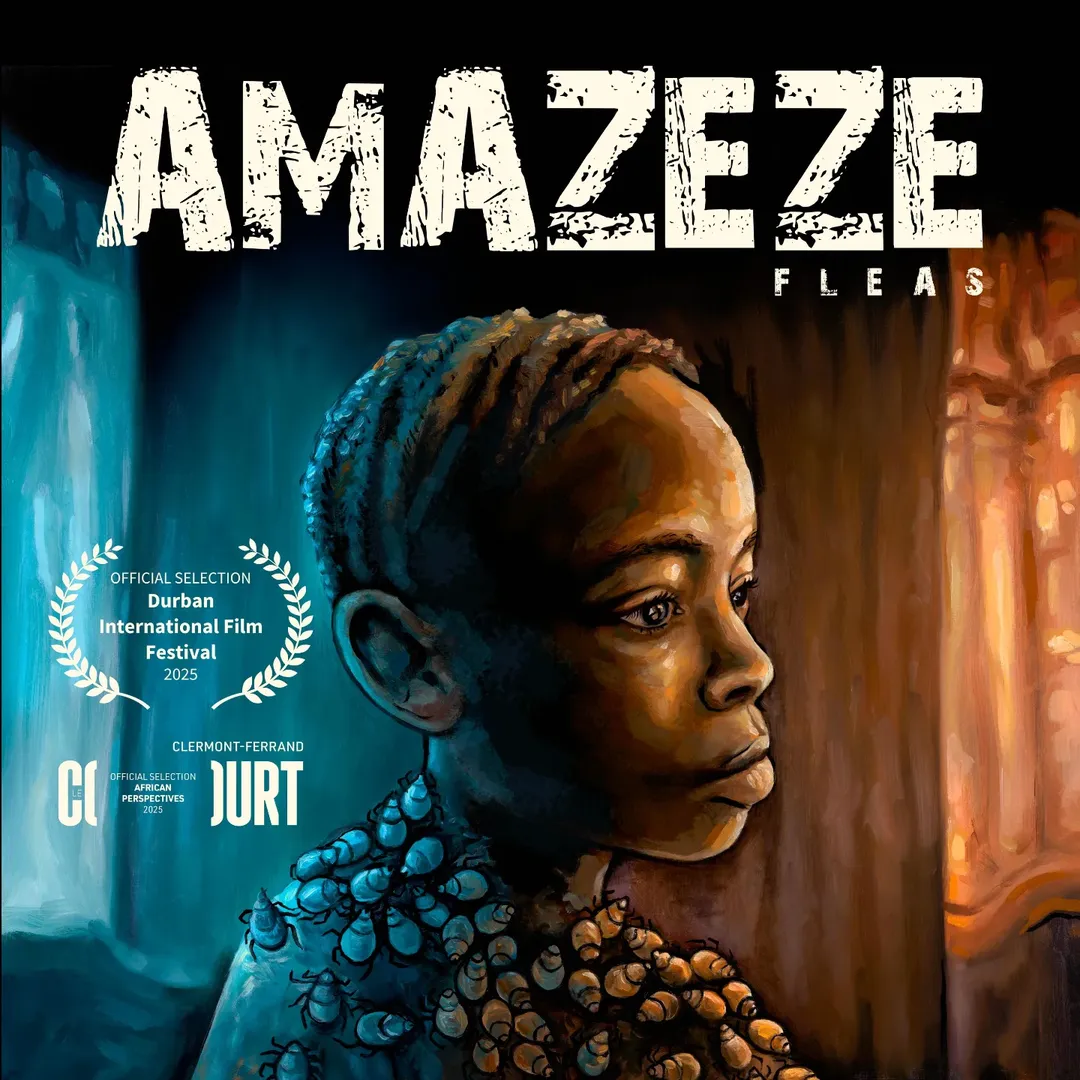
Where Rise carries the quiet electricity of a debut, Amazeze brings the confidence of a filmmaker working within a tradition. Together, they make the Best Short Film category something it rarely gets to be: genuinely continental.
Because that is the thing about this category. It has, for a good part of the AMVCA’s existence, functioned as an extension of the Nigerian short film ecosystem—a space where homegrown Nigerian talent competes against homegrown Nigerian talent, largely insulated from the rest of the continent’s output.
That insularity was never a deliberate policy, perhaps, but it was a pattern visible enough to feel like one. The AMVCAs bill themselves as a celebration of African storytelling, yet for years, the nominees list has told a much narrower story. Seeing Rise and Amazeze in contention is not just a pleasant surprise—it is an implicit challenge to that pattern, a suggestion that the selection process may finally be widening its gaze.
Whether that represents a genuine shift in how the AMVCAs scout and consider non-Nigerian work, or whether it is a happy accident of two exceptional films breaking through in the same cycle, remains to be seen. But for now, it is worth sitting with the possibility that the continent’s most visible film prize is beginning, however tentatively, to reckon with the fact that African cinema does not begin and end in Lagos. About time. – JJ
The AMVCA’s increased attention to non-Nigerian films this time around is also evident in its introduction of two new regional categories—Best Indigenous Language Film (North Africa) and Best Indigenous Language Film (Central Africa)—welcoming more African representation from regions previously overlooked.
This also comes off as a sign that the awards show is finally beginning to recognise what inclusiveness truly means, acknowledging that the diversity of Africa cuts across both Sub-Saharan and North Africa regions. – AJA
Emmanuel Igbekele’s First AMVCA Nomination for Best Cinematography Is a Hat-trick
There is something quietly poetic about a cinematographer’s first major award nomination arriving not once, but three times simultaneously. Emmanuel Igbekele—who got his start behind the camera on Biodun Stephen’s Picture Perfect in 2016—has spent the better part of a decade doing exactly what the industry asks of its craftsmen: show up, do the work, and trust that the work speaks. The AMVCA, characteristically slow to catch on, has finally listened.
This year, Igbekele lands his first-ever AMVCA nomination for Best Cinematography, and he does it with a hat-trick—The Herd, The Serpent’s Gift, and Gingerrr all flying his flag in the same category. It is the kind of nomination story that makes you want to rewind a career and look more carefully at what was always there. The visual language he has been quietly building across projects, the eye that has grown sharper with every frame. The AMVCA 12 nominations are not a discovery. They are an overdue acknowledgement. Some cinematographers get their flowers early. Igbekele got his all at once. – JJ
Six Industry Veterans Among the Nominees
One of the quiet pleasures of the AMVCA12 nominations is how many of them read like a reminder that Nollywood has a history. Gloria Anozie-Young, Sola Sobowale, Bimbo Akintola, Tunde Kelani, Kanayo O. Kanayo, Femi Branch—six names that collectively represent decades of craft, consistency, and an industry built on their shoulders. Seeing them on a nominees list in 2026 is not just pleasant. It feels necessary.
Sobowale, Akintola, and Anozie-Young converge in the Best Lead Actress category; a collision of generational heavyweights that, on its own, makes this one of the more compelling races of the night. Kanayo and Branch anchor Best Lead Actor, while Kelani earns a Best Director nod for Cordelia, adding a legend behind the camera to the conversation. The nominations are a signal that the industry’s elders are not stepping back; they are stepping up, and doing so in work worth nominating.
A small asterisk on Branch, though: his placement in Best Lead Actor for Red Circle raises questions over category fraud. Whether that applies here is a conversation for another section of this piece. The broader point stands: veterans in the mix, doing the work, demanding to be seen. That part, at least, is entirely welcome. – JJ
The Category Frauds
Male Supporting Roles Get Upgraded to Lead in Female-Led Red Circle and 3 Cold Dishes
There is no film awards event where lead and supporting roles are separated that does not come under fire for category fraud. Even the almighty American Academy has to deal with this routinely, and for all its rules, this is one area that’s lacking.
According to the Academy Rules, “The determination as to whether a role is a leading or supporting role shall be made individually by members of the branch at the time of balloting.” Producers exploit this apparent loophole in submitting certain names in choice categories for a variety of reasons. And in determining whether those names are eligible or acceptable, the jury will do what the jury will do. How much more can the AMVCA jury do with no public rule book?
But common sense should prevail, and for common sense to prevail, certain standard factors have been taken as universal, to an acceptable degree: a combination of narrative centrality, screentime, and overall purpose. To flout the common sense approach is to commit category fraud. And this is the case with the nomination of Femi Branch in the Best Lead Actor category for his performance as Chief Holloway in Red Circle.
Consider it this way: if you were to write a synopsis of Red Circle, could you do it without mentioning Chief Holloway? Absolutely, and without difficulty. The story of Red Circle is about and revolves around Fikayo Holloway. She loses someone dear to her, so she sets out to expose the cabal responsible for the loss, at great personal risk.

You cannot write a synopsis of this film without specifically mentioning her. But you can comfortably write the synopsis with no mention of her father, Chief Holloway. In fact, if I were to spell out his role here, it would be a spoiler. Even worse, you could cut off his character from this film, and there would be another character who could easily slip into his place.
That is not a lead character in any sense. It’s not even arguable. Chief Holloway is only slightly more important to this film than Oshisco, played by Lateef Adedimeji, who is rightly nominated for Best Supporting Actor for that role.
Perhaps, the idea was to escape nominating Femi Branch twice for Supporting Actor, since he also bagged a nomination for his role in Owambe Thieves. But other nominations defeat this argument. Adedimeji, for example, is nominated twice in the same category, with the second nod for his role in Gingerrr, while also nominated in the Best Lead Actor category nomination for Lisabi: A Legend Is Born (another hat-trick nomination at this year’s AMVCAs).
Chief Holloway is simply not a lead actor here. The screentime does not support it, nor does the character’s purpose or relevance. Red Circle has only one lead: Fikayo Holloway, who is played by Folu Storms, with no AMVCA nomination. It is possible for a film to have a single lead. It is possible for that one lead to be a woman. And it is insidious to suggest otherwise, to upgrade a supporting male character to a lead in a film that is strictly female-led. But this is what the AMVCA has done. And worse still, it did it a second time with 3 Cold Dishes, a female-centred film with a female ensemble cast.
3 Cold Dishes follows three women who reappear sixteen years after being trafficked as teenagers, determined to serve justice themselves. They are played as adults by Fat Toure, Osas Ighodaro, and Maud Guerard (all of whom received a joint nomination at the 2025 AMAAs), with three younger women, including Ruby Akubueze (an AMAA 2025 winner for Best Young/Promising Actor, for her performance in this film), playing their younger versions. But somehow, Wale Ojo received a nomination as lead actor, rather than supporting.
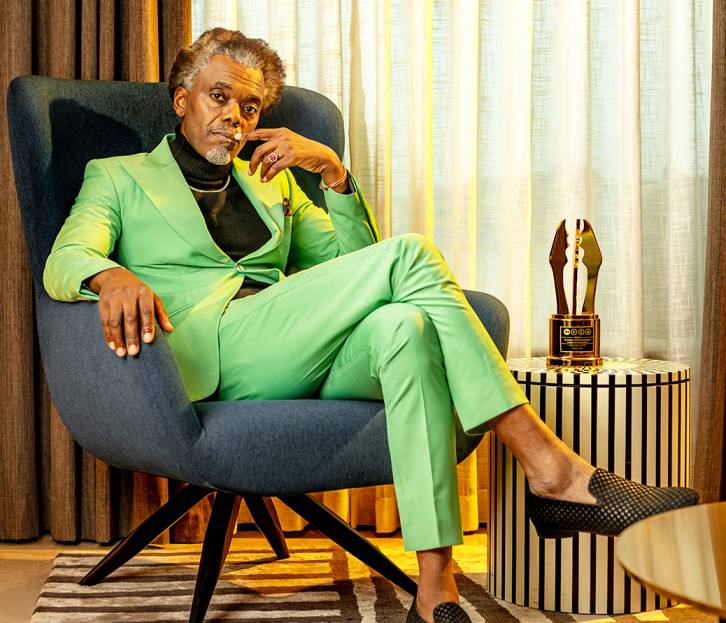
This is, unfortunately, not the first time the AMVCA would be accused of category fraud in favour of Wale Ojo. The actor has received numerous AMVCA nods throughout his career, including a controversial Best Lead Actor win for Breath of Life. The film’s obvious lead was Chimezie Imo (who interestingly hosted this year’s nominations announcement), but Imo was not nominated for his role at the 2024 AMVCAs. Instead, he went home with the flagship Trailblazer Award, which many commentators viewed as a consolation prize.
Who knows? Maybe one of the women of 3 Cold Dishes, possibly Ruby Akubueze, might be this year’s trailblazer. But that would not make this Best Lead Actor nomination less egregious. There could not be a more wrongful misplacement than nominating a supporting male character as lead in a film about women taking back their agency, and specifically led by so many women, none of whom were nominated. – VNN
Female Supporting Roles Masquerade as Lead in The Herd and To Kill a Monkey
This is a more debatable case of category fraud than the case of the Lead Actors in female-led films, but I’m inclined to argue against the nominations of Genoveva Umeh and Bimbo Akintola for Lead Actress for The Herd and To Kill a Monkey.
Granted, both titles have premises that support the argument for multiple leads, maybe even an ensemble. In The Herd, a couple and their best man sneak away from their wedding only to end up in the hands of bandits who kill the groom and abduct the bride (Genoveva Umeh) and best man (Daniel Etim Effiong) while the bride’s mother (Mercy Aigbe) and the best man’s wife (Linda Ejiofor) struggle to arrange ransom. In To Kill a Monkey, a struggling husband and father (William Benson) re-encounters an old acquaintance (Bucci Franklin) who introduces him to a life of cybercrime while a law enforcement agent (Bimbo Akintola) hunts them down.
But in unfolding their stories, both titles end up centring particular characters and having all the others support those characters. In The Herd, Umeh’s Derin might be the bride, but she is relegated to the background in a story that ultimately becomes about Etim Effiong’s Gosi, his fight to survive, and his wife’s frantic hustle to raise the ransom. Umeh becomes less of a lead than Ejiofor (playing Gosi’s wife, Adamma), who, even the AMVCA nominations jury agrees, is not a lead in the film. Ejiofor’s Best Lead Actress nomination is for her role in The Serpent’s Gift; her performance in The Herd earned her a Best Supporting Actress nomination, not lead.
Similarly, To Kill a Monkey centres on William Benson’s Efe, with Bimbo Akintola’s Inspector Mo written into a B-plot that feels distant for a good part of the show, as if waiting to become relevant. That her character has a backstory is not a defining factor; in fact, it is often a necessity for many supporting characters.
Everything about her character is designed to support Efe’s story. Her backstory puts her in the same place as him, subconsciously triggering her obsession with him. Her trauma is set up to make her unreliable in hunting him and delay his inevitable comeuppance. Her role is fundamentally to support the protagonist’s narrative by obstructing his goals. Without his story, hers does not exist.
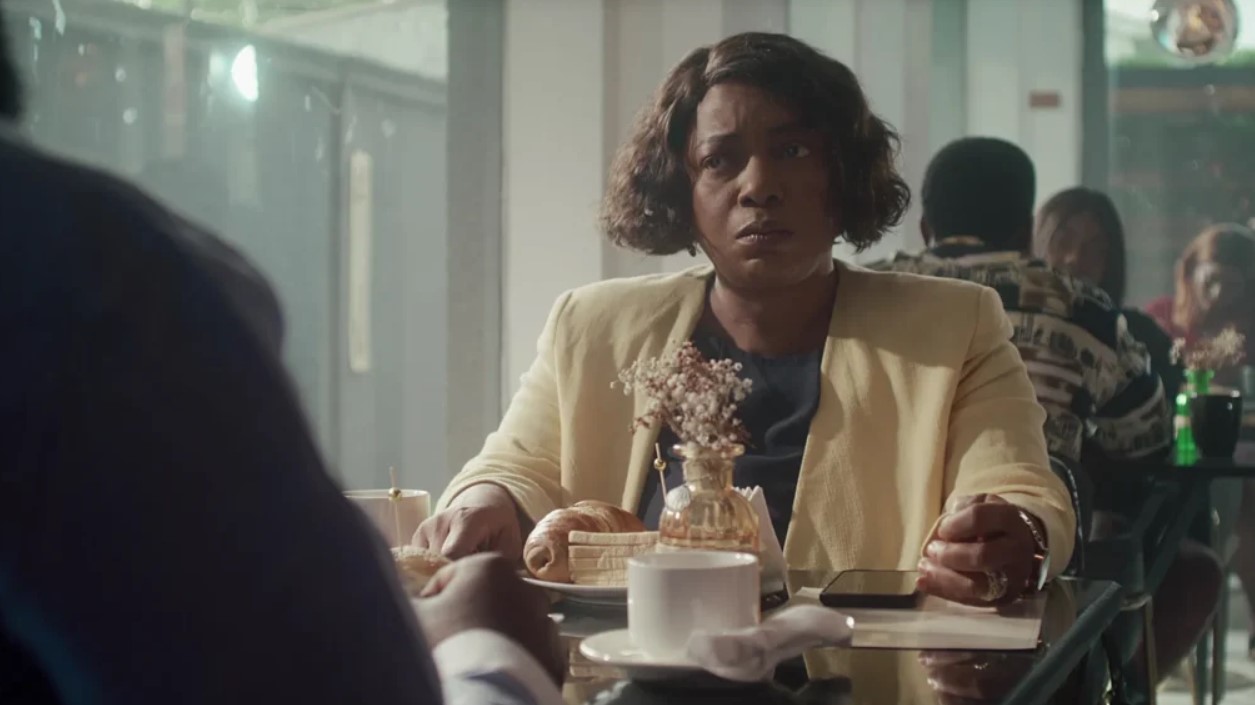
If To Kill a Monkey has two leads, the second would be Bucci Franklin, seeing as the central plot focuses on the relationship between Efe and Franklin’s Oboz. But most people would agree that Franklin is rightfully in the Best Supporting Actor category, for basically the same reasons that stand against Akintola. If Inspector Mo were a man, the role would not be considered a lead role. It does not automatically become one because the character is female, in the same way Oboz would not suddenly become a lead if the character were female.
To Kill a Monkey has no female lead. And if The Herd has one, it’s not Genoveva Umeh. Both actresses would ideally be more at home in the Best Supporting Actress category, and that is okay. After all, To Kill a Monkey has no nominee in the Best Supporting Actress category, and if The Herd already has two nods in that category (the second being Amal Umar’s nomination), is it really off-brand to have three?
Final Thoughts
Speaking of these double-nominees and hat-tricks, there is an uncomfortable conversation to be had about this rinse-and-repeat model where the same set of actors and practitioners are nominated over and over again in the same year within the same categories and across different categories. Sure, it can be defended as recognition for the hard work of certain nominees, but Nollywood alone cannot run out of hard workers, let alone the entire continent of Africa.
In a smaller industry, it might be understandable. But the AMVCA professes to be a pan-African event, and Nigeria, its primary market, is the world’s second-largest film industry. If the majority of the nominated projects were that remarkable, then one could make an argument that they were the few greats in a bad year. But there really is no justifying it in a year when Gingerrr received more nominations than My Father’s Shadow, and The Fire and the Moth and When Nigeria Happens did not make the nominations list. – VNN
Vivian Nneka Nwajiaku is a writer and film critic writing from Lagos. She has a master’s degree in law but spends most of her time consuming, studying and discussing film and TV. She’s particularly concerned about what art has to say about society’s relationship with women. Connect with her on X @Nneka_Viv
Joseph Jonathan is a historian who seeks to understand how film shapes our cultural identity as a people. He believes that history is more about the future than the past. When he’s not writing about film, you can catch him listening to music or discussing politics. He tweets @Chukwu2big
Adedamola Jones Adedayo is a film journalist and critic with a special interest in African cinema. Through writing and audiovisual mediums, he creates conversations around cinema in Africa and the Diaspora. You can find him on Instagram @jonesthegoodboy and X on @AdedamolaAdeda4